

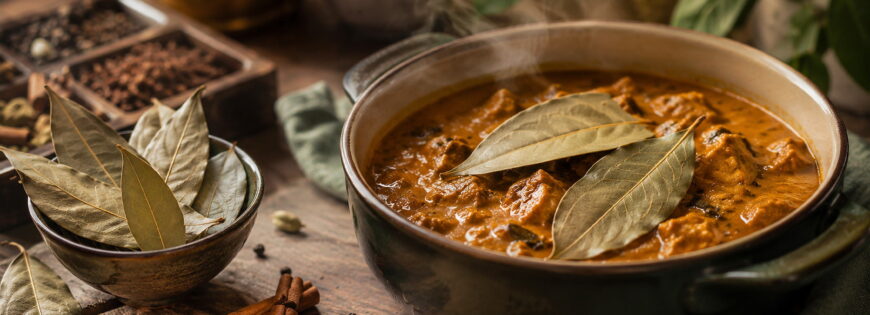
A curry can have enough salt, chilli, onion, tomato and masala and still taste as though something is missing. It may not be weak or badly cooked. It simply lacks the quiet background aroma that helps all those stronger flavours sit together.
Why is bay leaf added to curry? It creates a subtle aromatic base that connects stronger flavours such as onion, tomato, chilli and garam masala.
That is where dried bay leaf enters the pot. It does not announce itself like chilli, pepper or garam masala. It works slowly, releasing a warm, woody and gently spiced aroma into hot oil, water, stock or gravy. You may not immediately identify the leaf, but you notice when it is absent.
In many Indian kitchens, bay leaf is added at the beginning of rice dishes, curries, dals and slow-cooked gravies. It gives the base more depth before the louder spices arrive. That small early step can be the difference between a curry that tastes assembled and one that tastes complete.
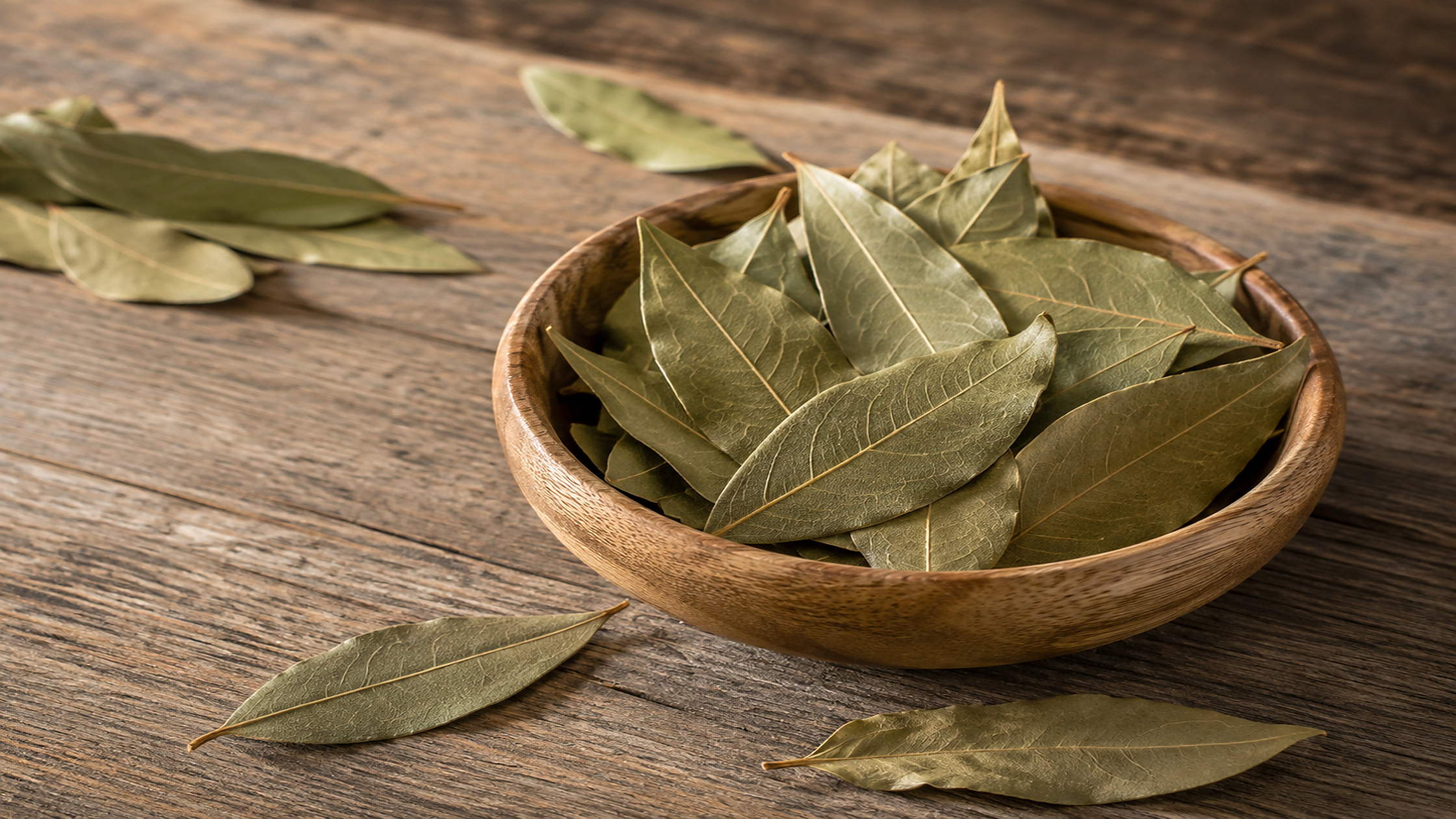
Why curry can taste flat even when the seasoning seems right
Flatness is not always caused by too little salt or spice. Sometimes the curry has heat but no depth. The first spoonful feels strong, yet the flavour disappears quickly because there is no aromatic base connecting the onion, fat, vegetables, meat and ground masala.
Bay leaf helps fill that gap. When it warms in oil or simmers in liquid, it gives the dish a dry, woody and gently sweet background note. The effect is subtle, which is why cooks sometimes underestimate it. Adding more chilli cannot replace it. Increasing garam masala may make the dish louder, but not necessarily rounder.
Think of bay leaf as part of the structure rather than the decoration. Salt defines the taste, chilli creates heat, onion and tomato build body, and bay leaf quietly lengthens the aroma. The curry begins to smell complete before it even reaches the plate.
What does bay leaf do in curry?
A whole dried leaf is designed for gradual infusion. It needs warmth, moisture and time. Dropping it into a curry just before serving gives it little chance to open. Adding it near the beginning allows the aromatic character to move into the oil and cooking liquid.
This is why bay leaf works especially well in dishes that simmer. In a quick stir-fry, its contribution may remain faint. In pulao, biryani, dal, stew, kurma or a slow gravy, it has time to soften the sharp edges between spices.
The leaf should remain whole or be torn once for a stronger release. It is normally removed before eating because the dried leaf stays firm and is not pleasant to chew. Its purpose is infusion, not texture.
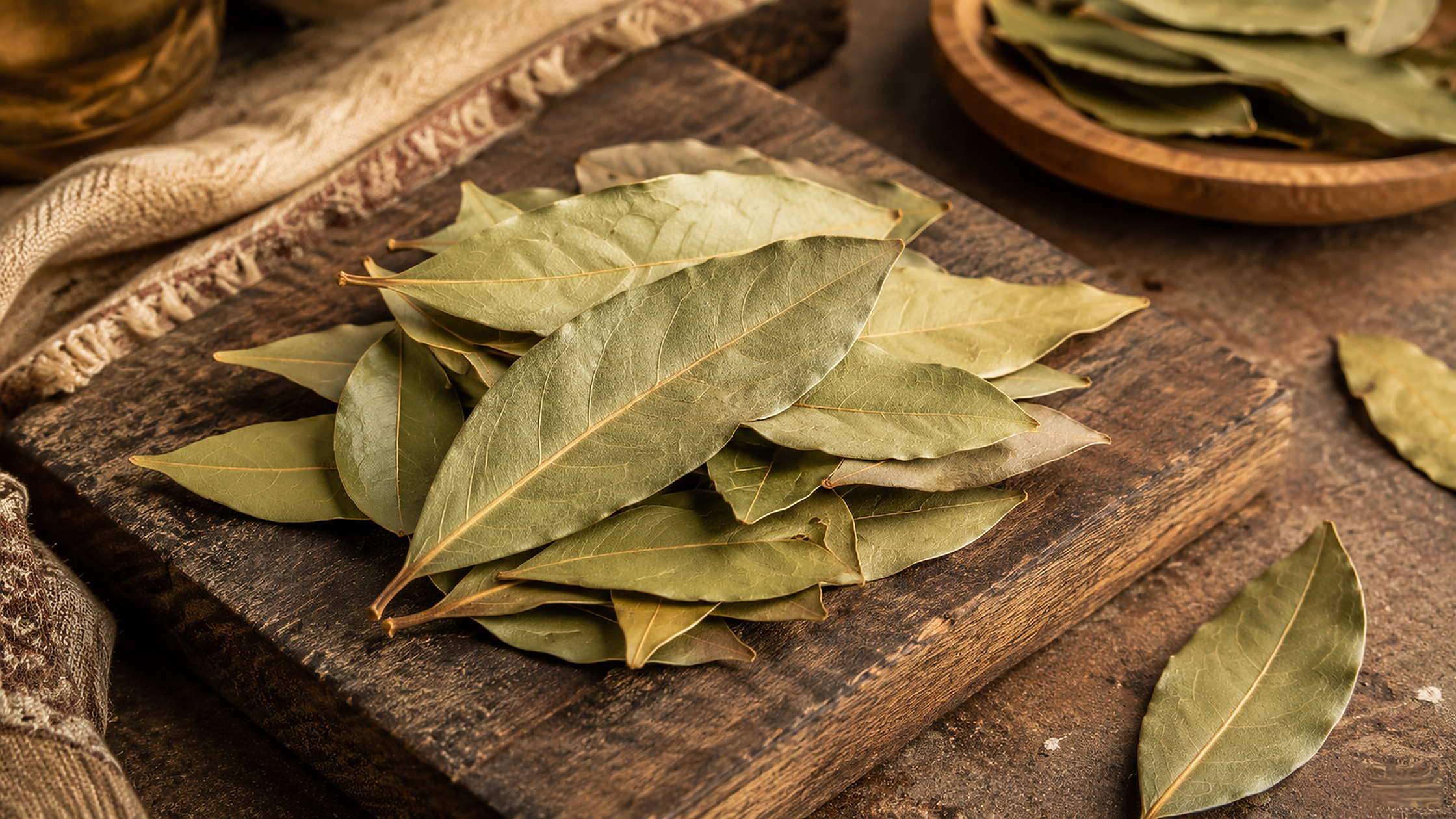
How bay leaf changes the curry without taking over
Builds the base
It adds a warm, leafy and woody aroma before stronger ground spices enter the dish.
Softens sharp edges
It helps onion, tomato, chilli and masala feel connected rather than separate.
Extends the finish
The curry carries flavour for longer instead of tasting strong only in the first moment.
Works quietly
Used carefully, it supports the dish without making every curry taste like one dominant spice.
When should bay leaf be added to curry?
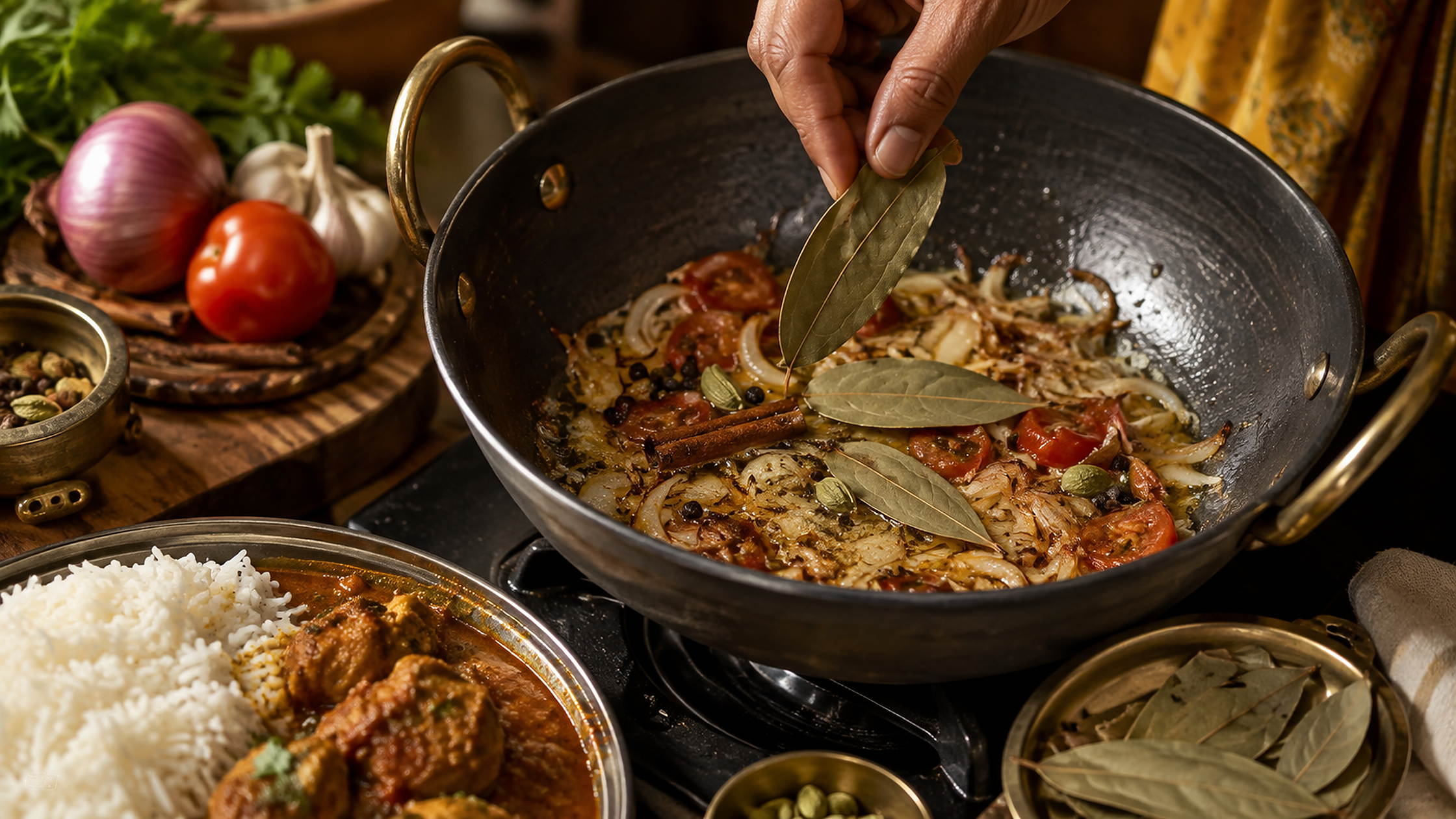
For most Indian curries, add bay leaf near the beginning. Warm the oil or ghee, add the leaf with other whole spices and let it become fragrant for a few seconds. Then add onion or the next ingredient in the recipe.
Do not leave it in very hot oil for too long. A bay leaf can darken and become bitter when burned. The goal is to wake up the aroma, not fry the leaf until it is black. Once the onion, water or gravy base enters the pan, the leaf can continue infusing safely.
Warm the fat
Heat oil or ghee over medium heat. It should be hot enough to release aroma but not smoking aggressively.
Add whole spices
Add one bay leaf with cinnamon, cardamom, clove or cumin, depending on the dish.
Build the curry
Add onion or cooking liquid and allow the leaf to infuse as the curry develops.
How many bay leaves should go into a curry?
One medium dried bay leaf is usually enough for a family-sized pot serving three to five people. A larger pot of biryani, stock or meat curry may need two. More leaves do not automatically create more flavour. Too many can make the aroma dry, medicinal or slightly bitter.
Size and strength vary, so begin modestly. A fresh, aromatic leaf can contribute more than several old leaves that have lost their fragrance. Tear a large leaf once when you want a slightly faster release, but avoid crushing it into small pieces that are difficult to remove.
| Dish quantity | Starting amount | Best method |
|---|---|---|
| Small curry for 2 people | ½ to 1 medium leaf | Add whole during tempering and remove before serving |
| Family curry for 3–5 people | 1 medium leaf | Warm briefly in oil, then simmer in the gravy |
| Large biryani or pulao | 1–2 leaves | Add with other whole spices before rice and water |
| Large meat curry or stock | 2 leaves | Allow a longer simmer and remove at the end |
Which dishes improve most with bay leaf?
Bay leaf is most useful when a dish contains liquid, fat and enough cooking time for infusion. It belongs naturally in biryani, pulao, dal, chana, rajma, kurma, vegetable stew, chicken curry, meat gravy and slow-cooked stocks.
It can also support mildly spiced dishes. In a coconut-based curry, one leaf adds depth without disturbing the softness of the coconut. In tomato gravies, it helps control sharp acidity. In rice dishes, the aroma moves through the steam and becomes part of every spoonful.
| Dish | What bay leaf contributes | When to add it |
|---|---|---|
| Biryani and pulao | Warm aroma that carries through the rice | With whole spices before adding rice |
| Dal, rajma and chana | Depth behind earthy lentils and beans | During tempering or pressure cooking |
| Chicken or meat curry | Rounds the gravy and supports slow-cooked flavour | At the beginning with oil and whole spices |
| Vegetable kurma or stew | Gentle warmth without aggressive heat | Before onion, coconut milk or cooking liquid |
| Soup and stock | Long, savoury background aroma | At the start of simmering |
How to recognise bay leaf that still has aroma
A useful dried bay leaf should look reasonably whole, feel dry and release a clear aroma when gently torn. Colour can range from olive green to muted brown-green, depending on the leaf and drying process. Colour alone does not decide quality, but a completely faded leaf with almost no smell may contribute little to the pot.
Avoid packs containing excessive dust, moisture, mould, webbing or a stale cupboard smell. Choose aromatic dried bay leaves that are protected from humidity and unnecessary breakage. Buying a practical quantity is better than storing a very large pack until its aroma disappears.
The U.S. FDA spice definition for bay leaves describes dried bay leaves as stiff, brittle and aromatic when crushed, with quality linked to characteristics such as volatile oil, moisture and freedom from excess stems. For home cooking, the most practical check is still simple: gently tear a leaf and confirm that it releases a clean, recognisable aroma.
How to store dried bay leaves correctly
Keep bay leaves in an airtight container or properly sealed pouch in a cool, dry and dark cupboard. Heat, air, moisture and direct light slowly reduce the aroma of dried herbs and spices.
Do not store the pack directly above the stove, where steam and heat reach it repeatedly. Guidance from Colorado State University Extension on using and preserving herbs recommends packing dried herbs in airtight containers. Keeping bay leaves sealed and away from heat, moisture and strong light helps protect their aroma for longer.
Open the pack only when needed and close it promptly. Use a dry spoon or clean, dry fingers. Moisture introduced into the pack can damage the leaves long before the printed best-before period.
Why adding bay leaf sometimes makes no difference
The most common mistake is adding the leaf too late. A leaf placed into a finished curry for two minutes cannot develop the same aroma as one that has simmered through the cooking process.
Another mistake is using old leaves with almost no fragrance. The cook may add three or four leaves and still notice little improvement. Quantity cannot restore aroma that has already faded.
- Do not burn it: blackened bay leaf can make the base bitter.
- Do not add too many: the flavour should remain supportive.
- Do not grind it into the curry: whole-leaf infusion is easier to control.
- Do not forget to remove it: the leaf stays firm after cooking.
- Do not store it near steam: moisture quickly reduces quality.
Bay leaf does not make curry louder. It makes it feel complete.
Good curry is not created by adding the maximum amount of every spice. It comes from building layers in the right order. Bay leaf belongs to the early, quiet layer: warm oil, whole spices, onion and the first release of aroma.
Once that base is present, chilli tastes less isolated, tomato feels less sharp and garam masala has something to rest on. The curry develops a longer finish and a more settled aroma without becoming unnecessarily heavy.
The next time a curry tastes flat, resist the urge to immediately add more salt or chilli. Ask whether the base had enough aroma. One dried bay leaf, added early and allowed to simmer, may be the missing step.
FAQs
Why is bay leaf added to curry?
Bay leaf adds a slow, warm and woody background aroma. It helps connect stronger flavours such as onion, tomato, chilli and garam masala.
When should I add bay leaf to a curry?
Add it near the beginning. Warm it briefly in oil or ghee with other whole spices, then allow it to infuse as the curry cooks.
How many bay leaves should I use?
One medium dried leaf is usually enough for a family-sized curry. Use up to two for a large pot of biryani, stock or slow-cooked meat curry.
Should bay leaf be removed before serving?
Yes. The dried leaf remains firm after cooking and is intended to flavour the dish through infusion rather than to be eaten whole.
Can I add bay leaf directly without frying it?
Yes, especially in stocks, dals or pressure-cooked dishes. Briefly warming it in oil can produce a fuller aroma, but simmering it in liquid also works.
Why can I not taste the bay leaf in my curry?
The leaf may have been added too late, stored for too long or exposed to air, heat or moisture. Bay leaf is also deliberately subtle and usually supports the overall curry rather than becoming a separate flavour.
Can too much bay leaf make curry bitter?
Yes. Using too many leaves, burning them in oil or simmering a very strong quantity for too long can create a dry or bitter character.
Which dishes are best for dried bay leaf?
It works well in biryani, pulao, dal, rajma, chana, kurma, vegetable stew, chicken curry, meat gravies, soups and stocks.
Give your curry the aroma it has been missing
Keep clean, aromatic dried bay leaves ready for biryani, dal, curries, gravies, stocks and everyday whole-spice cooking.
Shop Dried Bay Leaf