
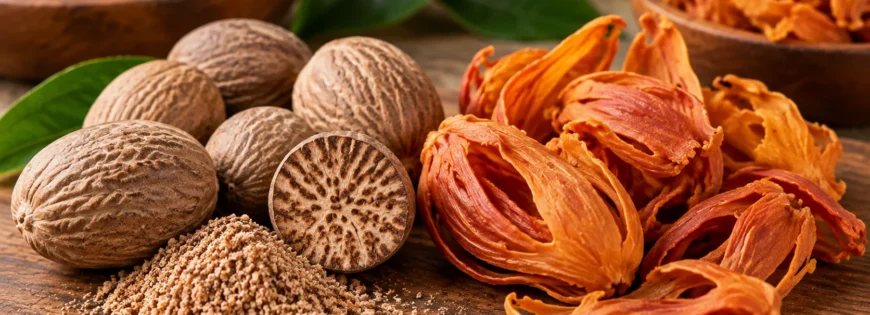
Nutmeg and mace often sit close together in a spice collection, and for good reason: they come from the same fruit. Yet their appearance, aroma and role in cooking are noticeably different. Understanding nutmeg vs mace makes it much easier to choose the right spice for biryani, curries, baking, desserts and homemade masala blends.
Nutmeg offers a warm, sweet and deep aroma that works beautifully in both savoury and sweet dishes. Mace is usually lighter, more fragrant and slightly sharper, making it especially useful when you want warmth without allowing one spice to dominate the dish. Although they are closely related, they are not simply two names for the same ingredient.
Where do nutmeg and mace come from?
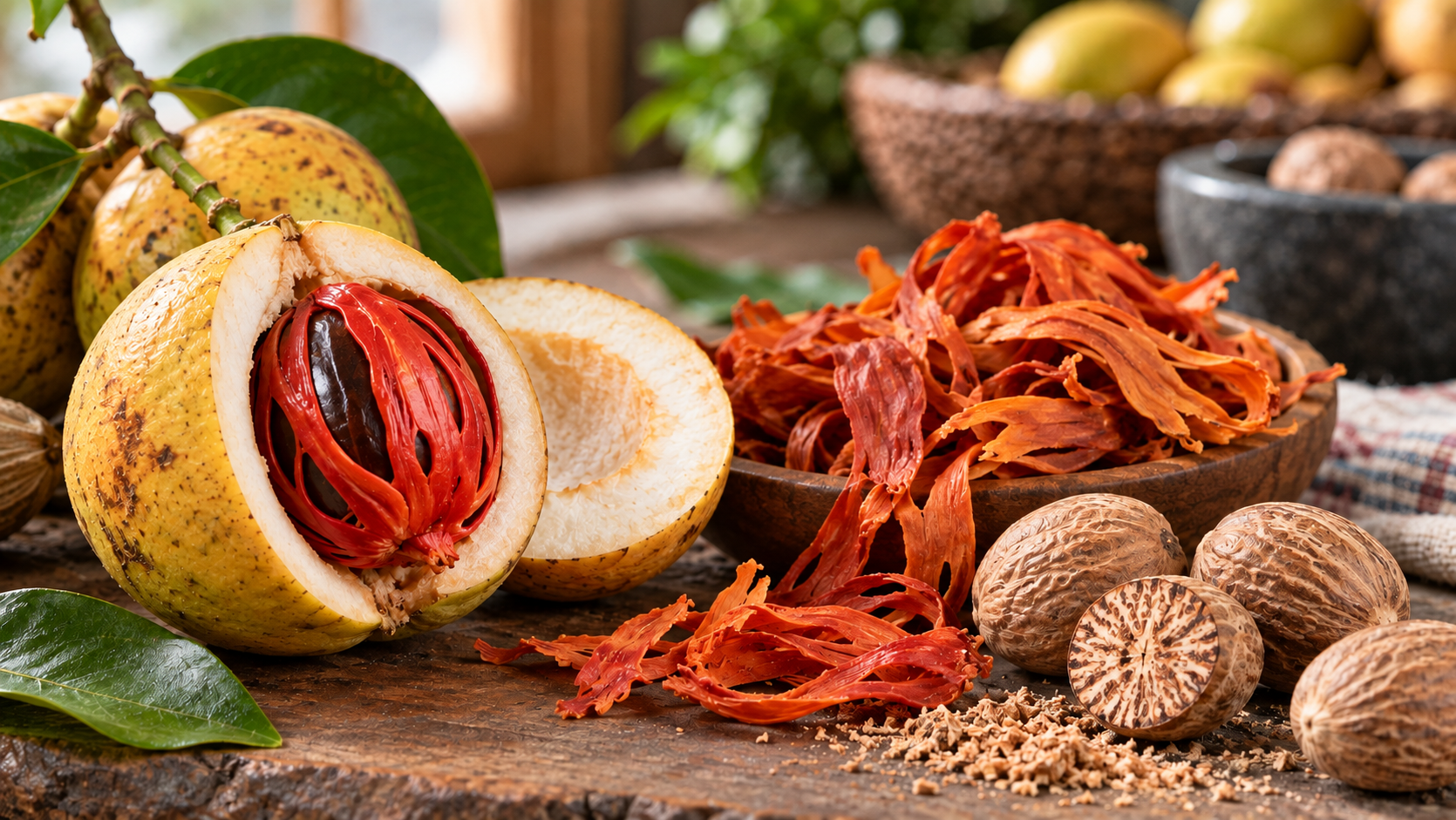
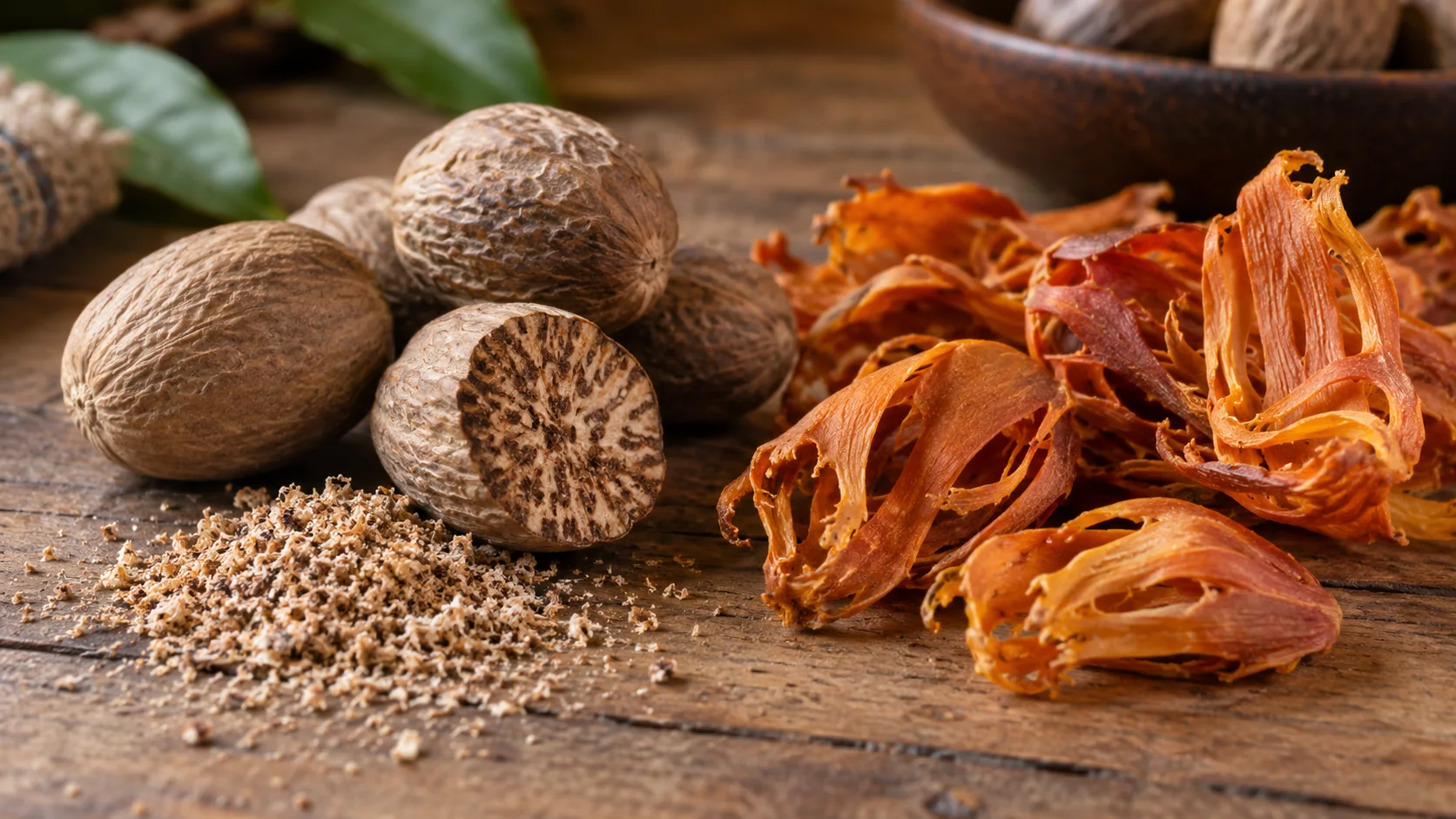
The easiest way to understand the difference between nutmeg and mace is to look inside the nutmeg fruit. When the mature fruit opens, a dark seed is visible beneath a bright red, lace-like covering. That red covering is mace.
The mace is carefully separated and dried. As it dries, its colour usually changes from bright red to orange, amber or reddish brown. Beneath it is the hard shell containing the nutmeg seed that we grate or grind for cooking.
This close relationship explains why the two spices share some warm aromatic notes. However, because they come from different parts of the fruit, their flavour is not identical. That difference becomes more noticeable once they are added to food.
Nutmeg vs mace: what is the difference?
If you are comparing nutmeg vs mace for cooking, think about depth versus delicacy. Nutmeg gives a rounder, sweeter and deeper warmth. Mace tends to be more delicate and aromatic, with a lighter warm-spice character.
| Feature | Nutmeg | Mace |
|---|---|---|
| Part of the fruit | The seed found inside the fruit | The thin aril surrounding the seed |
| Appearance | Brown, firm and oval with a textured surface | Thin, lacy strips that become orange-red when dried |
| Aroma | Warm, sweet, woody and rich | Warm, fragrant, lighter and slightly sharper |
| Flavour impact | Deeper and fuller | More delicate and aromatic |
| Common uses | Baking, desserts, payasam, sauces, curries and masala | Biryani, pulao, korma, gravies and spice blends |
| How it is used | Usually grated or ground | Used as whole blades or ground into powder |
| Best approach | Use a small amount and build gradually | Add gently so its aroma supports the other spices |
What does nutmeg taste like?
Nutmeg has a warm, sweet and gently woody character. Freshly grated nutmeg can smell especially rich because grating breaks open the seed and releases its aroma immediately.
This makes nutmeg useful in recipes where you want warmth and depth rather than obvious heat. A small amount can round out creamy, sweet or slow-cooked dishes without making them taste strongly of spice.
When learning how to use nutmeg, begin with a small quantity. Nutmeg is concentrated, and adding more is easier than correcting a dish in which too much has already been used.
How to use nutmeg in cooking
Nutmeg works comfortably in both Indian and international recipes. In Indian kitchens, a small amount may be added to payasam, kheer, festive sweets, biryani masala, garam masala and rich gravies.
It is equally useful in baking. Cakes, cookies, muffins and spiced desserts often benefit from nutmeg alongside cinnamon or cloves. Its warm aroma also works in milk-based drinks, custards and creamy sauces.
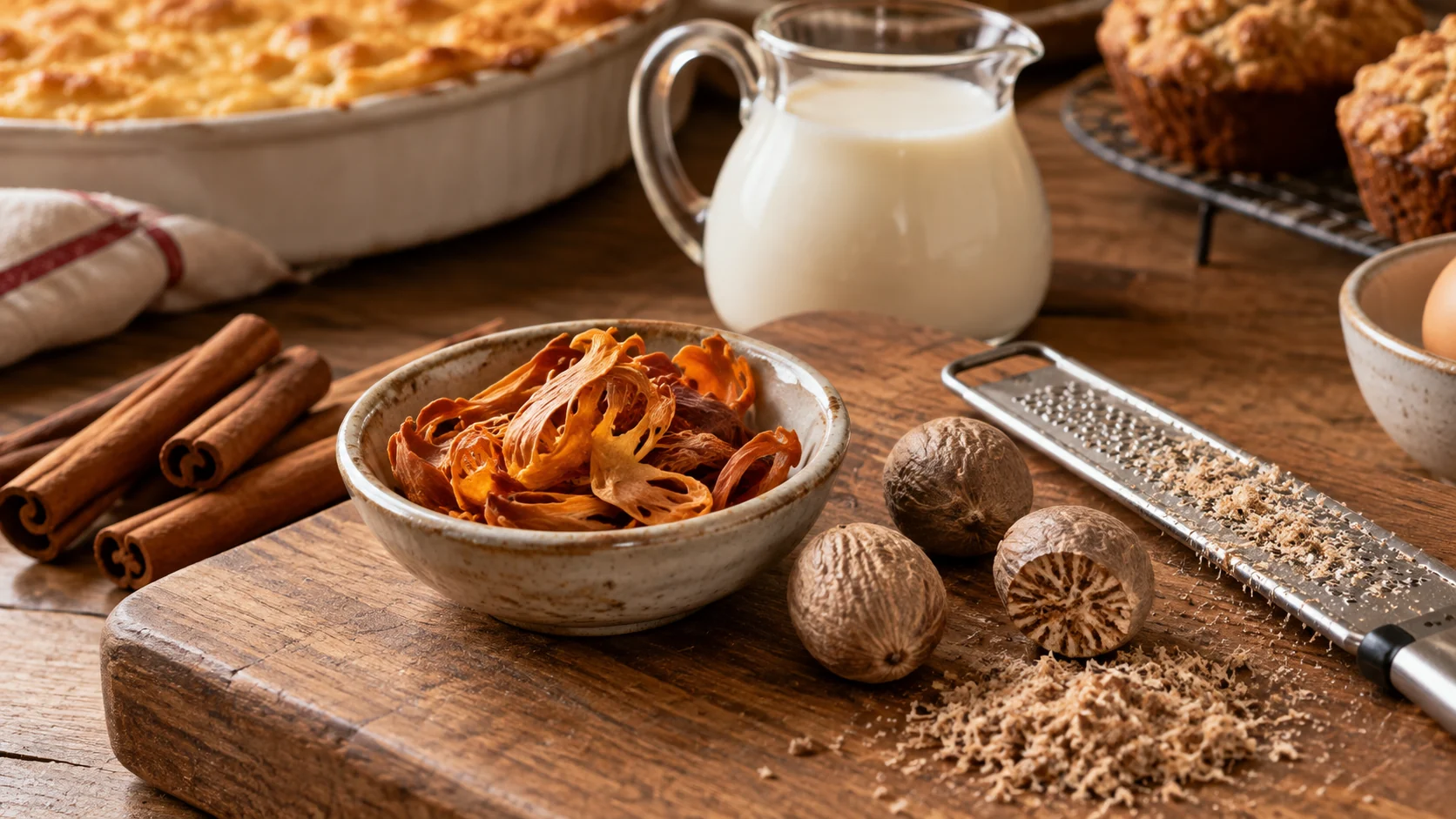
Whole nutmeg is particularly convenient because you can grate only what you need. A fine grater releases fresh aroma directly into the dish while allowing the remaining seed to stay whole until its next use.
What is mace spice and what does it taste like?
Mace is the dried aril that originally surrounds the nutmeg seed. Fresh mace is bright and striking in appearance. After drying, it becomes thinner and takes on the familiar orange-red colour seen in spice boxes.
The aroma is related to nutmeg but is not identical. Mace is often perceived as more delicate and fragrant, with warm notes that can blend smoothly into rice, gravies and slow-cooked dishes.
Because its flavour can sit neatly alongside cardamom, cloves, cinnamon and bay leaf, mace spice uses are especially common in layered spice combinations rather than dishes where mace is expected to stand alone.
How to use mace spice in Indian cooking
Mace fits naturally into dishes that use several whole spices together. A small blade can be added while cooking biryani or pulao along with cardamom, cinnamon, cloves and bay leaf. It can also bring fragrance to korma, meat gravies and slow-cooked curry bases.
Whole mace can be added to the cooking pot and removed later, or it can be lightly roasted and ground as part of a homemade spice blend. Ground mace distributes quickly, so use it carefully and allow the aroma to build gradually.
Mace can also appear in sweet dishes and baking, particularly when you want a warm spice note that feels slightly different from the deeper character of nutmeg.
Which spice should you reach for?
Baking & desserts
Start with nutmeg when you want deep, sweet warmth in cakes, cookies, custards, kheer, payasam or milk-based desserts.
Biryani & pulao
Mace is a natural fit when you want an aromatic layer alongside cardamom, cloves, cinnamon and other whole spices.
Masala blends
Both can work. Nutmeg adds depth while mace contributes a lighter aromatic note. Use them in small quantities.
Creamy dishes
Nutmeg works particularly well when you want gentle warmth in creamy sauces, milk drinks and rich preparations.
Can you use mace instead of nutmeg?
Yes, nutmeg and mace can sometimes substitute for each other because their flavour families are related. However, the finished dish will not taste exactly the same.
If a recipe asks for nutmeg and you use mace, expect a somewhat lighter and more aromatic result. If you replace mace with nutmeg, the flavour may become deeper and warmer.
The safest approach is to start with less than you think you need, taste or smell the dish as it develops, and add more only when necessary. Spice strength can vary depending on freshness, form and how finely it has been ground.
Whole nutmeg and mace vs ground spice
Ground spices are convenient because they mix into a recipe quickly. Whole spices, however, give you more control over when the aroma is released.
A whole nutmeg can be grated immediately before cooking. Whole mace blades can be broken into smaller pieces, added directly to a dish or ground when needed. Keeping the spice whole until close to the time of use reduces the amount of surface exposed to air.
If you cook occasionally, buying whole nutmeg or whole mace can therefore be a practical option because you use only the quantity required for each recipe.
What to look for when buying nutmeg and mace
Good whole nutmeg should feel firm and dry rather than soft or damp. Its surface should look naturally textured, and grating the seed should release a noticeable warm aroma.
Whole mace should appear dry and reasonably intact, with its characteristic thin, blade-like structure. Colour naturally varies, but it should not feel damp or carry a stale or musty smell.
Avoid choosing spices only by appearance. Aroma, dryness, handling and storage matter just as much. Buying quantities that your household can realistically use also helps prevent spices from sitting forgotten in the cupboard.
How to store nutmeg and mace
Store both spices in tightly closed containers or resealable packs away from moisture, direct sunlight and excessive kitchen heat. A cool, dry cupboard is preferable to a shelf directly above the stove.
Whole nutmeg is easy to store because you can keep the seed intact and grate a little whenever required. Mace blades should also be protected from moisture and handled gently because dried mace can become brittle.
If you use ground nutmeg or ground mace, close the container immediately after measuring the spice. Avoid leaving the pack open while cooking, particularly beside steaming pots.
Nutmeg vs mace: which one should you keep in your kitchen?
There does not need to be a winner in the nutmeg vs mace comparison. They are related spices with different strengths, and each earns its place in a well-used spice collection.
Choose nutmeg when you want rich, sweet warmth in baking, desserts, creamy dishes and masala blends. Choose mace when you want a lighter aromatic layer for biryani, pulao, korma and other richly spiced preparations.
If you regularly cook Indian food as well as bake or prepare desserts, keeping both makes sense. One fruit then gives you two different ways to build aroma: the depth of nutmeg and the delicate warmth of mace.
FAQs
Are nutmeg and mace the same?
No. They come from the same fruit but are different parts of it. Nutmeg is the seed, while mace is the thin aril that surrounds the seed.
What is the main difference between nutmeg and mace?
Nutmeg generally has a deeper, sweeter and warmer flavour. Mace is usually lighter and more aromatic. They can be used in similar dishes, but they create slightly different results.
Which is stronger, nutmeg or mace?
Nutmeg usually gives a deeper and fuller warm-spice character, while mace can feel more delicate and fragrant. Perceived strength also depends on freshness and the quantity used.
Can I substitute mace for nutmeg?
Yes, they can sometimes substitute for one another because their aromas are related. Start with a small quantity because the final flavour will be different and spice strength varies.
What are the most common mace spice uses?
Mace is commonly used in biryani, pulao, korma, rich gravies, meat dishes, garam masala and other spice blends. It can also be used in selected desserts and baked dishes.
How do you use whole nutmeg?
Grate a small amount of whole nutmeg directly into the recipe using a fine grater. Begin with a little because freshly grated nutmeg can be strongly aromatic.
Is whole nutmeg better than ground nutmeg?
Both are useful. Ground nutmeg is convenient, while whole nutmeg allows you to grate only what you need immediately before cooking and keep the remaining seed intact.
How should nutmeg and mace be stored?
Keep them tightly sealed in a cool, dry and dark place away from steam, direct sunlight and heat. Avoid storing spice containers directly above the cooking stove.
Bring real whole-spice aroma into your kitchen
Explore whole nutmeg, mace and other carefully selected spices for biryani, curries, baking, festive cooking and everyday recipes.
Explore Idukki Spices