


The journey of Idukki spices begins along roads that climb through damp forests, small settlements and hills that disappear into the morning mist. Long before these whole spices reach your kitchen, their character is shaped by the highlands.
I reached the highlands early in the morning, before the mist had lifted completely. The farms did not resemble the large, perfectly arranged plantations seen in advertisements. They felt lived in. Pepper grew beside family homes, cardamom plants filled shaded slopes behind small sheds, and freshly collected spices rested in baskets while farmers prepared for another round of work.
Nothing about the process appeared rushed. A farmer examined pepper berries by hand before placing them into a basket. Nearby, green cardamom pods were being sorted according to their maturity. At another house, spices had been spread out carefully so that moisture could leave without damaging their natural aroma.
Standing there, it became clear that a spice begins its journey long before it enters a packet. Its character is shaped by the mountain climate, the timing of the harvest and the judgement of the people handling it.
The highlands create their own climate for spices
Idukki’s elevation, rainfall, shade and fertile soil create a suitable environment for many valuable spices. The region receives generous monsoon rain, while the surrounding forests help maintain humidity and moderate temperatures. Readers can also learn more about Indian spice cultivation and the spice industry through the Spices Board India
Cardamom grows particularly well under shade. The plants remain close to the forest floor, where the soil stays moist and direct sunlight is limited. Pepper grows differently. Its vines climb upward around support trees, allowing long clusters of pepper berries to develop above the ground. The Kerala Tourism guide to spice cultivation also identifies Idukki as one of Kerala’s important spice-growing regions.
Nutmeg trees need space and time. When the fruit ripens, it opens naturally to reveal the dark nutmeg seed wrapped in a bright red covering. That red outer layer is mace, a separate spice with its own aroma and culinary uses.
Clove trees produce flower buds that must be harvested before opening. Cinnamon comes from carefully removed inner bark, which curls as it dries. Every spice responds to the land differently, which is why farmers cannot handle every crop using the same method.
The journey of Idukki spices from highland farms to your kitchen
The complete journey differs slightly for every spice, but most whole spices pass through the same essential stages before reaching your home.
Harvesting depends on timing, not speed
Cardamom harvesting is repetitive work. The capsules on the same plant do not become ready together, so workers return to the plants several times during the season. Each mature pod is selected by hand.
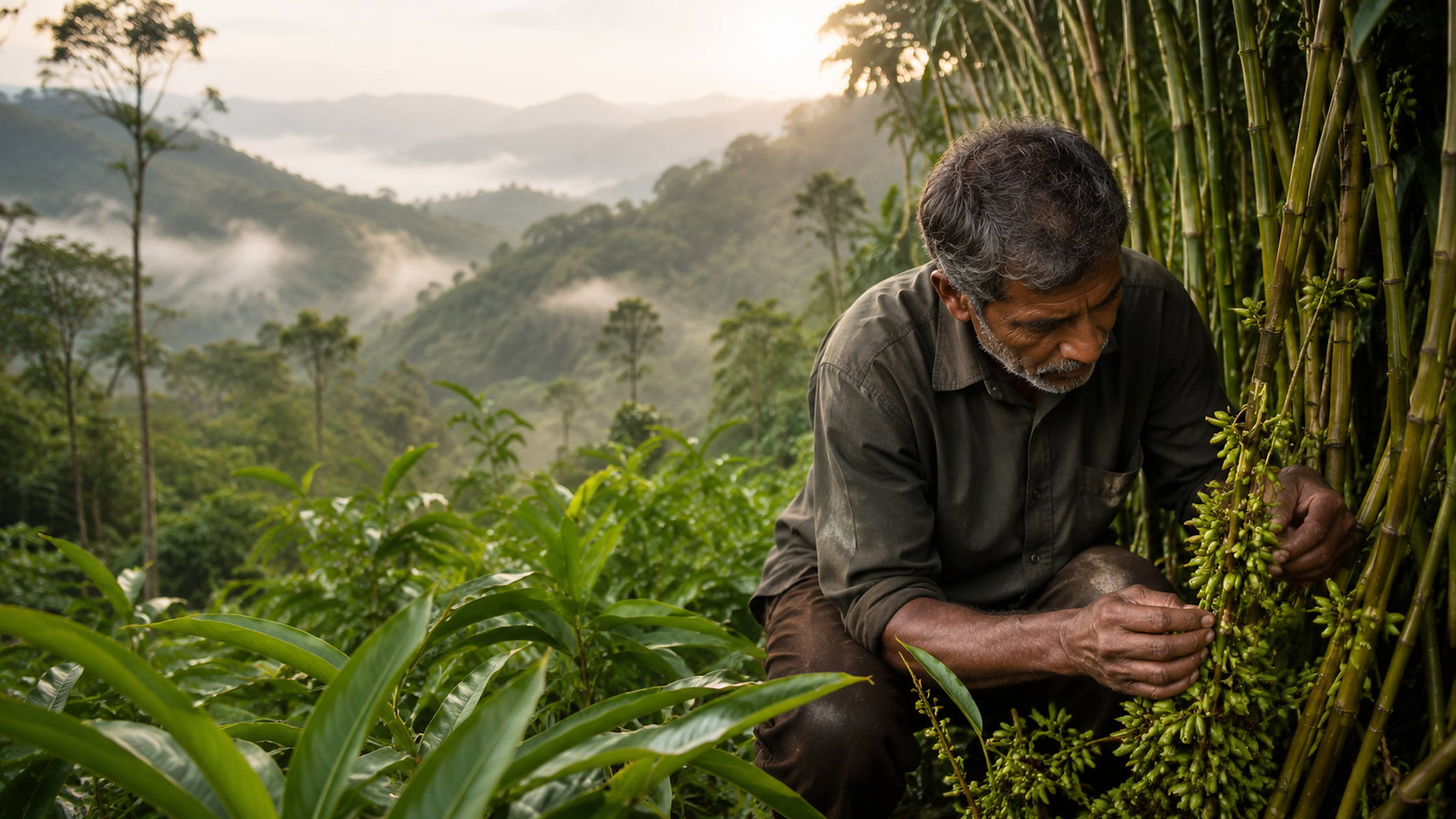
Harvesting too early may result in smaller, less developed pods. Waiting too long can affect appearance and handling quality. Experience helps workers recognise the correct stage without damaging the plant or the younger capsules growing nearby.
Pepper follows a different rhythm. The berries grow in long spikes and gradually change as they mature. Farmers harvest them according to the type of pepper being produced and the processing method that will follow.
Nutmeg fruit is collected after it matures and splits. The nutmeg seed and surrounding mace are separated carefully. Fresh mace is soft, bright and delicate, so it must be handled gently before drying.
Clove buds are also sensitive to timing. They are harvested before the flowers open, while the buds still contain the concentrated oils responsible for their intense aroma.
A farmer does not judge maturity from colour alone. Texture, weather, crop condition and the intended processing method also influence the decision to harvest.
Fresh spices slowly become the ingredients we recognise
Freshly harvested spices rarely look exactly like the products used in a kitchen. Pepper berries begin as smooth green fruits. After cleaning and drying, they become dark, wrinkled peppercorns.
Cardamom pods must lose moisture while retaining as much colour and aroma as possible. Mace changes from a vivid red covering into dry orange or reddish blades. Clove buds become dark brown, while cinnamon bark curls as it dries.
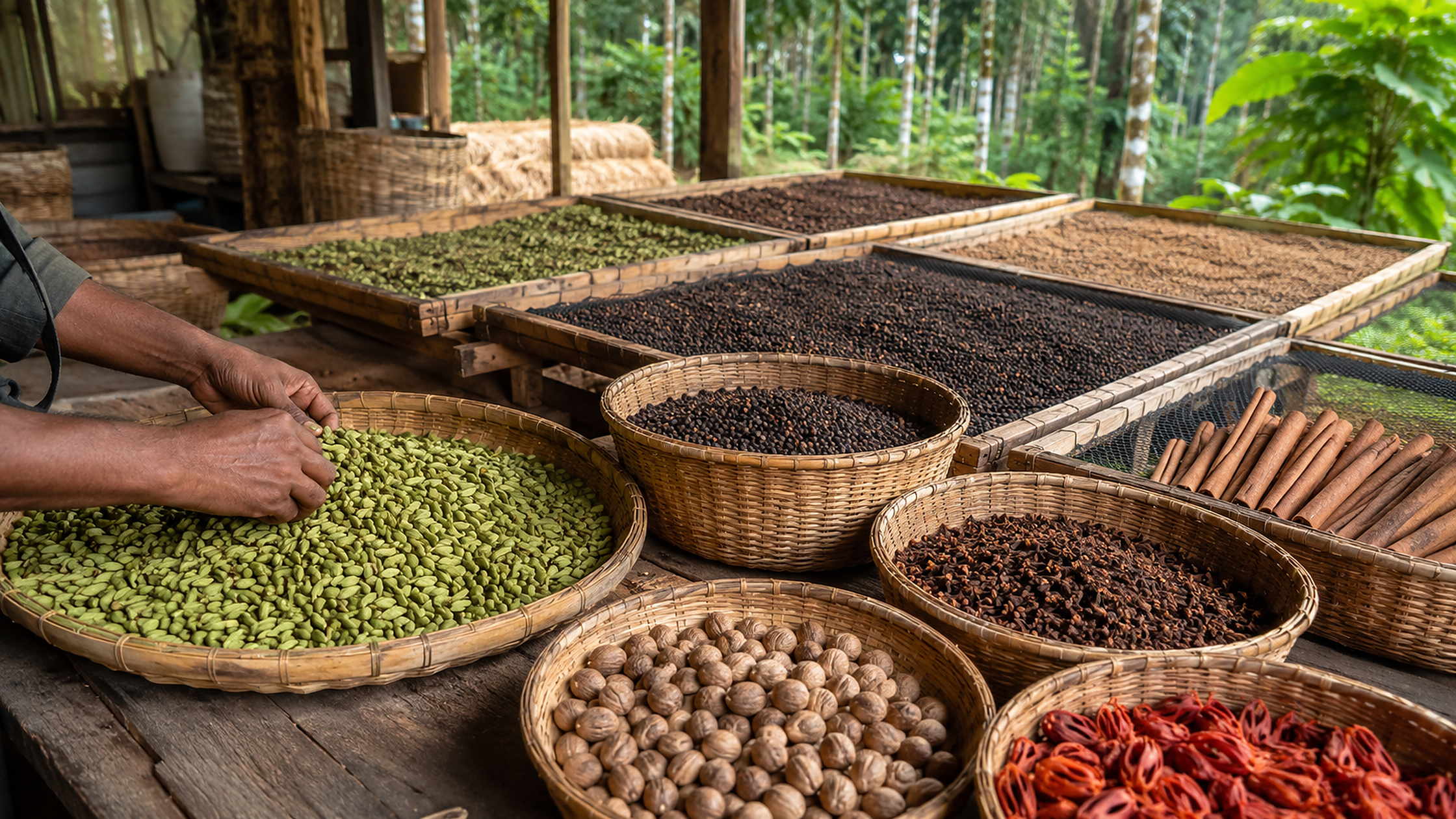
Drying is one of the most important stages because too much moisture can cause spoilage. Drying too aggressively, however, may reduce aroma, alter colour or make the spice brittle.
After drying, the spices are cleaned and sorted. Broken pieces, immature produce and unwanted material are removed. Depending on the product, spices may be graded by size, colour, fullness or overall appearance.
Machines may help remove dust or separate material by size, but experienced eyes remain valuable. A packet may look simple, yet it represents several stages of careful handling.
How different Idukki spices move from farm to cup
Each spice has its own growing pattern, processing method and kitchen role. This table offers a simple guide to some of the most familiar whole spices from the highlands.
| Spice | Where It Comes From | Character | Common Uses | Simple Way to Use It |
|---|---|---|---|---|
| Cardamom | Pods from shade-grown cardamom plants. | Floral, fresh and gently sweet. | Tea, payasam, biryani and desserts. | Lightly crush one or two pods before adding. |
| Black Pepper | Dried berries from climbing pepper vines. | Sharp, woody and warming. | Curries, soups, eggs, marinades and tea. | Crush just before cooking for a fresher aroma. |
| Cinnamon | Dried inner bark of cinnamon trees. | Sweet, woody and comforting. | Tea, curries, desserts and rice dishes. | Simmer a small piece and remove it before serving. |
| Clove | Dried unopened flower buds. | Strong, warm and slightly sweet. | Rice dishes, gravies, tea and spice blends. | Use sparingly because the flavour is concentrated. |
| Nutmeg | The seed from mature nutmeg fruit. | Rich, nutty and warming. | Desserts, milk drinks, sauces and baking. | Grate only a very small amount. |
| Mace | The dried outer covering of the nutmeg seed. | Delicate, aromatic and gently sweet. | Biryani, korma, desserts, milk and spice blends. | Lightly crush a small piece before cooking. |
Mace and nutmeg come from the same fruit, but they are not the same spice
Nutmeg is the seed at the centre of the fruit. Mace is the delicate, lacy covering wrapped around that seed. When the fruit opens, the bright red mace is one of the first things visible.
Once dried, mace develops a warm and slightly sweet aroma. It resembles nutmeg but generally feels lighter and more delicate. This allows it to add depth without making a dish feel heavy.
Mace works particularly well in biryani, korma, creamy gravies, milk-based desserts and certain spice blends. A small piece can also be infused in tea or warm milk.
Because its aroma is concentrated, very little is needed. Lightly crushing the blade before cooking helps release the flavour. It can be added whole while simmering and removed before serving, or ground into a fine powder for spice mixtures.
The most common mistake is using too much. Mace should sit quietly behind the main flavours rather than dominate them.
Mace works best as a supporting flavour. Begin with a small piece, allow it to infuse and increase the quantity only when necessary.
A good spice tea should still taste like tea
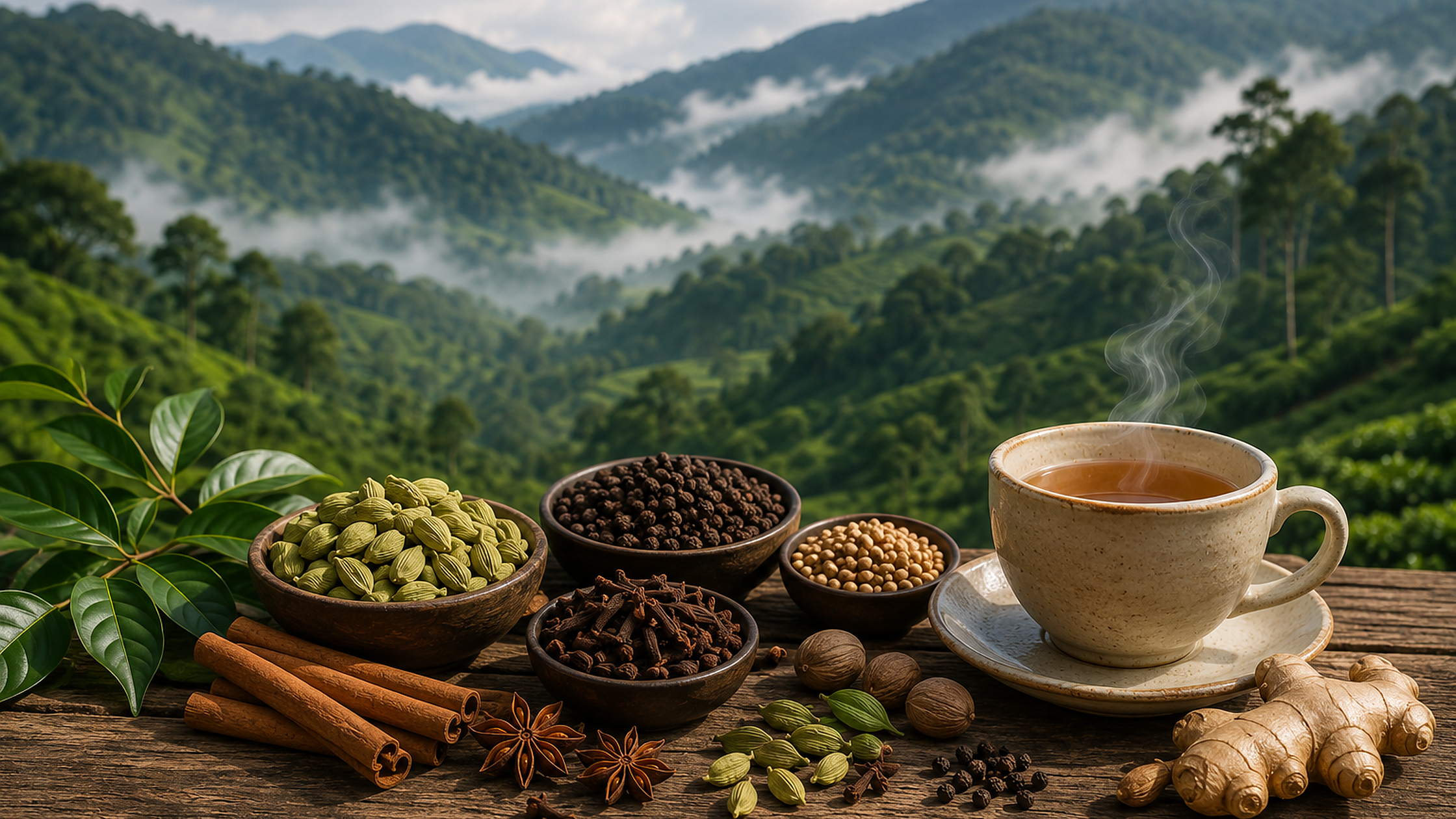
After travelling through the highlands, I began paying more attention to how whole spices behave in a cup. It is easy to assume that adding more spices will create better masala tea. Usually, the opposite happens.
Too many strong ingredients compete with one another and hide the flavour of the tea itself. A more balanced cup begins with one main spice.
For a fresh and floral tea, lightly crush two cardamom pods and simmer them in water before adding tea leaves. For a warmer cup, add a small piece of cinnamon or one cracked peppercorn.
Clove should be used carefully. One clove can be enough for an entire pot. Nutmeg should be grated in a tiny quantity, particularly when used with milk. Mace works best as a small broken piece that is allowed to infuse briefly.
Whole spices release flavour gradually. Starting with a small quantity gives you greater control and helps the tea remain balanced.
Choose spices according to the tea you want
There is no single correct masala tea recipe. Begin with the aroma and mood you want, then choose one main spice and a gentle supporting note.
Fresh
Cardamom creates a bright, floral and gently sweet cup.
Warm
Cinnamon with black pepper gives sweetness with gentle heat.
Earthy
Nutmeg gives the drink a smooth, rounded and comforting flavour.
Delicate
Mace adds subtle warmth without making the drink feel heavy.
Packing and storage protect the work already completed
Once a spice has been grown, harvested, dried and sorted, poor storage can still damage it. Whole spices are affected by moisture, heat, direct sunlight and prolonged exposure to air.
Packaging helps reduce these risks during transport and storage. At home, the same care should continue. Spices should be kept in a cool, dry place, preferably inside a sealed container or resealable packet.
They should not be stored directly above the stove, where heat and steam are common. Whole spices generally retain their character longer than pre-ground spices because their aromatic oils remain protected inside.
Grinding or crushing them shortly before cooking releases a fresher aroma. Keeping spices whole until they are needed can help preserve more of their original character.
The real story is found in small decisions
Idukki is beautiful, but the scenery alone does not explain the value of Idukki spices. The real story is found in small decisions: when a pod is ready, how long a berry should dry, which pieces should be removed and how the finished spice should be protected.
These details are easy to overlook when opening a packet in the kitchen. Yet they remain present in every cardamom pod you crush, every peppercorn you grind and every piece of mace you add to a pot of biryani.
Travelling through the highlands changed the way I cook with spices. I use smaller quantities now and give them more time to release their aroma. I also try not to add every spice simply because it is available.
A good spice does not need to shout. It works quietly, bringing warmth, balance and familiarity to the food.
The next time you prepare tea, crush a cardamom pod between your fingers and notice the fragrance before adding it to the pot. That aroma has travelled from a shaded hillside, through careful harvesting, drying, sorting and packing, before finally reaching your cup.
FAQs
Why are Idukki spices known for their aroma?
Idukki’s rainfall, elevation, shaded farms, fertile soil and humid highland climate create favourable growing conditions for spices. Aroma also depends on harvest timing, drying, sorting and storage, not only on where the spice is grown.
Which spices are commonly grown in Idukki?
Idukki is closely associated with cardamom and black pepper. Farms across the region also grow spices such as cloves, nutmeg, mace and cinnamon, depending on local elevation, soil and growing conditions.
How can I identify fresh whole spices?
Fresh whole spices should have a clean, natural aroma when crushed. They should feel properly dried, show no signs of moisture or mould, and remain free from excessive dust, broken material and stale smells.
Are whole spices better than ground spices?
Whole spices generally retain their aroma for longer because their natural oils remain protected inside. Crushing or grinding them shortly before cooking usually produces a fresher and more noticeable flavour.
What is the difference between mace and nutmeg?
Nutmeg is the seed found at the centre of the nutmeg fruit. Mace is the delicate outer covering wrapped around that seed. Nutmeg has a deeper, richer flavour, while mace is generally lighter, warmer and more delicate.
How should I store cardamom, pepper and other whole spices?
Keep whole spices in sealed containers or resealable packets in a cool, dry place. Avoid direct sunlight, heat, moisture and storage above the stove, where steam can reduce quality and aroma.
How much whole spice should I add to tea?
Begin with a small quantity. Two lightly crushed cardamom pods, one clove, a small cinnamon piece or one cracked peppercorn may be enough for a pot. Whole spices release flavour gradually, so more can be added later when needed.
Bring a little of the Idukki highlands home
Choose Idukki spices for their natural aroma, use them in balanced quantities and allow them to add warmth and character without overpowering your food.
Explore Idukki Spices