

Whole Spices for Biryani: What Each Spice Adds to the Flavour
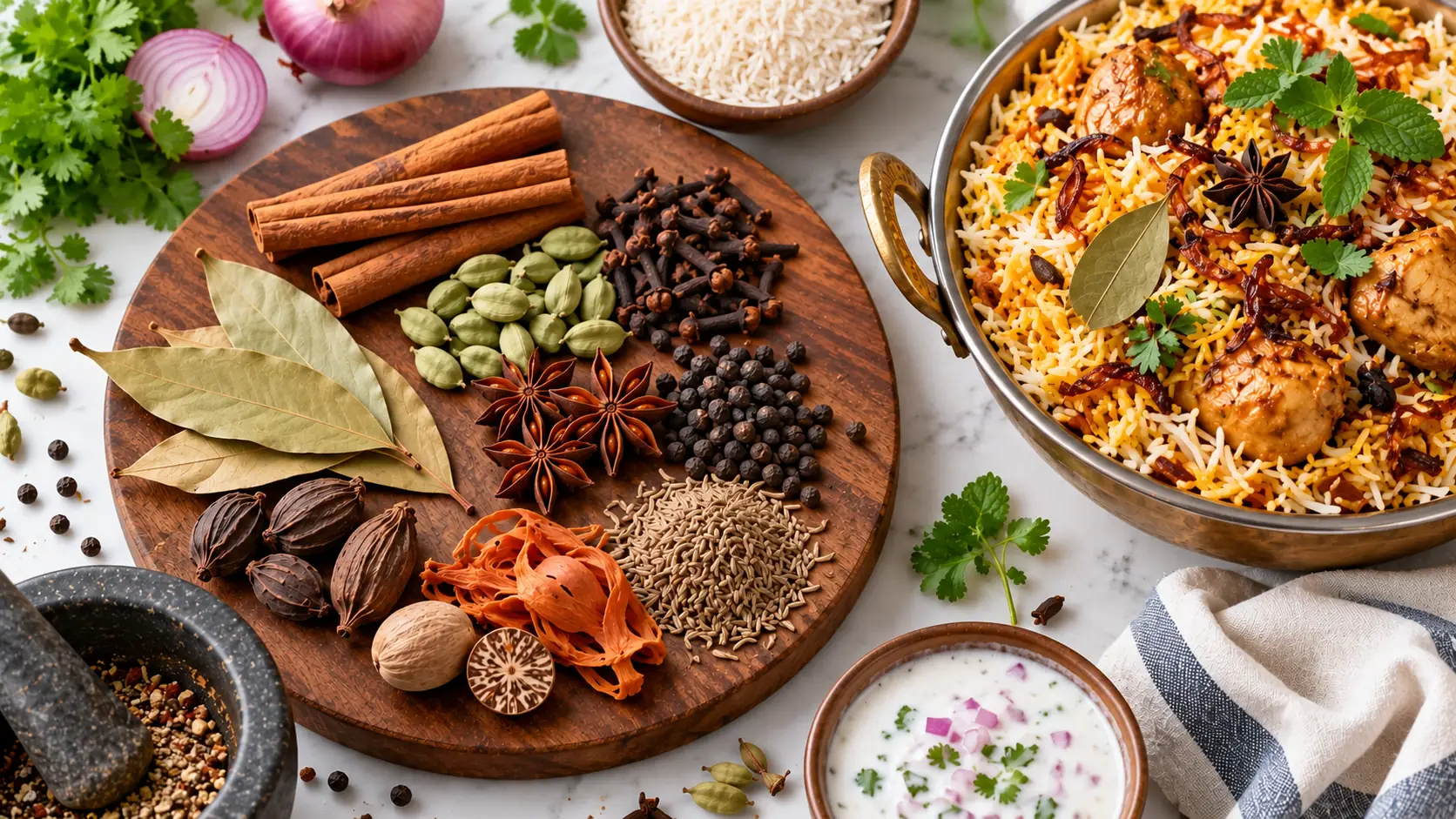
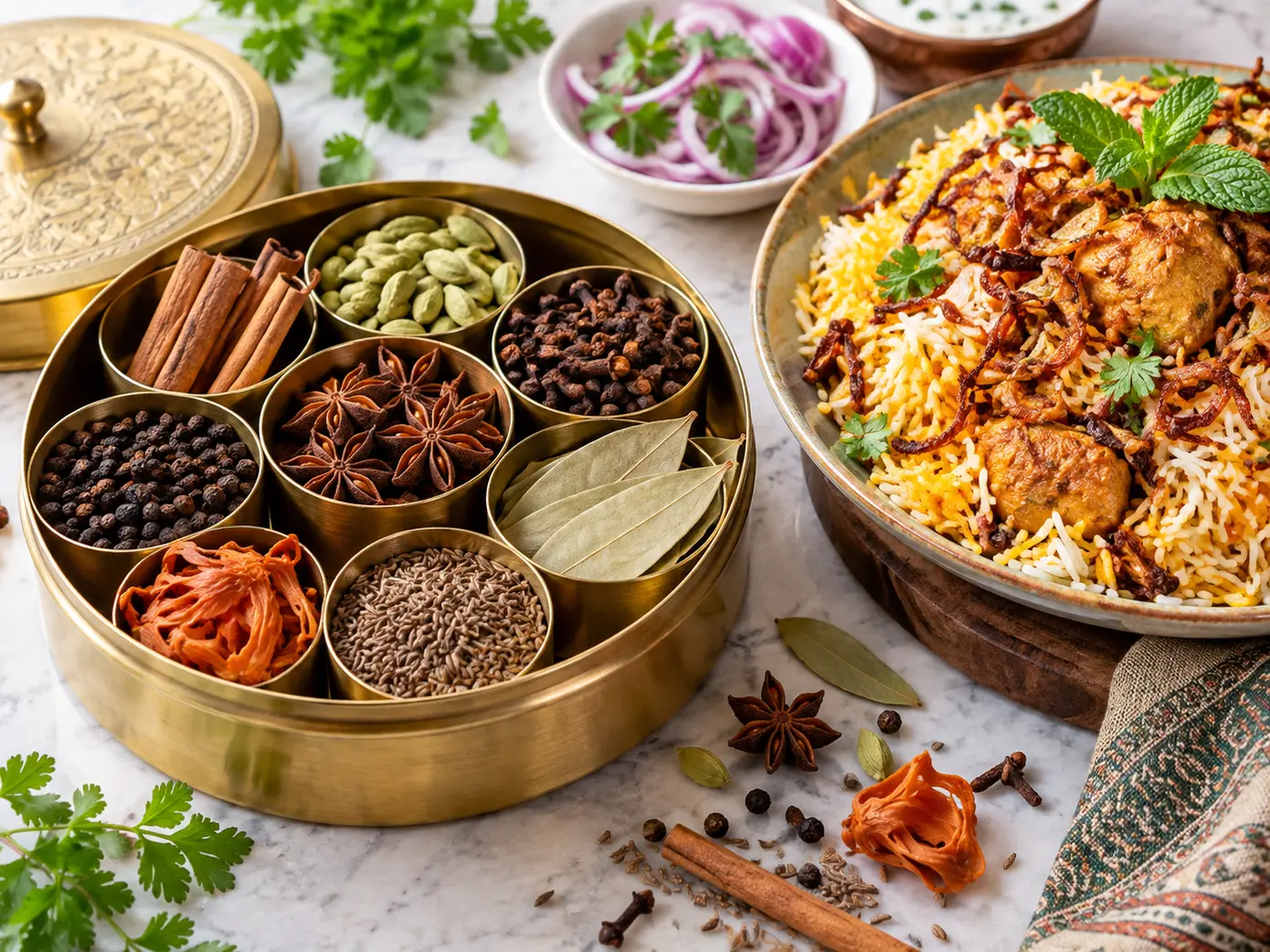
Biryani spices create much of the distinctive aroma, warmth and layered flavour that make a well-prepared biryani memorable. Rice, meat or vegetables form the body of the dish, while carefully selected whole spices shape its aromatic character. Cinnamon, cardamom, cloves, bay leaf, star anise, mace, black pepper and shahi jeera can each contribute a different layer, ranging from gentle sweetness and floral fragrance to peppery warmth and subtle earthy depth.
The best biryani does not depend on adding every available spice in large quantities. Instead, the flavour develops when different ingredients are balanced carefully. Cinnamon provides warmth, green cardamom adds floral freshness, cloves create intensity and bay leaf builds a quieter herbal background. Meanwhile, star anise, mace, black pepper and shahi jeera add further complexity without hiding the natural aroma of the rice, meat or vegetables.
Understanding the main whole spices for biryani also makes it easier to adjust recipes confidently. Once you know what each spice contributes, you can change the combination according to chicken, mutton, vegetables or a particular regional biryani style. This approach gives you greater control over fragrance and flavour than simply adding a large quantity of one prepared spice mixture.
Biryani Spices: Which Whole Spices Are Commonly Used?
Common whole spices used in biryani include cinnamon, green cardamom, cloves, bay leaf, star anise, black peppercorns, mace and shahi jeera. Depending on the recipe and regional style, cooks may also include black cardamom, nutmeg or another aromatic ingredient. Not every biryani needs every spice, so the final combination should reflect the rice, meat, vegetables, masala and cooking method used in the dish.
Each spice performs a different role. Cinnamon gives warm woody sweetness, while green cardamom provides a brighter floral fragrance. Cloves add pungent intensity, mace contributes a warm aromatic lift and black pepper introduces gentle heat. At the same time, bay leaf and shahi jeera create quieter herbal and earthy notes that help connect the stronger aromas with the rice and masala.
Why Biryani Spices Need Balance
Biryani already contains several flavour layers from rice, fried or caramelised onions, herbs, meat or vegetables and the masala. Therefore, whole spices should support those ingredients rather than compete with them. A small amount of a powerful spice can have a major effect, particularly when the biryani cooks slowly and the aromatic oils have enough time to spread through the rice and gravy.
Quick answer: Good biryani depends on balance. Choose complementary whole spices and use powerful ingredients such as cloves, star anise, black cardamom and cinnamon carefully so that the rice, masala and main ingredient remain clearly noticeable.
Biryani Spices List: What Each Whole Spice Adds
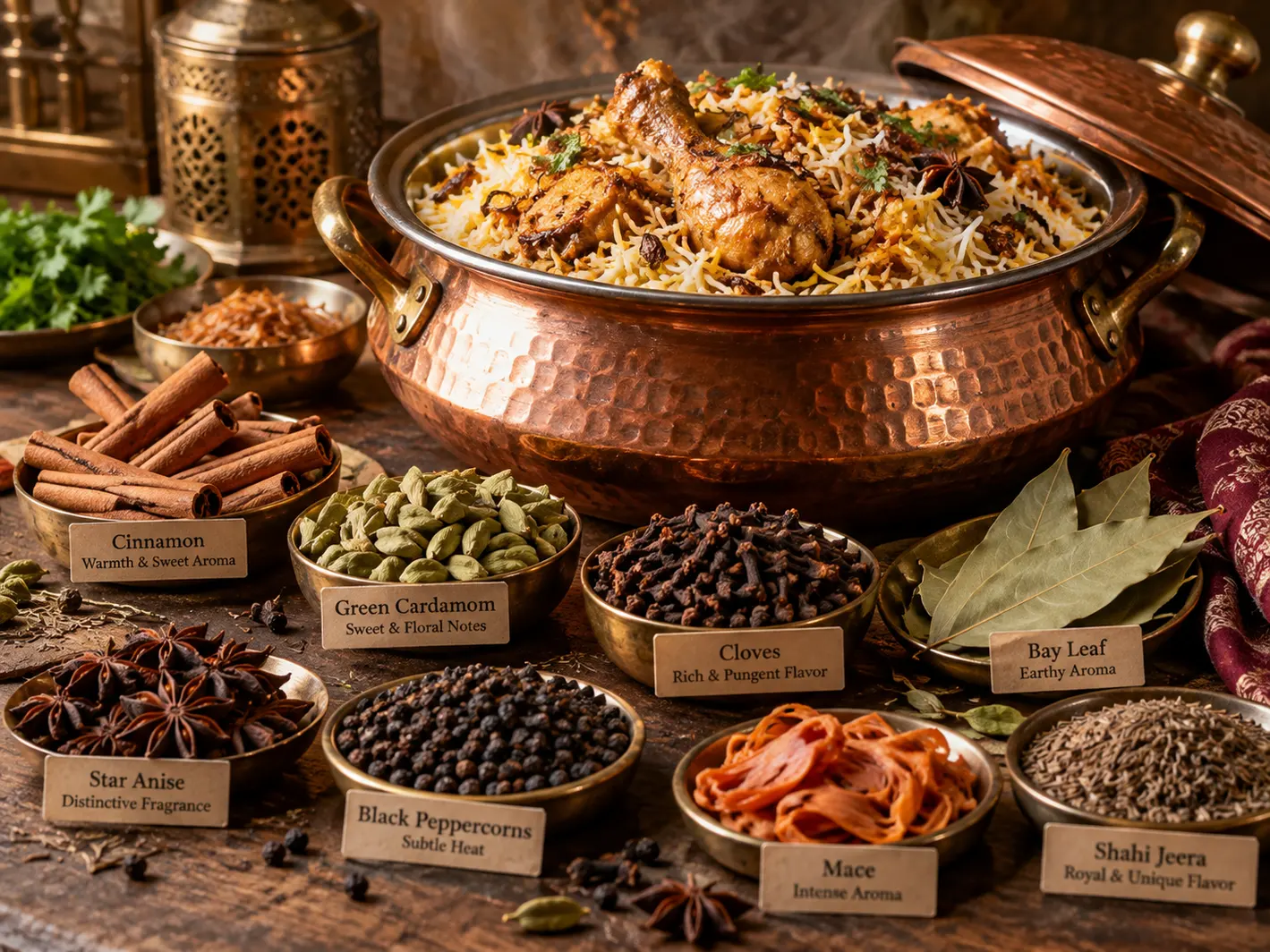
A useful biryani spice list should explain more than the names of the ingredients. Each whole spice affects the dish differently, which is why several spices can work together without producing the same flavour. Cinnamon adds warmth, cardamom provides floral fragrance, cloves bring intensity and black pepper adds gentle heat. Bay leaf, mace, star anise and shahi jeera then create additional background layers around those stronger aromas.
Understanding the role of each ingredient makes it easier to adjust a biryani without reducing or increasing every spice at once. For example, if the aroma becomes too sweet, the recipe may need less cinnamon or star anise. If the masala feels heavy, a balanced amount of green cardamom or mace can provide a fresher aromatic lift without making the dish hotter.
| Whole Spice | Main Aroma or Flavour | Role in Biryani |
|---|---|---|
| Cinnamon | Warm, woody and gently sweet | Builds warmth in the aromatic base. |
| Green Cardamom | Sweet, floral and fresh | Adds fragrance and lifts deeper notes. |
| Cloves | Warm, sharp and pungent | Adds intensity in small quantities. |
| Bay Leaf | Herbal and gently earthy | Supports the savoury background. |
| Star Anise | Sweet and liquorice-like | Adds a distinctive aromatic note. |
| Mace | Warm, floral and slightly peppery | Adds fragrance and aromatic lift. |
| Black Pepper | Warm, sharp and peppery | Adds gentle heat and depth. |
| Shahi Jeera | Earthy, warm and delicate | Adds subtle savoury depth. |
How Biryani Spices Build Layers of Flavour
A balanced spice combination works in layers rather than creating one dominant flavour. Some ingredients provide warmth, while others contribute floral fragrance, peppery intensity or a quieter earthy background. When these different characteristics support each other, the final biryani tastes complex without feeling overloaded with spice.
The rice also absorbs these aromas gradually during the cooking process. Therefore, even ingredients used in small quantities can influence the finished dish. Understanding which flavour layer each spice provides makes it easier to build a controlled combination instead of depending only on the number of spices added.
Biryani Spice for Warmth: Cinnamon
Cinnamon provides woody warmth and gentle sweetness. It creates a comforting aromatic base that supports cardamom, cloves and pepper without adding chilli heat.
Aromatic Spices: Cardamom & Mace
Cardamom and mace contribute floral fragrance. Their brighter aroma lifts richer masala and prevents the overall spice profile from becoming excessively heavy.
Strong Spices: Cloves & Pepper
Cloves and black pepper introduce sharper warmth. They also help balance sweeter aromas from cinnamon, cardamom and star anise when used carefully.
Whole Spices: Bay Leaf & Shahi Jeera
Bay leaf and shahi jeera add subtle herbal and earthy notes. These quieter flavours support stronger spices and create a rounded savoury background.
Kitchen principle: Think in flavour layers rather than the number of spices. Warm, floral, earthy and peppery notes should support one another while the rice and main ingredients remain noticeable.
Biryani Spices: What Cinnamon Adds
Cinnamon is one of the most familiar spices for biryani because its warm, woody aroma creates depth without adding chilli heat. It also provides a gentle natural sweetness that works well with fragrant rice, browned onions, green cardamom, cloves and black pepper. When cinnamon is warmed briefly in oil or ghee, its fragrance enters the cooking fat and becomes part of the aromatic base of the biryani.
Its flavour continues to develop while the biryani cooks, so even a modest piece can influence the entire pot. This makes cinnamon useful but also easy to overuse. If the quantity becomes too high, the rice may develop an overly woody or sweet character that hides more delicate ingredients such as green cardamom, mace or saffron.
How Much Cinnamon Should You Use?
For a family-sized biryani, a small piece often provides enough aroma. The ideal quantity still depends on the style of biryani and the strength of the cinnamon itself. Start modestly, especially when the recipe also contains powerful ingredients such as cloves, star anise or black cardamom.
When to Add Cinnamon
Cinnamon commonly goes into the oil or ghee near the beginning with other whole spices. Heat it only until the aroma becomes noticeable and then continue with the remaining ingredients. Excessive frying can create a stronger woody taste and may reduce the balance of the overall spice mixture.
Use carefully: Too much cinnamon can create an overly woody taste. A smaller quantity gives the biryani warmth while leaving enough space for cardamom, cloves and the natural fragrance of the rice.
Whole Spices for Biryani: Green Cardamom
Green cardamom provides one of the brightest and freshest aromas among whole biryani spices. Its sweet, floral fragrance can lift deeper notes from cinnamon, cloves, black pepper and browned onions. This makes cardamom especially useful when a biryani needs fragrance and freshness rather than additional chilli heat or a heavy smoky character.
Cooks commonly add the pods whole or lightly crushed. As the dish cooks, the aromatic seeds inside gradually release fragrance into the masala and rice. Lightly pressing the pod exposes more surface area and can create a stronger aroma, while keeping the pod intact produces a slower and more subtle infusion.
What Does Cardamom Add to Biryani?
Cardamom helps balance heavier flavours and can make a rich biryani feel more aromatic. It works especially well with saffron, cinnamon, cloves and bay leaf. Because the fragrance is distinctive, only a few pods are generally needed in a household-sized preparation.
Green Cardamom vs Black Cardamom
Green cardamom creates floral freshness, while black cardamom gives the dish a deeper smoky quality. Green cardamom can appear in chicken, vegetable and meat biryanis. Black cardamom works particularly well in richer preparations where the masala has enough strength to balance its heavier aroma.
Spices for Biryani: How Cloves Add Depth
Cloves are small, but their aroma is powerful. They contribute warm, pungent and slightly sweet notes that deepen the overall biryani spice profile. Their sharper character also helps balance sweeter ingredients such as cinnamon, green cardamom and star anise, which can otherwise make the aromatic profile feel too soft.
A few cloves can influence an entire pot, particularly when the biryani cooks slowly. Therefore, moderation matters. Too many cloves may make the dish taste excessively sharp and can hide the natural fragrance of the rice, meat or vegetables.
How to Use Cloves in Biryani
Add cloves with the other whole spices during the early stages of cooking. Allow them to become fragrant in oil or ghee, but avoid leaving them over very high heat for too long. Their aromatic oils release quickly once the cloves meet hot fat.
Best Spices to Pair With Cloves
Cloves pair naturally with green cardamom, cinnamon, bay leaf and black pepper. Together, these ingredients create warmth and fragrance without depending entirely on chilli for intensity.
Biryani Spices: How Star Anise Changes the Aroma
Star anise has a powerful sweet fragrance with a distinctive liquorice-like quality. Even a small piece can noticeably change a full pot of biryani. For this reason, it should remain a supporting spice rather than becoming the central flavour of the dish.
Its fragrance becomes stronger as the biryani cooks. Adding too much at the beginning may therefore make the finished dish taste overly sweet or perfumed. Start with a small amount and allow cinnamon, cardamom, cloves, rice and the masala to remain clearly noticeable.
When Should You Use Star Anise?
Star anise works particularly well in biryanis with deep masala flavours, meat or stronger whole-spice combinations. It may also appear in selected chicken and vegetable biryanis, although lighter dishes generally need less because they provide fewer strong flavours to balance it.
How to Balance Star Anise
Pair star anise with warmer and more savoury spices instead of allowing it to stand alone. Cinnamon, cloves, black pepper and bay leaf can help keep its sweet aroma balanced within the overall flavour of the biryani.
Balance matters: Star anise adds complexity, but too much can overpower cardamom, mace and the natural fragrance of the rice. Use it as one small layer within the larger spice combination.
Whole Biryani Spices: What Bay Leaf Adds
Bay leaf has a quieter flavour than cinnamon, cloves, cardamom or star anise. However, that subtle character makes it useful in biryani because it provides a gentle herbal and earthy background without competing with stronger ingredients. Its aroma slowly blends into the rice and masala as the dish cooks.
Bay leaf can also help connect different spice flavours. While cinnamon or cloves may stand out immediately, bay leaf contributes a more restrained savoury note underneath them. This background effect helps the entire spice combination feel more complete and rounded.
How to Use Bay Leaf in Biryani
Most cooks add bay leaves whole during the early stages of cooking. The leaves can stay with the masala and rice while the biryani cooks, giving their flavour enough time to infuse gradually. Remove the larger leaves before serving when practical.
Why Bay Leaf Works as a Background Spice
Bay leaf does not need to dominate the dish to be useful. Its role is usually to create subtle depth and connect stronger spices. This makes it valuable even when its individual flavour is not immediately obvious in every bite.
Aromatic Spices for Biryani: Mace
Mace works particularly well when fragrance is an important part of the biryani. It has warm, floral and mildly peppery notes that can lift rich rice dishes without increasing chilli heat. Because its aroma is noticeable and refined, cooks normally use only a small piece.
Mace combines naturally with green cardamom, cinnamon and cloves. However, excessive mace can make the biryani feel heavily perfumed and may compete with cardamom or saffron. A modest amount allows it to remain a supporting aromatic layer instead of becoming the main flavour.
What Does Mace Add to Biryani?
Mace brings warmth and floral complexity. It can make a rich biryani feel more aromatic without creating the smokiness of black cardamom or the distinct sweetness of star anise. This makes it particularly useful when you want fragrance rather than additional heat.
How Much Mace Should You Use?
Begin with a small piece instead of adding a large quantity. The aroma develops while the rice and masala cook, so you may need less than expected. Stronger mace requires even greater restraint.
Biryani Spices: Black Pepper for Gentle Heat
Whole black peppercorns provide warmth and mild peppery heat. This sensation differs from the stronger and more immediate heat created by chilli powder or fresh chillies. Pepper can therefore add depth without making the biryani excessively spicy.
Black pepper also balances sweeter aromas from cinnamon, green cardamom and star anise. Because of this, it helps the overall spice combination feel more rounded. A small number of whole peppercorns can release warmth gradually as the biryani cooks.
Why Black Pepper Works Well in Biryani
Pepper has enough strength to remain noticeable beside meat, onions and masala, but it does not automatically dominate the dish. It works especially well when sweeter or more floral spices need a sharper counterpoint.
Whole Peppercorns vs Ground Pepper
Whole peppercorns release their flavour gradually during cooking, while ground pepper spreads more quickly and produces a stronger immediate peppery taste. For a traditional whole-spice layer, whole peppercorns are usually the better fit.
Whole Spices Used in Biryani: Shahi Jeera
Shahi jeera provides a delicate earthy fragrance that works especially well with aromatic rice. Compared with cloves, cinnamon or star anise, its flavour remains quieter. This allows it to add savoury depth without introducing another dominant aromatic note.
Cooks can temper shahi jeera with other whole spices before adding onions, meat, vegetables or rice. The seeds develop a warm and slightly nutty aroma in hot oil or ghee and become part of the base of the biryani masala.
How Shahi Jeera Supports Other Biryani Spices
Shahi jeera works as a connecting flavour. It provides depth behind the stronger aromatic spices and pairs naturally with rice, onions and meat. Its subtle character helps the dish feel layered without making the spice profile crowded.
Shahi Jeera and Regular Cumin
Both spices have related earthy characteristics, but shahi jeera is commonly used for its more delicate aromatic quality in fragrant rice dishes. Follow the individual biryani recipe when deciding which variety is more appropriate.
Biryani Spices for Rich Dishes: Black Cardamom
Some biryani recipes include black cardamom because it adds a deeper and smokier aromatic note. Compared with green cardamom, the pods are larger and the flavour is considerably stronger. This makes black cardamom particularly suitable for rich meat biryanis where the masala has enough depth to balance it.
One pod can influence a large pot, especially during slow cooking. Therefore, use black cardamom carefully. Too much can give the rice and masala an overly smoky character that covers cinnamon, green cardamom and the natural aroma of the main ingredients.
When to Use Black Cardamom
Black cardamom works particularly well in mutton and other rich meat biryanis. It can also appear in selected chicken preparations, but lighter dishes generally need less because their flavour is easier to overpower.
Green vs Black Cardamom in Biryani
Green cardamom creates floral freshness, while black cardamom provides smoky depth. Some biryanis use both varieties because they perform different roles. When you combine them, keep the amount of black cardamom lower because its flavour is much stronger.
Green vs black cardamom: Green cardamom adds sweet floral fragrance, while black cardamom adds a deeper smoky character. They can work together when each variety remains balanced.
How to Use Biryani Spices Correctly
The cooking method influences how strongly each whole spice appears in the final biryani. A clear sequence helps release aroma while keeping the overall spice profile balanced. Start by choosing complementary ingredients, temper them carefully and then allow their flavours to continue infusing through the masala and rice.
Choose Biryani Spices Carefully
Select spices that contribute different flavour layers. Avoid using every available spice because too many strong aromas can make the biryani feel confused instead of complex.
Temper Whole Spices Gently
Warm the whole spices in oil or ghee until they become fragrant. Avoid burning them because scorched cinnamon, cloves or pepper can create bitter flavours.
Build the Biryani Masala
Add onions, ginger, garlic, meat or vegetables after the spices release their aroma. The flavoured fat then carries the spice fragrance into the developing masala.
Let the Spices Infuse
Allow the whole spices to keep flavouring the masala and rice as the dish cooks. Slow infusion produces layered fragrance instead of one strong burst of spice.
Biryani Spices vs Ground Biryani Masala
Whole biryani spices and ground biryani masala perform different jobs. Whole ingredients release aroma gradually while they warm in oil, simmer in the masala and remain with the rice during cooking. Ground masala spreads much more quickly because the spices have already been powdered and therefore expose more surface area.
Many biryani recipes use both forms because they complement one another. Whole spices create fragrant layers, while powdered biryani masala distributes spice flavour more evenly through the masala and rice. When the quantities remain controlled, this combination can provide both distinct fragrance and deeper overall flavour.
When to Use Whole Biryani Spices
Use whole spices when you want gradual aroma and recognisable fragrant notes. They work especially well during tempering and longer cooking because their flavour develops slowly instead of spreading immediately through the entire dish.
When Ground Biryani Masala Helps
Ground masala works well when a recipe needs evenly distributed spice flavour throughout the gravy or rice. It should support the whole spices rather than duplicate them in excessive quantities.
| Type | How It Works | Best Role |
|---|---|---|
| Whole Spices | Release aromatic oils gradually as the dish cooks. | Building fragrance and layered aroma. |
| Ground Biryani Masala | Disperses quickly through the masala and rice. | Providing evenly distributed spice flavour. |
Learn More About Indian Whole Spices
Reliable ingredient information can help when identifying and understanding Indian whole spices. The Spices Board India provides broader information about Indian spices, their production and India's spice sector. This can be useful when you want background information beyond an individual recipe or product page.
Cooking tip: Whole spices can vary in aroma and intensity. Begin with moderate quantities and adjust according to the strength of the spice, the amount of rice and the richness of the biryani.
Common Mistakes When Using Biryani Spices
Most biryani spice problems come from imbalance rather than one incorrect ingredient. Powerful whole spices can become overwhelming when too many varieties are used together or when the spices burn during tempering. Avoiding a few common mistakes helps keep the aroma layered, clear and controlled.
Using Too Many Biryani Spices
More ingredients do not automatically produce better flavour. Too many strong aromas can make the biryani feel crowded and prevent the rice, meat or vegetables from remaining noticeable.
Burning Whole Spices
Heat the spices only until they become fragrant. Excessive heat can scorch cinnamon, cloves, pepper or seeds and introduce harsh or bitter flavours into the masala.
Overusing Strong Spices
Cloves, star anise, cinnamon and black cardamom can dominate quickly. Start with moderate quantities and let the cooking process develop their aromas gradually.
How to Choose Whole Biryani Spices
Whole spices are valued mainly for aroma, so freshness, dryness and storage condition matter when you select them. A spice may still look acceptable but have very little fragrance after long or poor storage. Therefore, inspect both physical condition and aroma whenever possible before using the ingredient in biryani.
Long exposure to heat, moisture, sunlight or air can gradually reduce aromatic strength. Suitable packaging and careful storage help protect the natural fragrance until you are ready to cook. Buying practical quantities can also prevent opened packs from sitting unused for long periods.
What to Check Before Buying Biryani Spices
Check Spice Fragrance
Whole spices should release a clear characteristic aroma when opened, rubbed or gently crushed. Cinnamon should smell woody and warm, while green cardamom should provide a recognisable floral fragrance.
Check the Whole Spices
Choose spices that appear properly dried and reasonably intact. Natural variation is normal, but excessive dust, visible moisture or unusual material should receive closer attention.
Protect the Spice Aroma
Suitable packaging helps reduce exposure to air, moisture and outside odours. After opening the pack, reseal it firmly or move the spices to a clean and airtight container.
How to Store Biryani Spices
Store whole biryani spices in tightly closed containers in a cool and dry place. Keep them away from direct sunlight, excessive heat and cooking steam because repeated exposure can gradually weaken their aroma. A cupboard away from the stove generally provides better storage conditions than an open shelf close to the cooking area.
Keeping spices whole until needed also makes portion control easier and protects their aromatic interior. In addition, you can inspect the condition of cardamom pods, cinnamon bark, cloves and peppercorns more easily before using them than you can with a completely ground mixture.
Protect Biryani Spices From Moisture
Always use dry spoons or clean dry hands when handling the spices. Moisture entering a container can affect the quality of otherwise dry ingredients. Close the lid or pouch soon after measuring the quantity required for the recipe.
Store Strong Spices Carefully
Highly aromatic ingredients such as cloves, star anise and black cardamom can transfer fragrance to nearby foods when containers remain open. Keeping each spice properly sealed helps preserve its individual aroma and prevents unwanted odour transfer.
Biryani Spices: Final Flavour Guide
The easiest way to understand biryani spices is to recognise the contribution of each ingredient instead of treating all whole spices as one generic mixture. Cinnamon provides warmth and mild sweetness, while green cardamom adds floral fragrance. Cloves create intensity, and bay leaf contributes a quieter herbal background.
Star anise provides a sweet aromatic note, while mace adds floral and mildly peppery lift. Black pepper contributes gentle heat and helps balance sweeter spices. Shahi jeera gives subtle savoury depth, while black cardamom can introduce smokiness to richer meat biryanis.
The ideal combination depends on the biryani you are preparing. Chicken, mutton and vegetable biryanis do not always need identical spice quantities. The type of rice, masala, cooking time and other aromatic ingredients also affect how much of each whole spice the dish can comfortably support.
How to Balance Biryani Spices
Start with a small group of complementary spices and allow each one to perform a clear role. Use stronger ingredients sparingly and let gentler spices build the background aroma. This approach gives you more control than simply adding large quantities of every whole spice available.
Final takeaway: Great biryani comes from balance. Use whole spices to create complementary layers of warmth, fragrance, earthiness and gentle heat instead of allowing one strong ingredient to dominate the rice and masala.
Explore Whole Spices from Idukki Spices
Discover whole spices for biryani, pulao, curries and everyday Indian cooking. Explore cardamom, cinnamon, cloves, black pepper, bay leaf, star anise, mace and other aromatic ingredients for kitchens that value freshness, fragrance and balanced flavour.
Frequently Asked Questions About Biryani Spices
These answers cover common questions about whole biryani spices, their flavour roles, how they differ from ground masala and how to store them correctly. The exact spice combination can vary according to the recipe, regional style and main ingredients.
What are the main biryani spices?
Common whole biryani spices include cinnamon, green cardamom, cloves, bay leaf, star anise, black pepper, mace and shahi jeera. Some recipes also include black cardamom or nutmeg. The exact combination depends on the regional style, main ingredient and desired flavour profile.
Why are whole spices used in biryani?
Whole spices release aroma gradually as the biryani cooks. This creates different layers of fragrance throughout the rice and masala. Individual ingredients can contribute warmth, floral aroma, peppery heat or earthy depth without needing to be ground into one mixture.
What does cinnamon add to biryani?
Cinnamon adds warm, woody and gently sweet aromatic notes. It helps create the warming base of the spice mixture and works particularly well with cardamom, cloves, black pepper and bay leaf. Use it moderately so the woody character does not dominate the dish.
What does cardamom add to biryani?
Green cardamom contributes sweet floral fragrance and helps lift deeper flavours from cinnamon, cloves and browned onions. Black cardamom performs a different role because it adds smoky and earthy notes that suit richer meat biryanis.
Is star anise one of the spices used in biryani?
Yes. Star anise can add a distinctive sweet and liquorice-like aroma. Because the spice is powerful, cooks generally use only a small amount so that it does not overpower cardamom, cinnamon, rice and the main ingredients.
Is mace used in biryani?
Yes. Mace can add warm, floral and slightly peppery fragrance to biryani and other aromatic rice preparations. A small quantity is usually enough because too much mace can compete with cardamom, saffron and other delicate aromas.
What does shahi jeera add to biryani?
Shahi jeera contributes a delicate earthy and savoury aroma. Its flavour remains subtler than cloves, cinnamon or star anise, so it can support stronger whole spices without becoming the dominant note in the biryani.
Can I use whole spices and biryani masala together?
Yes. Whole spices help build gradual aroma and distinct fragrant layers, while ground biryani masala distributes spice flavour more evenly through the rice and masala. Many recipes use both approaches to create fragrance as well as deeper overall flavour.
Should whole spices be removed before serving biryani?
You can remove large ingredients such as cinnamon sticks, bay leaves, star anise and black cardamom before serving when practical. Smaller ingredients such as cloves, peppercorns and shahi jeera may remain in the rice depending on the cooking style.
How should biryani spices be stored?
Keep whole spices in tightly closed containers in a cool and dry place away from direct sunlight, heat, moisture and cooking steam. Keeping them sealed and whole until needed helps protect their aroma and makes their physical condition easier to inspect before cooking.