

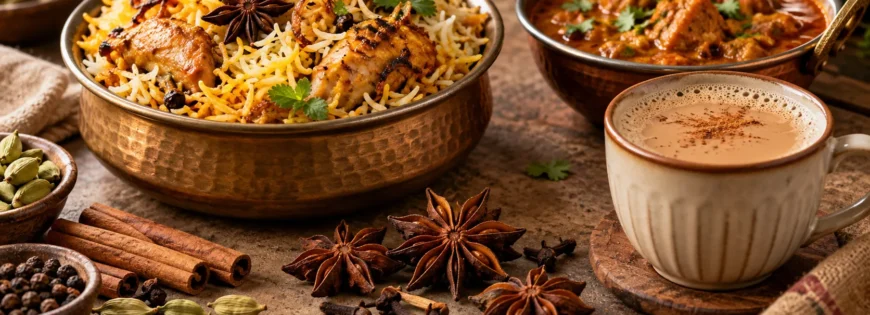
Star Anise in Indian Cooking: How to Use It in Biryani, Curries and Chai
How to use star anise in Indian cooking depends mainly on the dish you are preparing, the cooking time and how strong you want the final aroma to be. This distinctive whole spice adds warm, sweet and gently liquorice-like notes to biryani, curries, pulao and masala chai. Because its fragrance becomes stronger during cooking, a small quantity can influence an entire pot and should therefore be used with more care than milder whole spices.
In India, star anise is also known as chakra phool or chakriphool in several regions. Its recognisable star-shaped pod contains a strong aromatic character that works particularly well with cinnamon, cardamom, cloves, black pepper, ginger and bay leaf. These complementary spices help create a rounded flavour instead of allowing the sweet, liquorice-like quality of star anise to become the only aroma you notice.
The most important rule is balance. Star anise should usually support the rice, meat, vegetables, tea or gravy rather than dominate them. Starting with a smaller piece allows the aroma to develop gradually, and you can then decide whether the dish actually needs more. This approach gives you much better control than beginning with a large quantity and trying to correct an overpowering flavour later.
How to Use Star Anise in Indian Cooking
Add a small piece of whole star anise early enough for its fragrance to move through the dish. You can briefly warm it in oil or ghee with other whole spices, allow it to simmer in a curry, cook it with rice or steep it while preparing masala chai. The most suitable method depends on whether you want the spice to become part of a savoury base or provide a lighter aromatic note in a drink.
Start with a modest quantity because the flavour becomes more noticeable as cooking continues. Cinnamon, green cardamom, cloves, black pepper, ginger and bay leaf pair naturally with its warm fragrance. Together, these ingredients create a more layered aroma and prevent one sweet note from overpowering the rest of the recipe.
How Much Star Anise Should You Start With?
The exact amount depends on the size of the recipe and the strength of the individual pod. For a small household preparation, begin with a small piece rather than automatically using several whole stars. Give it time to infuse, smell and taste the developing dish, and increase the quantity only when the flavour truly needs more aromatic depth.
Quick answer: Use a small quantity, add it early enough to infuse, pair it with complementary spices and remove large whole pieces before serving when appropriate.
Star Anise Uses in Cooking: Quick Guide
Different Indian dishes need slightly different methods because rice, gravy and tea absorb aroma in different ways. Biryani can carry deeper whole-spice notes during a longer cooking process, while chai needs a smaller quantity because the aromatic liquid reaches the palate directly. Curries fall somewhere in between and allow the spice to infuse gradually into the gravy.
The table below shows practical ways to add star anise and explains the kind of flavour it can contribute. Use the suggestions as a starting point rather than a rigid rule because the size of the pot, cooking time and strength of the other spices will affect the final result.
| Dish | How to Add It | What It Adds |
|---|---|---|
| Biryani | Temper with other whole spices or add while the masala cooks. | Warm and sweet aromatic depth. |
| Curry | Warm gently in oil or allow it to simmer in the gravy. | Fragrance and complexity. |
| Masala Chai | Simmer a small piece with tea and complementary spices. | Warm, sweet aroma. |
| Pulao | Temper with cinnamon, cardamom, cloves and bay leaf. | Subtle aromatic richness. |
What Does Star Anise Taste Like?
Star anise has a warm, sweet and highly aromatic flavour. Its most recognisable characteristic is a liquorice-like note, which makes it very different from earthy cumin, peppery black pepper or the floral freshness of green cardamom. The aroma can feel rich and comforting when used in a balanced quantity, especially in rice dishes, slow-cooked gravies and spiced tea.
Because the flavour is distinctive, quantity matters more than it does with many milder spices. A small piece can provide complexity in the background, while too much can make an entire recipe taste mainly of liquorice. Pairing it with warmer, sharper and more floral spices helps create a broader flavour profile.
The Main Flavour Characteristics of Star Anise
Sweet and Fragrant
Heating star anise releases a noticeable warm fragrance that can spread through rice, gravy or tea. The aroma becomes stronger with longer cooking, which is why smaller quantities often work best.
Liquorice-Like Character
Its sweet aromatic profile makes it different from pepper, cumin, cloves and many other whole spices. This unique character can add complexity when it remains one part of a larger spice combination.
A Supporting Aroma
Star anise usually works best as a supporting layer rather than the main flavour. Balanced use allows rice, curry ingredients and tea to remain clearly recognisable.
How to Use Whole Star Anise Step by Step
If you have not cooked with star anise before, treat it like any other powerful whole spice: begin with less, give the aroma enough time to develop and judge the dish before adding more. Preparing the other spices in advance also helps because you can build the flavour in a controlled way instead of adding ingredients randomly during cooking.
Whole pieces are particularly useful for beginners because you can see exactly how much you add and remove the pod later when needed. The simple four-step method below works for many biryanis, curries, pulao preparations and other dishes that use whole aromatic spices.
Start With a Small Amount
Begin with a small piece or one whole star depending on the size of the recipe. A smaller starting quantity gives you better control as the aroma develops.
Add It Early
Add the spice early enough for its fragrance to move through the rice, gravy or tea. Longer infusion creates a stronger aromatic effect.
Pair It With Other Spices
Cinnamon, cardamom, cloves, black pepper and bay leaf can create a more rounded flavour and reduce the chance of one sweet aroma dominating.
Taste Before Adding More
The aroma grows stronger during cooking, so give the recipe enough time before increasing the quantity. Additional spice is easier to add than an overpowering flavour is to remove.
How to Use Star Anise in Biryani
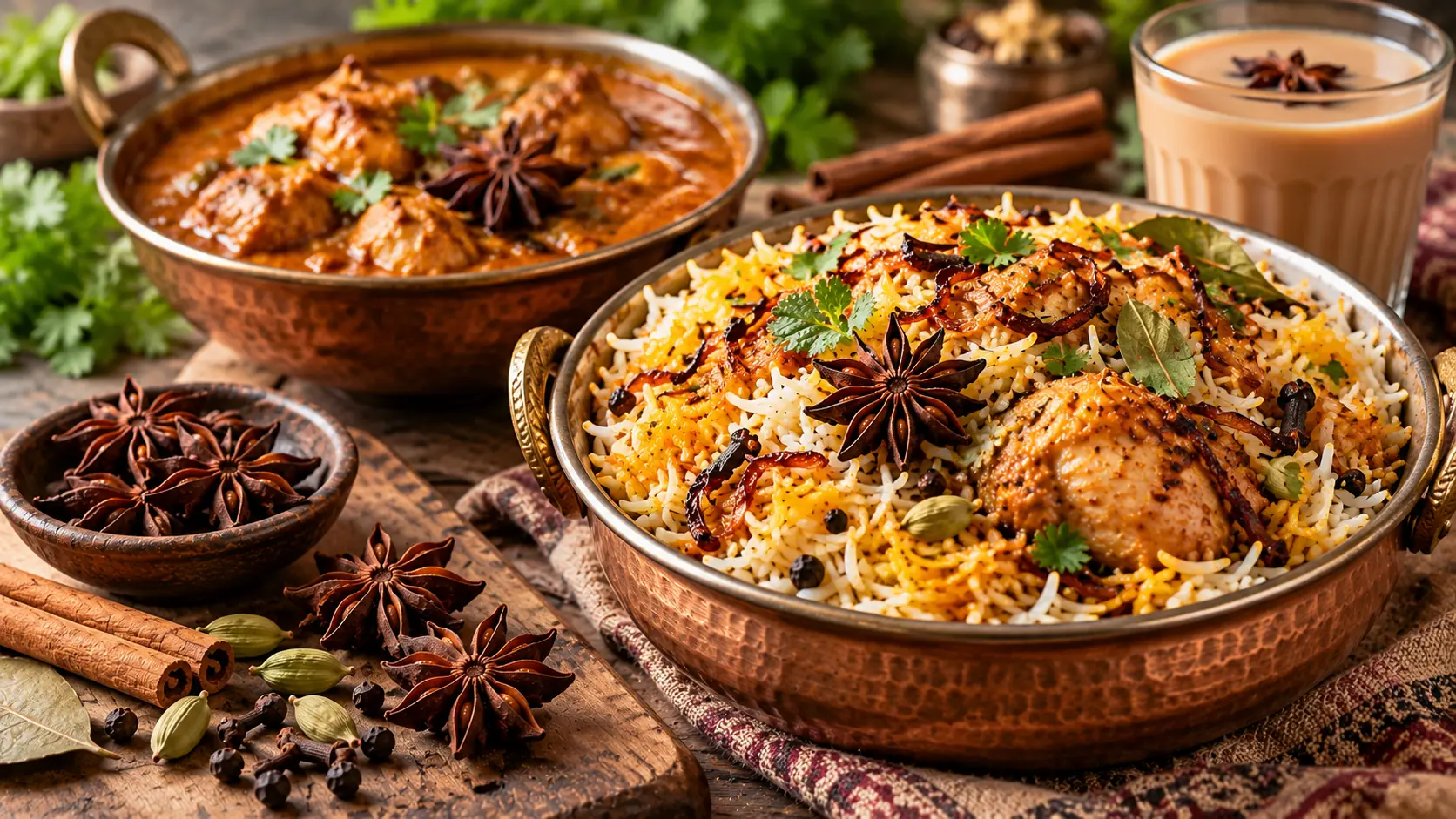
Star anise in biryani works best as one part of a wider whole-spice combination. Cinnamon, green cardamom, cloves, bay leaf and black pepper can create warm, floral and peppery layers around its sweet fragrance. This balance is particularly useful because biryani already contains several strong flavours from onions, meat or vegetables, herbs and the masala.
One practical method is to warm a small piece with the other whole spices in oil or ghee before building the masala. Another option is to add it while the masala cooks so that the fragrance develops gradually. Both methods allow the flavoured cooking fat and steam to carry the aroma through the rice.
Keep the Biryani Aroma Balanced
The finished rice should not taste mainly of star anise. Instead, the spice should provide a soft sweet aromatic note behind the basmati rice, meat, vegetables, fried onions and other whole spices. If the liquorice-like flavour becomes the first thing you notice, the quantity was probably too high for that particular preparation.
Pair Star Anise With Other Biryani Spices
Cinnamon contributes warmth, green cardamom adds floral freshness, cloves provide sharper intensity and black pepper gives gentle heat. Combining these different characteristics with star anise produces a more layered aroma than relying on one spice alone.
Using Star Anise in Indian Curries
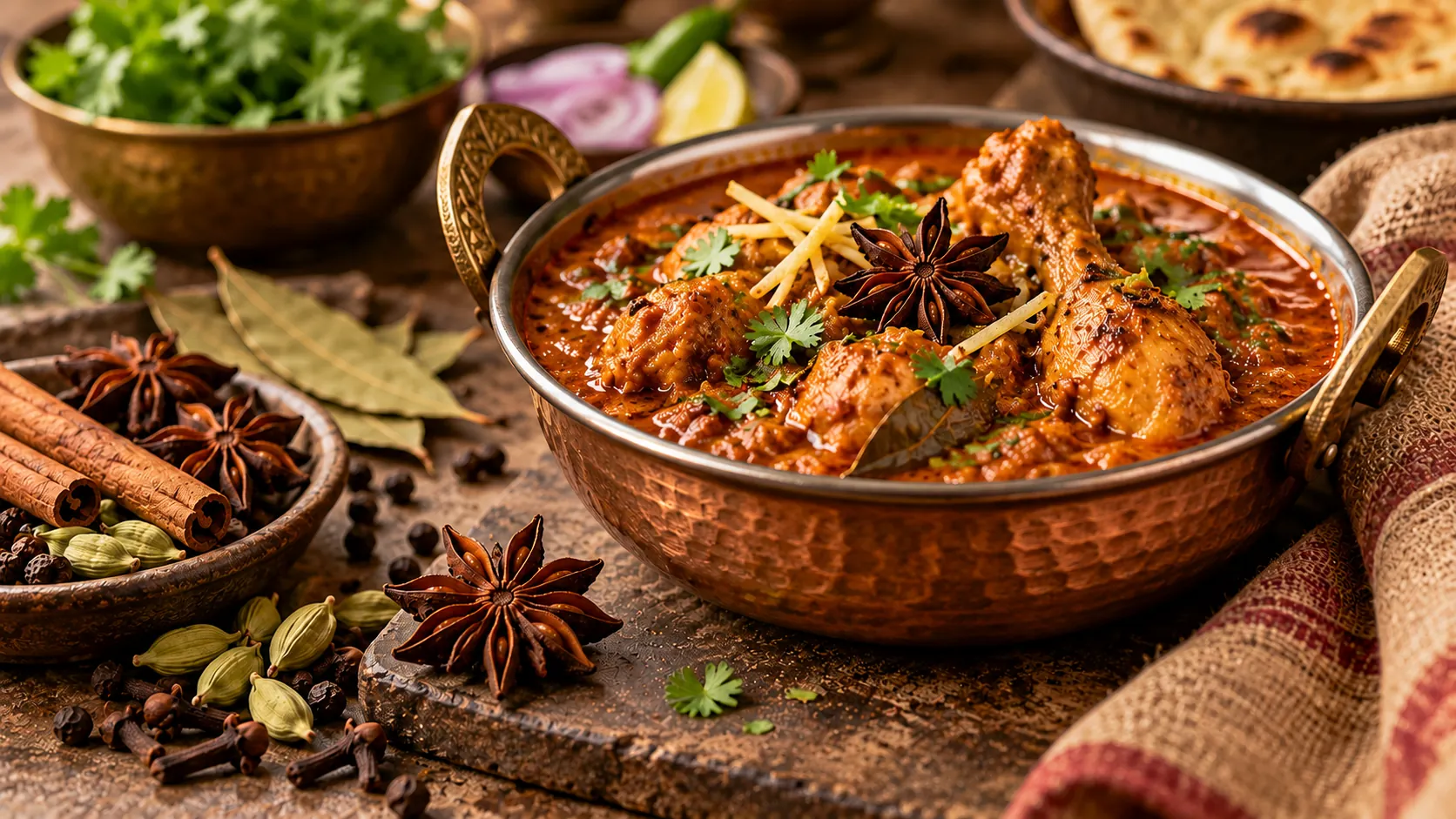
Star anise in curry can add depth to rich gravies, particularly when the dish cooks long enough for whole spices to release their fragrance gradually. Meat curries and other robust preparations usually handle the strong aroma more comfortably than very light gravies because they contain enough flavour to keep the sweet note balanced.
You can add a small piece during tempering or place it directly into the gravy while it simmers. Ginger, garlic, onions, chillies, black pepper, cinnamon and cloves can all balance the sweeter character. The cooking liquid then carries the aroma throughout the curry instead of leaving the spice concentrated in one part of the dish.
Which Curries Suit Star Anise Best?
Rich meat gravies, selected festive curries and slow-cooked preparations generally suit star anise well. Delicate vegetable dishes or lightly seasoned gravies may require a much smaller amount because their natural flavours are easier to overpower.
When to Remove the Whole Spice
If a large star-shaped pod remains visible after the curry finishes cooking, you can remove it before serving. The pod has already released much of its aroma, and removing it prevents someone from biting directly into the firm whole spice.
How to Use Star Anise in Chai
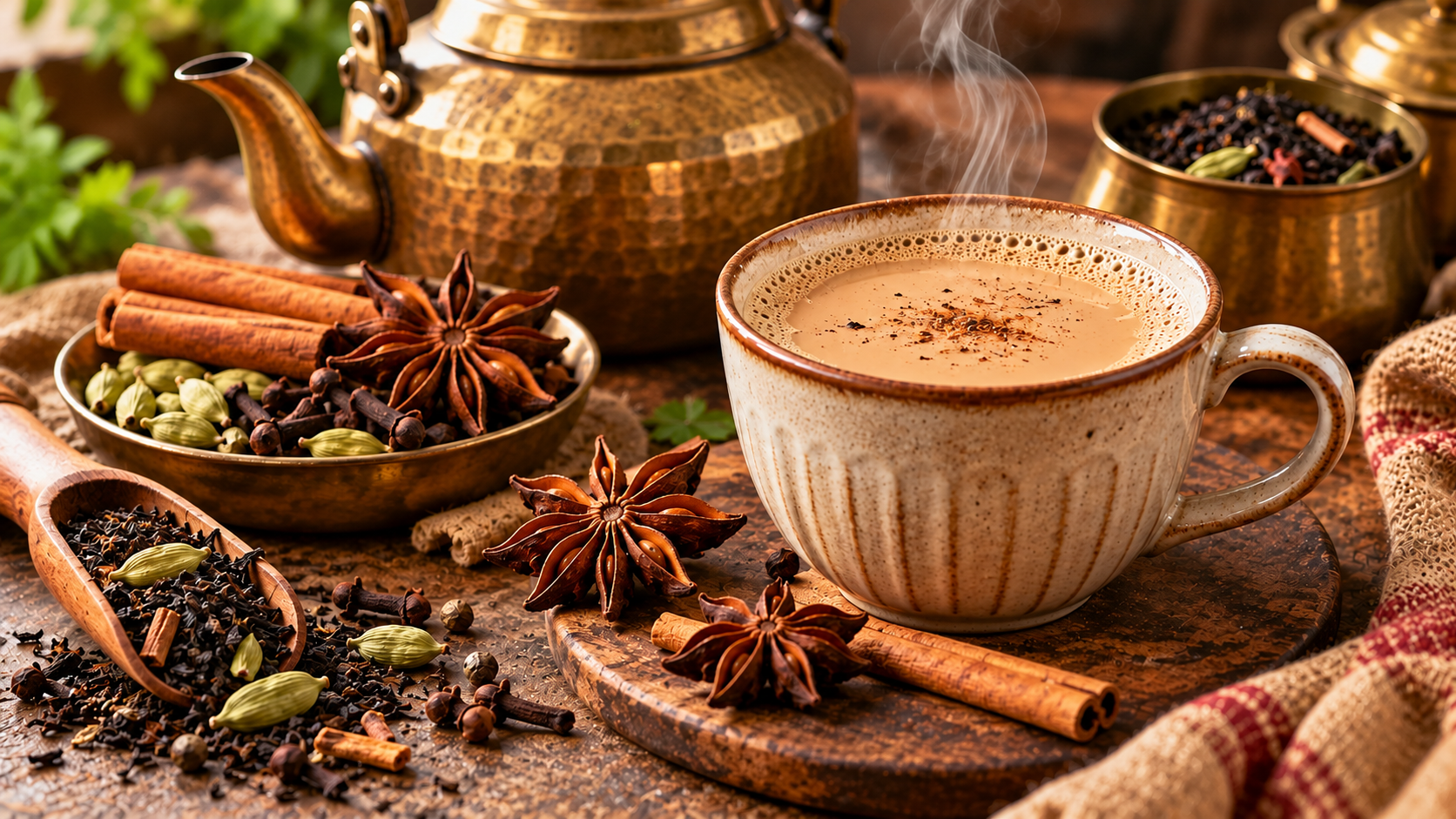
Star anise in chai adds gentle sweetness and a warm aromatic note that works particularly well with green cardamom, cinnamon, cloves and ginger. Since chai is a liquid preparation, the aroma can become noticeable quickly. For this reason, use less than you might use in a large pot of biryani or curry.
For a small batch of masala chai, simmer a small piece with water and the other aromatics before adding tea and milk according to your usual method. Allowing the spice to simmer briefly helps the fragrance enter the liquid without requiring a large quantity of the whole pod.
How Much Star Anise Should You Add to Chai?
Begin with a small piece, especially when preparing only one or two cups. A longer simmer strengthens the flavour, so taste and smell the tea before increasing the quantity. The goal is to create a warmer masala profile, not to turn the drink into a strongly liquorice-flavoured beverage.
Balance Star Anise With Cardamom and Ginger
Green cardamom adds floral freshness, while ginger provides a sharper warming quality. Cinnamon and cloves can contribute deeper spice notes. Together, these ingredients help star anise sit naturally within masala chai instead of becoming the only aroma.
Chai tip: Star anise should complement cardamom, ginger and tea rather than make the drink taste strongly of liquorice.
Which Spices Pair Well With Star Anise?
Pairing star anise with complementary whole spices makes its strong aroma easier to balance. Instead of trying to hide its sweet character, use other spices to add different flavour layers around it. Cinnamon can provide warmth, cardamom introduces floral freshness, and cloves or black pepper add sharper notes that prevent the overall profile from becoming excessively sweet.
The ideal pairing depends on the dish. Rice preparations can comfortably combine several whole spices, while chai usually needs a simpler mixture because the flavours reach the palate more directly. Start with a small combination and increase complexity only when the recipe requires it.
Best Whole-Spice Pairings
Cinnamon
Cinnamon supports the warm sweetness of star anise and works particularly well in rice dishes, chai and rich curries. Its woody aroma adds depth without producing chilli heat.
Cardamom
Green cardamom adds a brighter floral fragrance that helps balance the deeper and sweeter aromatic character of star anise.
Cloves and Black Pepper
Cloves and pepper bring sharper warmth and help create a layered flavour profile. Their intensity can prevent the spice combination from becoming overly sweet.
Whole Star Anise vs Powder: Which Should You Use?
Whole star anise suits recipes that need slow and controlled infusion. You can see exactly how much you add, allow the pod to release aroma gradually and remove the visible piece when the dish finishes cooking. This makes whole star anise particularly practical for biryani, pulao, curries and chai.
Powder behaves differently because the spice has much more exposed surface area. As a result, it spreads quickly through the food and can become difficult to remove if the flavour grows too strong. Begin with a very small quantity when using the ground form and allow it enough time to blend before adding more.
When Whole Star Anise Works Better
Whole pieces are useful when you want gradual aroma, clear portion control and the option to remove the spice before serving. They are also easier to combine with other whole spices during tempering.
When Star Anise Powder Can Be Useful
Powder can work in selected spice blends and recipes where you want the flavour distributed evenly. However, its strength is easier to underestimate, so careful measurement becomes especially important.
| Form | Best For | Usage Style |
|---|---|---|
| Whole | Biryani, pulao, curries and chai | Gradual infusion with easier quantity control |
| Powder | Selected spice blends and recipes | Use sparingly because it disperses quickly |
Learn More About Indian Spices
For broader information about Indian spices, production and the wider spice sector, visit Spices Board India. The official resource provides information related to India's spice industry and can be useful when you want background information beyond individual cooking guides or product pages.
Common Mistakes When Cooking With Star Anise
Most problems with star anise come from quantity and timing rather than the spice itself. Its aroma becomes stronger as the recipe cooks, so adding too much at the beginning or increasing the quantity before the first piece has infused can make the final dish unbalanced. A more controlled approach keeps the sweet fragrance in the background.
Mistakes to Avoid When Using Star Anise
Using Too Much
A large quantity can overpower rice, meat, vegetables, tea and other spices. Start smaller and give the aroma enough time to develop.
Adding More Too Soon
Star anise becomes stronger during cooking. Wait before increasing the quantity so you can judge the actual final direction of the flavour.
Ignoring Other Aromatics
Cinnamon, cardamom, cloves, ginger and black pepper can create balance. Relying only on star anise can make the dish feel one dimensional.
Serving Large Whole Pieces
Remove firm whole pods before serving when practical. Their main role is to infuse aroma rather than to be eaten as a large whole piece.
What to Check When Buying Whole Star Anise
Look for recognisable star-shaped pods with a clear characteristic fragrance. Whole or mostly intact pieces make portion control easier because you can see how much spice you are adding. Excessively crushed material may still be usable, but it becomes harder to judge quantity and can release aroma faster during cooking.
The spice should also feel properly dry, and the packaging should protect it from unnecessary moisture, air and strong external odours. Because aroma is one of the main reasons for using star anise, storage condition and packaging can directly affect how clearly the spice performs in your recipes.
Three Simple Quality Checks
Look for Intact Pods
Choose packs with recognisable star-shaped pieces rather than mostly broken fragments. Intact pieces also make measurement and removal easier during cooking.
Check the Fragrance
Star anise should retain a distinct warm and sweet aroma. A very weak fragrance may indicate that the spice has lost some aromatic strength during storage.
Protect It From Moisture
Suitable packaging helps limit exposure to moisture, air and strong external odours. Reseal the pack carefully after opening it.
How to Store Star Anise
Store star anise in a tightly closed container or properly resealed pack in a cool and dry place. Keep the container away from direct sunlight, excessive heat and cooking steam because repeated exposure can gradually weaken the spice's aroma and affect the condition of the dried pods.
Keeping the spice whole until you need it also improves portion control. Whole pieces release their fragrance more gradually than powder, and you can inspect the pod before cooking. Grind or crush only the amount needed when a particular recipe calls for a smaller form.
Keep Moisture Out of the Container
Always use a clean and dry spoon or dry hands when removing star anise from storage. Close the container soon after use and avoid leaving it open beside a steaming pot or another strong-smelling ingredient.
Store Strong Aromatic Spices Separately
Star anise has a strong fragrance, so keeping it properly sealed also prevents its aroma from transferring to nearby ingredients. Separate, tightly closed containers help maintain the individual character of each whole spice.
How to Use Star Anise: Final Takeaway
The main lesson when learning how to use star anise is simple: a small amount can create a noticeable effect. Its warm, sweet and liquorice-like aroma works best when it remains one layer within the recipe rather than becoming the main flavour. Give the spice time to infuse before deciding whether the dish needs more.
In biryani, combine it with cinnamon, cardamom, cloves, black pepper and bay leaf for a more rounded whole-spice profile. In curries, allow a small piece to simmer with the gravy and complementary aromatics. For masala chai, use a smaller quantity because the flavour moves directly into the liquid and can become intense quickly.
Whole star anise also gives you better control than powder because you can see the quantity clearly and remove the pod before serving. Proper storage then helps preserve the aroma for future recipes, making it a versatile whole spice for rice dishes, curries and warming beverages.
Remember the Balance Rule
Start small, combine the spice with complementary flavours and allow enough cooking time for the aroma to develop. This simple approach helps you enjoy the distinctive character of star anise without allowing its sweet liquorice-like flavour to overpower the rest of the dish.
Final takeaway: Start small, give the spice time to infuse and aim for balance rather than an overpowering liquorice-like flavour.
Explore Whole Spices from Idukki Spices
Discover aromatic whole spices for biryani, curries, chai and everyday Indian cooking. Explore star anise, cardamom, cinnamon, cloves, black pepper, bay leaf and other spices for recipes that depend on freshness, fragrance and balanced flavour.
Frequently Asked Questions About Star Anise
These answers cover common questions about cooking with whole star anise, including its use in biryani, curry and chai, the flavour it contributes, suitable spice pairings and the best way to store it.
How do you use star anise in cooking?
Add a small piece during cooking and allow its aroma to infuse the recipe gradually. Star anise works well in biryani, pulao, rich curries and masala chai. Pair it with complementary spices and avoid adding too much before the first piece has had time to release its fragrance.
How do you use star anise in biryani?
Add a small piece with whole spices such as cinnamon, cardamom, cloves, black pepper and bay leaf while tempering or preparing the masala. Let the spice infuse gradually so that it adds a background sweetness without overpowering the rice and other aromatics.
Can star anise be used in curry?
Yes. Warm a small piece with other whole spices or allow it to simmer directly in the gravy. Rich curries generally handle its strong aroma better than very delicate dishes, especially when ginger, garlic, pepper and other spices provide balance.
Can you put star anise in chai?
Yes. Simmer a small piece with green cardamom, cinnamon, cloves or ginger to give masala chai additional warmth and fragrance. Use less for a small batch because the aroma can become strong during a long simmer.
What is star anise called in India?
Star anise is commonly known as chakra phool or chakriphool in parts of India. Regional names can vary, but the recognisable star-shaped whole spice is used in selected rice dishes, curries, spice blends and beverages.
What does star anise taste like?
It has a warm, sweet and highly aromatic flavour with a distinctive liquorice-like character. In a balanced quantity, this flavour can add depth to savoury dishes and warmth to spiced drinks without becoming dominant.
Is whole star anise better than powder?
Whole pieces make gradual infusion and portion control easier, which is helpful in biryani, curry and chai. Powder spreads through food much faster and therefore needs more careful dosing, especially when you are unfamiliar with the strength of the spice.
Which spices pair well with star anise?
Cinnamon, green cardamom, cloves, black pepper, ginger and bay leaf all pair well with its warm aromatic profile. Each ingredient contributes a different flavour layer, which helps keep the sweet star-anise aroma balanced.
Should whole star anise be removed after cooking?
Yes, you can remove visible whole pieces before serving when practical. The firm pod mainly acts as an aromatic infusion during cooking, so it does not need to remain in the finished dish once enough flavour has developed.
How should star anise be stored?
Keep whole star anise in a tightly closed container in a cool and dry place away from sunlight, excessive heat and moisture. Keep the pods whole until needed when possible, and always use a clean, dry spoon or dry hands when removing them from storage.