
Tempering Spices: The Right Order for Better Aroma & Flavour
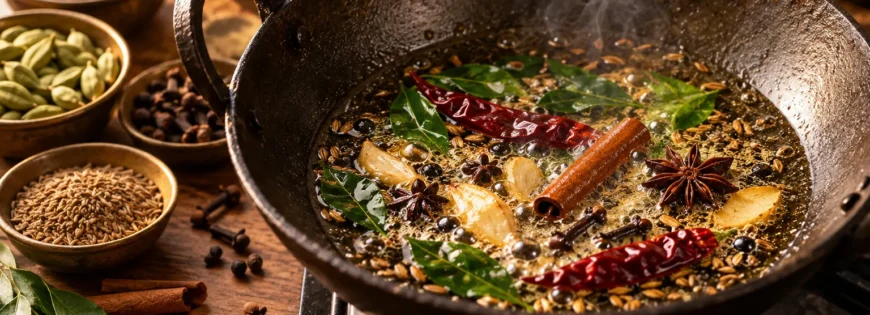
Tempering spices is one of the simplest ways to build stronger aroma and deeper flavour in Indian cooking. The method uses hot oil or ghee to release the natural aromatic compounds inside whole spices, seeds and other ingredients. When you add each ingredient at the correct stage, the cooking fat absorbs its fragrance and carries that flavour through dal, curry, rice, vegetables and many other dishes.
However, different spices react to heat at different speeds. Cinnamon, cardamom, cloves and bay leaf can usually handle slightly more time in hot fat. Mustard and cumin seeds react faster, while curry leaves, dried chillies, garlic and powdered spices can burn within seconds. Therefore, good tempering depends on order, heat and timing rather than simply adding every spice to the pan at once.
Tempering Spices: What Is the Right Order?
The right order for tempering spices depends on how quickly each ingredient releases aroma and how easily it burns. A practical approach is to begin with the ingredients that need slightly more time in hot oil. After that, add smaller seeds and faster aromatics. Finally, add delicate ingredients that need only brief contact with the cooking fat.
For many recipes, the process starts with warm oil or ghee. Hardy whole spices such as cinnamon, cardamom, cloves, peppercorns and bay leaf can enter first. Mustard, cumin or fennel seeds usually follow. Next come curry leaves, dried chillies, ginger or garlic. Asafoetida and powdered spices usually enter near the end because they can burn quickly.
Why the Order of Tempering Spices Matters
Adding ingredients in stages helps each spice release aroma without burning. If you add everything together, delicate ingredients may burn before larger whole spices have enough time to warm through. As a result, the tempering can taste bitter instead of fragrant. A clear sequence also gives you better control over the final flavour.
Why Tempering Spices Improves Aroma and Flavour
Whole spices contain aromatic compounds that become more noticeable when they meet warm oil or ghee. Heat helps release those aromas, while the fat carries them into the rest of the dish. This is why a small amount of well-made tempering can noticeably change the flavour of dal, curry, vegetables or rice.
The method also changes the character of individual spices. Cumin becomes deeper and nuttier, mustard seeds become sharper and more aromatic, while cardamom, cloves and cinnamon release warm fragrance. The process happens quickly, so good timing matters. Leaving spices over high heat for too long can destroy their pleasant aroma and create burnt flavours.
Tempering Builds Layers of Flavour
Each stage contributes a different flavour layer. Large whole spices often create the background aroma. Seeds can add nuttiness or sharpness. Curry leaves, chillies, garlic and ginger provide fresher aromatic notes. When you add them in sequence, the flavours become more distinct and balanced.
Tempering Spices: The Correct Order
The exact sequence changes from one recipe to another because not every dish uses the same ingredients. Still, the following order gives you a useful starting point for many Indian recipes. Adjust the sequence when a specific recipe requires mustard seeds, cumin or another ingredient to enter the oil earlier.
| Stage | Ingredients | Reason |
|---|---|---|
| 1. Heat the fat | Oil or ghee | The fat needs enough heat to extract aroma from the spices. |
| 2. Hardy whole spices | Cinnamon, cardamom, cloves, peppercorns and bay leaf | Larger whole spices usually benefit from slightly more cooking time. |
| 3. Seeds | Mustard, cumin or fennel | Seeds release aroma quickly once they reach hot oil. |
| 4. Quick aromatics | Dried chilli, curry leaves, garlic or ginger | These ingredients cook quickly and can burn if added too early. |
| 5. Delicate ingredients | Asafoetida or selected powdered spices | These ingredients usually need only brief contact with hot oil. |
Important: The recipe always matters. Mustard seeds, for example, often enter hot oil early because they need enough heat to crackle. Cumin may follow shortly afterwards because it releases aroma faster and can turn bitter if it becomes too dark.
How to Temper Whole Spices Step by Step
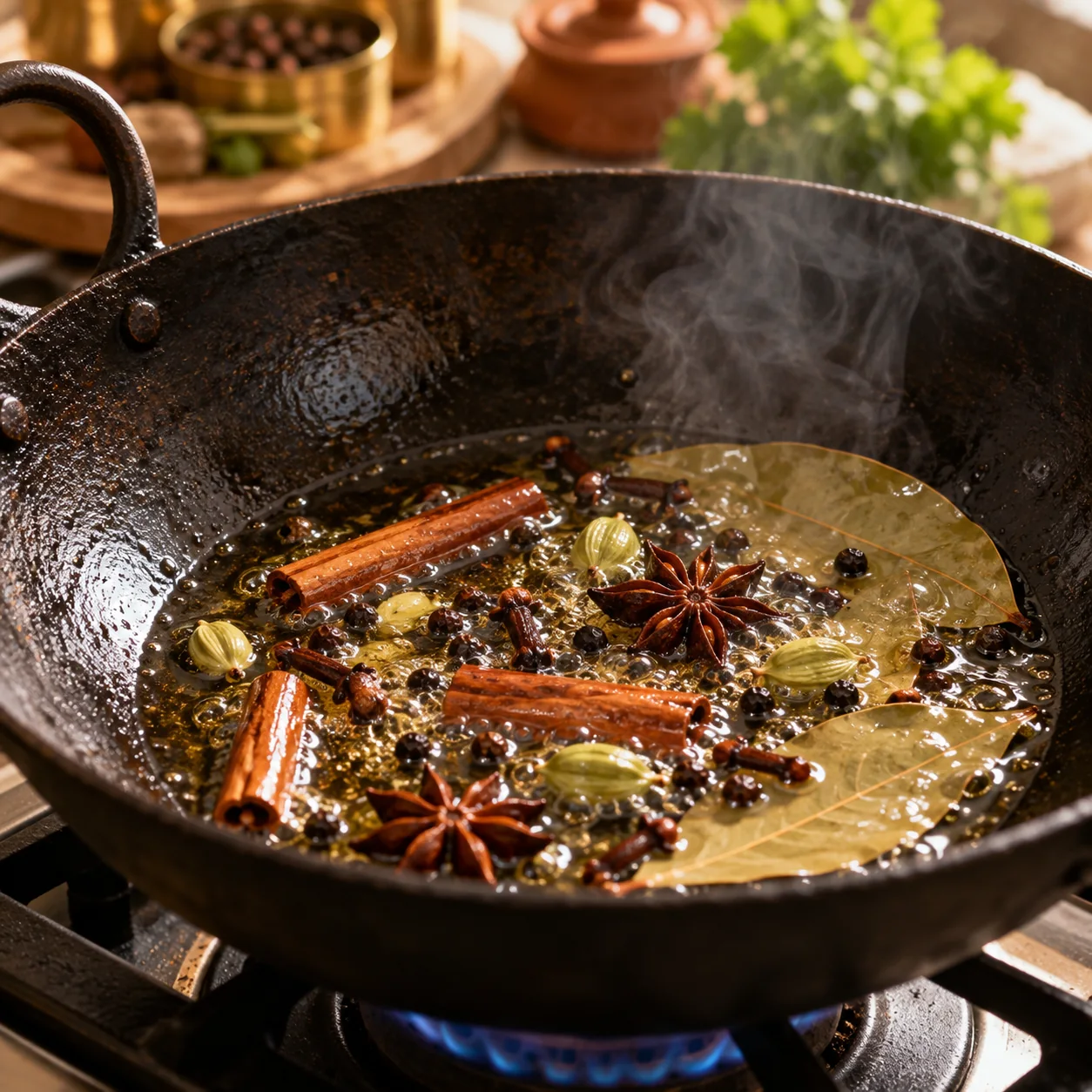
Prepare every spice and aromatic before you heat the pan because tempering moves quickly. Once the oil reaches the correct temperature, you may have only a few seconds between ingredients. Keeping everything ready helps you avoid searching for spices while something is already burning in the pan.
Heat Oil or Ghee
Warm the cooking fat until it becomes hot enough for the spices to react. Avoid letting the oil smoke heavily because excessive heat can burn the first ingredients immediately.
Add Whole Spices
Begin with larger or harder ingredients such as cinnamon, cardamom, cloves and bay leaf when the recipe uses them. Move them through the oil so they heat evenly.
Add Quick Aromatics
Add mustard or cumin according to the recipe, followed by ingredients such as dried chilli, curry leaves, garlic or ginger. Watch them carefully because they react quickly.
Continue the Dish
Once the tempering smells fragrant, add the remaining recipe ingredients. For a finishing tadka, pour the hot aromatic mixture over the prepared dish immediately.
Tempering Spices in Oil: Use the Right Heat
Temperature controls the success of tempering. Oil that stays too cool may warm the spices without releasing enough aroma. On the other hand, excessively hot oil can burn seeds and powdered spices within seconds. Therefore, heat the fat carefully and watch how the first ingredient reacts.
Medium or medium-high heat works for many home recipes, but the ideal setting depends on the pan, stove and cooking fat. A thin pan responds to heat faster than a heavy pan. Ghee may also behave differently from some oils. Adjust the flame when the spices begin to crackle or release fragrance.
How to Tell If the Oil Is Too Hot
If cumin turns very dark immediately or a spice blackens as soon as it touches the oil, reduce the heat before adding anything else. Burnt spices can make the entire dish taste bitter, so it is better to restart the tempering than continue with badly scorched ingredients.
Tempering Whole Spices That Need More Time
Cinnamon, cardamom, cloves, black pepper and bay leaf can usually enter the pan before more delicate aromatics. Their larger size allows them to tolerate slightly longer heating. As the oil moves around them, they begin releasing fragrance and create the first aromatic layer of the dish.
Keep the spices moving gently so that one side does not remain against the hottest part of the pan. Once they smell clearly fragrant, continue to the next stage. You do not need to fry them until they become very dark. The goal is aroma, not heavy browning.
Why Whole Spices Usually Go First
Whole spices expose less surface area than powdered spices. Therefore, they generally release aroma more slowly and tolerate heat for longer. This gives them enough time to flavour the oil before quicker ingredients enter the pan.
How to Temper Cinnamon
Cinnamon develops a warm, woody and slightly sweet fragrance when it heats in oil or ghee. A small piece is usually enough for most household recipes because the aroma becomes stronger as the spice remains in the dish during cooking.
How Long Should Cinnamon Stay in the Oil?
Heat cinnamon only until its aroma becomes noticeable. Avoid frying it for too long because an overly intense woody note can dominate lighter recipes. Once the piece smells fragrant, add the next spice or continue with the recipe.
How to Temper Cardamom
Green cardamom contributes floral fragrance and gentle sweetness to the aromatic base. Whole pods can enter hot oil with cinnamon, cloves or other hardy spices. Lightly pressing the pods before cooking can expose more of the aromatic seeds inside.
Whole or Lightly Crushed Cardamom?
Whole pods release flavour more gradually, while lightly crushed pods release aroma faster. Choose the method according to the recipe. For rice dishes and curries, whole or lightly pressed pods usually work well.
How to Temper Cloves and Black Pepper
Cloves and black pepper add sharper warmth to the tempering. Both ingredients have strong natural aromas, so a modest quantity can influence the entire dish. They release fragrance quickly once the hot oil reaches their surface.
Keep the Cooking Time Short
Do not leave cloves or peppercorns in very hot oil for too long. Once they smell fragrant, continue with the next ingredient. Short heating helps release aroma without creating an overly strong or burnt flavour.
Tempering Spices: When to Add Seeds
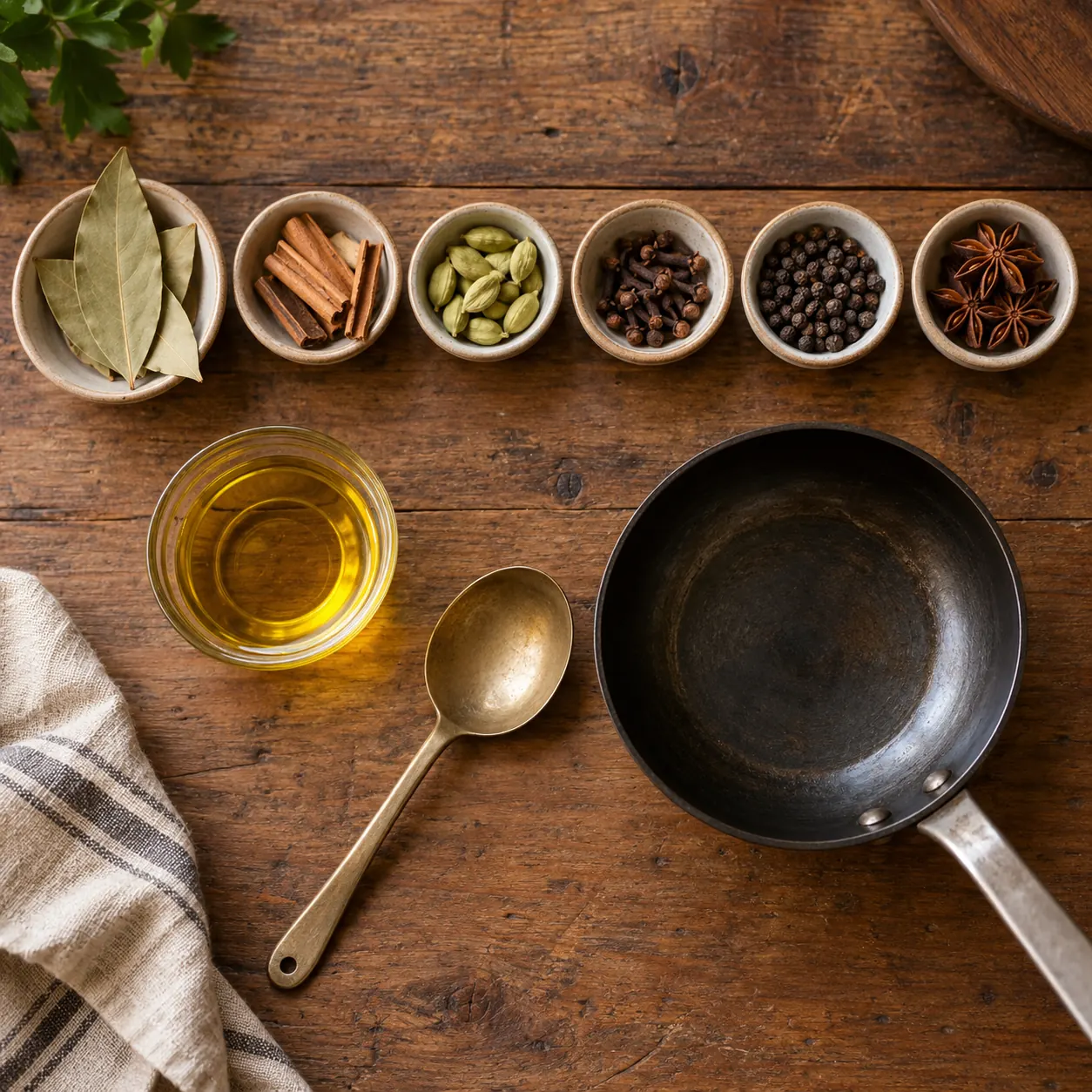
Mustard, cumin and fennel seeds are much smaller than cinnamon or bay leaf. Therefore, they react quickly once they touch hot oil. Their timing depends on the recipe because mustard seeds often need enough heat to crackle, while cumin generally releases its fragrance more quickly.
Watch the seeds rather than relying only on a fixed number of seconds. Mustard may begin popping, while cumin will deepen slightly in colour and release a nutty smell. Once these signs appear, move to the next ingredient instead of continuing to fry the seeds.
Mustard Seeds vs Cumin Seeds
Mustard seeds often go first in recipes that use both because they need enough heat to crackle. Cumin can follow once the mustard begins reacting. Since cumin burns faster, adding it slightly later gives you better control over the tempering.
Watch the colour: Cumin should become aromatic without turning very dark. Likewise, mustard seeds should crackle without burning. If either ingredient becomes black and smells scorched, the finished tempering may taste bitter.
When to Add Curry Leaves, Chillies and Garlic
Curry leaves, dried chillies, garlic and ginger cook faster than large whole spices. Therefore, add them after the slower ingredients have already begun releasing their aroma. This timing prevents delicate aromatics from burning before the rest of the tempering develops.
Curry leaves can splutter strongly when they touch hot oil, especially if water remains on the surface. Dry them well before cooking and keep your face and hands away from the pan when adding them. Garlic can also brown quickly, so reduce the heat if necessary.
Why Quick Aromatics Go Later
These ingredients expose more surface area to hot fat and release aroma rapidly. Adding them near the end gives them enough time to become fragrant without turning bitter, black or excessively dry.
When to Add Powdered Spices During Tempering
Ground spices expose far more surface area to hot oil than whole spices. As a result, they absorb heat quickly and can burn within seconds. If a recipe asks you to bloom chilli powder, turmeric or another ground ingredient in the tempering, reduce the heat before adding it.
Stir powdered spices briefly and follow them quickly with the next wet ingredient or prepared dish. Do not leave them alone in hot oil. Asafoetida also needs only brief contact with the fat because its aroma develops very quickly.
Use Lower Heat for Ground Spices
Lowering the flame gives you more control. The goal is to release fragrance, not fry the powder until it darkens. Once the aroma appears, continue immediately with the recipe.
Two Ways to Use Tempering Spices in Indian Cooking
Indian cooking commonly uses tempering in two ways. You can begin a dish with the aromatic oil and build the recipe on top of it. Alternatively, you can prepare a separate tadka at the end and pour it over the finished dish. Both methods use the same basic principle, but they create different flavour effects.
Tempering at the Beginning
Heat the spices first and then build the curry, vegetable dish or rice preparation over the aromatic fat. The flavours blend gradually with the other ingredients during cooking.
Finishing Tadka
Cook the main dish first. Then prepare fresh tempering in a separate pan and pour it over the dish just before serving. This creates a stronger fresh aroma on top.
How the Aroma Changes
Beginning tempering creates deeper integrated flavour. Finishing tadka gives the dish a fresher and more noticeable aroma because the spices reach the food shortly before serving.
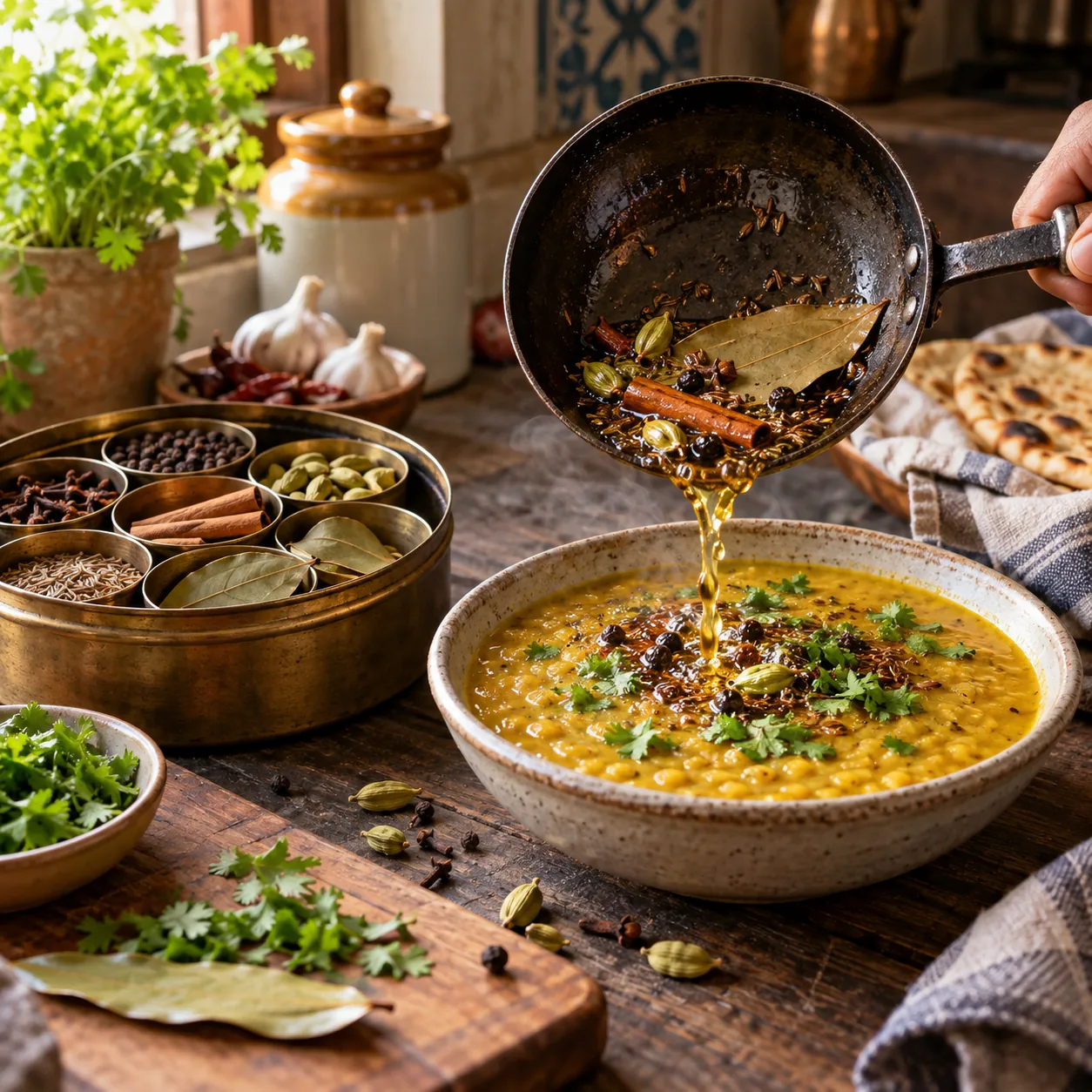
Tempering Spices for Tadka
For a finishing tadka, heat a small amount of oil or ghee in a separate pan while the main dish remains ready to serve. Once the fat becomes hot, add the spices in the order required by the recipe. Give each ingredient enough time to release aroma before adding the next.
When the tempering smells fragrant, pour it directly over dal, curry or another prepared dish. The hot fat carries the aroma across the surface, which creates an immediate burst of fragrance. Serve the dish soon afterwards so that the fresh aromatic effect remains noticeable.
Why Finishing Tadka Smells Stronger
A finishing tadka spends less time mixed into the main dish. Therefore, more of its aroma remains near the surface when you serve the food. This makes the fragrance especially noticeable with dal and other simple dishes.
How to Know When Tempering Spices Are Ready
Aroma gives you one of the clearest signals. The spices should smell fragrant, warm and recognisable rather than burnt. Seeds may crackle or move in the oil, while cinnamon, cloves and other whole spices may deepen slightly in colour.
Once those changes appear, continue with the next ingredient or move on with the recipe. Do not wait for every spice to become dark. Tempering works best when you stop heating each ingredient soon after its aroma develops.
Use Your Eyes, Ears and Nose
Successful tempering involves several sensory cues. Listen for mustard seeds crackling, watch cumin change colour slightly and smell the growing aroma. Together, these signals provide more useful guidance than relying only on a timer.
Common Mistakes When Tempering Spices
Most tempering problems come from poor timing or excessive heat rather than the spices themselves. Preparing the ingredients before you start and understanding which ones cook quickly can prevent many common mistakes.
Adding Everything Together
Different ingredients cook at different speeds. Adding them all at once may burn curry leaves, garlic or powdered spices before larger whole spices have enough time to release their aroma.
Using Too Much Heat
Excessive heat can burn aromatic spices before their flavour moves into the oil. Use enough heat to create fragrance, but reduce the flame when ingredients begin darkening too quickly.
Leaving the Pan
Tempering happens quickly. Keep every ingredient measured and ready before you begin so that you can add each one at the correct moment without leaving the pan unattended.
Use Fresh Whole Spices for Better Tempering
Tempering can release the aroma already present inside a spice, but it cannot restore fragrance that the ingredient has lost through poor storage. Fresh, well-kept whole spices usually create a clearer aroma and need less time to become noticeable in hot oil.
Choose spices that appear dry and reasonably intact. Lightly crush or rub them when possible and check whether they still release their normal fragrance. Weak aroma may indicate that the spices have lost some strength during storage.
Store Spices Properly Between Uses
Keep whole spices in tightly closed containers or properly resealed packs. Store them away from sunlight, steam and excessive heat. Good storage helps protect the aroma that you later release through tempering.
You can browse the Idukki Spices whole spice collection to explore cardamom, black pepper, cinnamon, cloves and other whole spices.
Learn More About Using Whole Spices
Understanding how each whole spice behaves makes it easier to decide when it should enter the pan. Large spices, seeds and delicate aromatics all release flavour at different speeds. Learning these differences also helps you combine spices more confidently in curries, rice dishes and other Indian recipes.
You can also read our guide to building a fresh Indian masala box with whole spices for more ideas on choosing, combining and using whole ingredients in everyday Indian cooking.
Learn More About Indian Spices
For broader information about Indian spices and the country's spice sector, visit Spices Board India . The official resource provides additional information related to Indian spices and the wider spice industry.
Kitchen principle: Use aroma as your main signal. Heat whole spices long enough to release their fragrance, but move to the next stage before they develop burnt, harsh or bitter notes.
Tempering Spices: The Order to Remember
Start with properly heated oil or ghee. Then add ingredients that need more time, such as larger whole spices or mustard seeds when the recipe calls for them. Give each ingredient enough time to release aroma before moving to the next stage.
Next, add faster ingredients such as cumin, dried chillies, curry leaves, garlic or ginger according to the recipe. These ingredients need less time, so stay near the pan and watch their colour and aroma closely.
Finally, add delicate ingredients such as asafoetida or powdered spices only briefly. Once the tempering smells fragrant, continue with the main recipe or pour the finished tadka over the prepared dish. Good tempering follows cooking speed rather than one rigid universal order.
Tempering Spices: Simple Final Rule
Think from slowest to fastest. Give hardy whole spices more time, add seeds according to how quickly they react and leave delicate aromatics until later. This simple sequence helps you build aroma while avoiding burnt flavours.
Final takeaway: Good tempering follows cooking speed. Hardy whole spices receive more time, quick aromatics enter later and delicate ingredients stay in the hot fat only briefly.
Explore Whole Spices from Idukki Spices
Discover black pepper, green cardamom, cinnamon, cloves, nutmeg, mace, bay leaf and star anise for tadka, curries, rice dishes and everyday Indian cooking. Choose whole spices that match the aroma, flavour and cooking method your recipe requires.
Explore Whole SpicesFrequently Asked Questions About Tempering Spices
These answers cover common questions about tempering spices, including the correct order, suitable heat, tadka, whole spices and the best time to add quicker aromatics.
What does tempering spices mean?
Tempering means briefly heating spices and aromatics in oil or ghee so they release their fragrance and flavour into the cooking fat. You can use that aromatic fat as the base of a recipe or pour it over a finished dish as tadka.
What is the correct order for tempering spices?
Begin with ingredients that need more heat or cooking time. Then add seeds and faster aromatics. Finish with delicate ingredients that can burn quickly. The exact sequence should still follow the recipe you are preparing.
Which whole spices can be tempered?
Common choices include cardamom, cinnamon, cloves, black pepper, bay leaf, mustard seeds, cumin and fennel. Different recipes use different combinations, so you do not need to add every spice at the same time.
Should mustard seeds or cumin go first?
In many tadka recipes, mustard seeds enter first because they need enough heat to crackle. Cumin usually follows because it releases aroma faster and can turn bitter when it becomes too dark.
When should curry leaves be added?
Curry leaves usually enter after the main whole spices or seeds have started releasing aroma. They react quickly in hot oil and may splutter strongly, especially when moisture remains on the surface.
Can whole spices burn during tempering?
Yes. Excessive heat or leaving spices in hot oil for too long can create burnt and bitter flavours. Watch the colour and smell closely, then continue the recipe once the aroma becomes clear.
Can powdered spices be tempered?
Some recipes briefly bloom powdered spices in oil. However, powders burn much faster than whole spices. Lower the heat, stir briefly and add the next ingredient quickly so the powder does not scorch.
Is tempering the same as tadka?
Tadka is a common Indian tempering technique. The cook heats spices and aromatics in fat and then uses that mixture either at the beginning of cooking or as a finishing layer over a prepared dish.
How do I know when the tempering is ready?
The spices should smell clearly fragrant. Seeds may crackle, while whole spices may deepen slightly in colour. Continue the recipe before they become very dark or develop a burnt smell.