
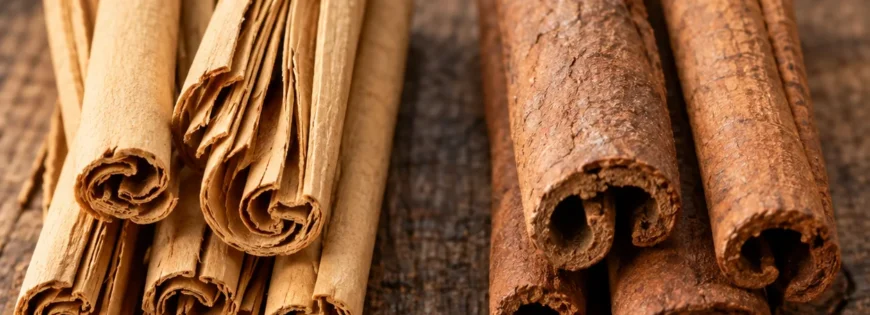
If two packets are both labelled cinnamon, the bark inside may still look very different. One may contain thin, tightly layered quills, while another contains thick, hard pieces with a darker reddish-brown appearance. This is where the comparison between cinnamon vs cassia becomes useful.
True cinnamon, commonly called Ceylon cinnamon, and cassia are related spices, but they are not the same type of bark. Their structure, colour, texture and flavour profile can be noticeably different when you compare whole sticks side by side.
For buyers looking for Idukki cinnamon, there is one additional point to understand. Idukki tells you about sourcing or origin, while cinnamon type tells you what kind of bark you are buying. A good purchase therefore depends on both clear sourcing information and the physical characteristics of the spice.
This guide explains how to identify real cinnamon, how cassia differs, what to inspect in a whole cinnamon stick and what to ask before buying cinnamon online.
Cinnamon vs Cassia: What Is the Main Difference?
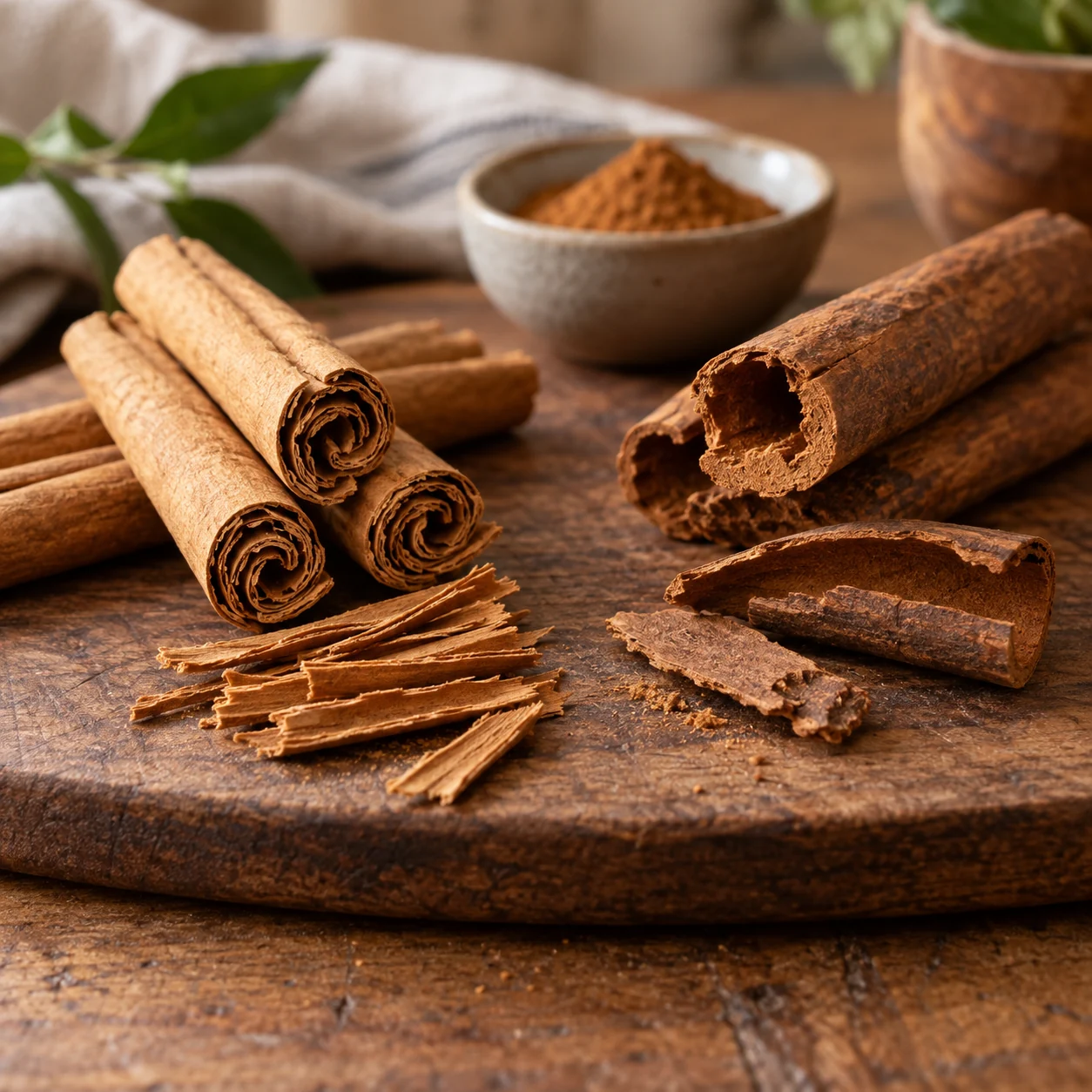
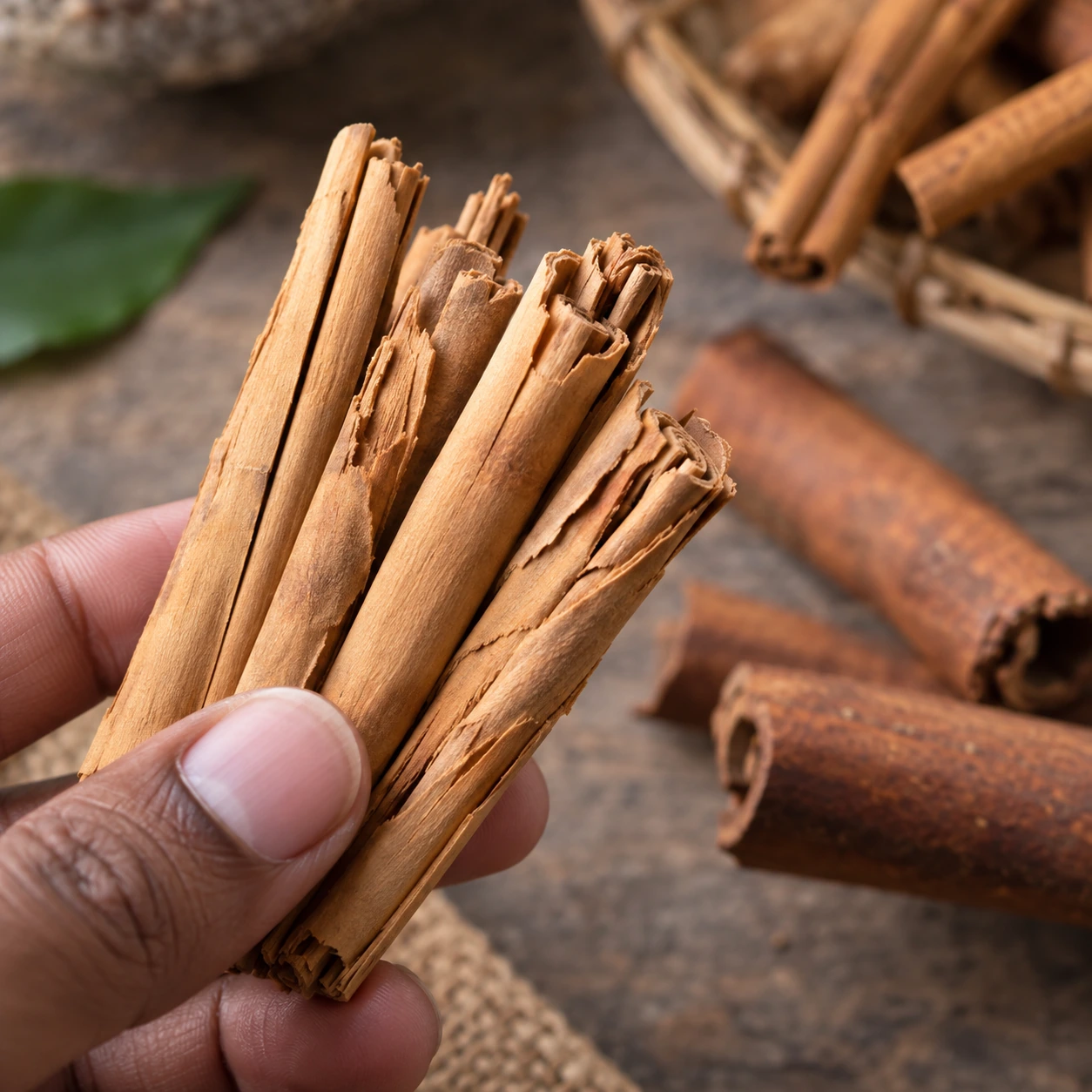
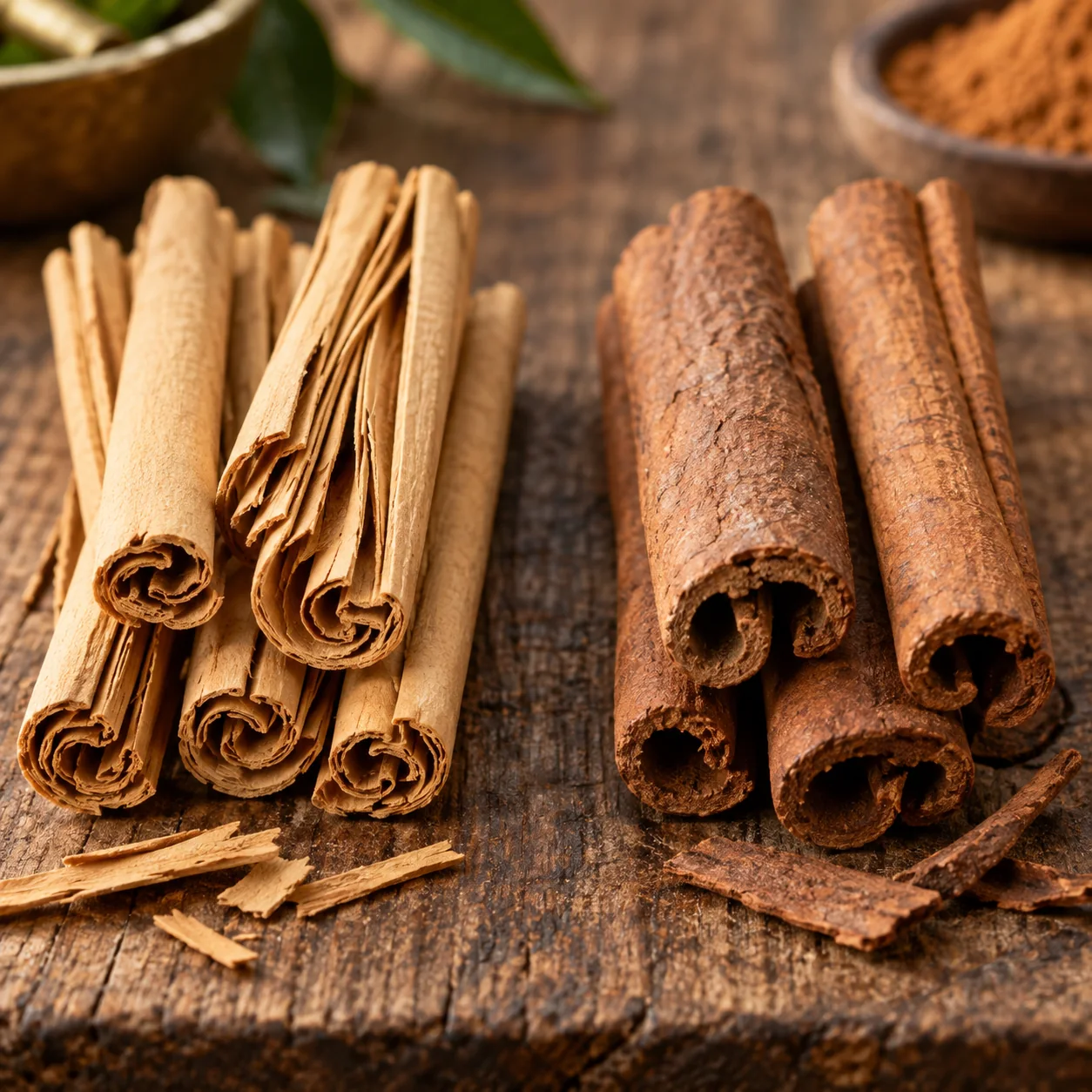
The easiest difference to see in whole sticks is the bark structure. True or Ceylon cinnamon is usually made from many thin layers of inner bark rolled together. Cassia is generally thicker, harder and commonly curls as one or a few heavy layers.
Ceylon cinnamon also tends to look lighter tan or golden brown, while cassia is often darker and more reddish brown. Aroma can provide another clue, although smell alone should not be treated as proof of species.
Quick answer: Look at the cut end of the stick. Multiple thin, papery layers are a useful sign associated with true cinnamon. A thick, hard bark with a hollow centre and fewer layers is more typical of cassia.
Ceylon Cinnamon vs Cassia: Side-by-Side Comparison
Whole bark makes the comparison much easier because you can inspect the layers, thickness and texture directly.
| Feature | True / Ceylon Cinnamon | Cassia |
|---|---|---|
| Bark structure | Usually formed from several thin layers rolled together | Usually thicker with one or a few heavier layers |
| Colour | Generally light tan to golden brown | Often deeper reddish brown |
| Texture | Thin, delicate and comparatively papery | Harder, thicker and more woody |
| Cut end | Shows several fine rolled layers | Often shows a thicker curl with more open space inside |
| Breaking | Thin pieces can break or flake more easily | Usually more difficult to snap because the bark is thicker |
| Flavour impression | Often described as softer, sweeter and more delicate | Usually stronger, warmer and more pungent |
| Best way to identify | Compare whole sticks using bark thickness, visible layers, texture and reliable species or sourcing information. | |
How to Identify Real Cinnamon from the Stick
You do not need to judge cinnamon from colour alone. Look at several physical signals together, especially the bark layers and thickness.
Best visual clue: Do not rely only on colour. The number and thickness of the bark layers visible at the end of the stick usually provide a much more useful comparison.
What Is Real or True Cinnamon?
The term true cinnamon is commonly used for Ceylon cinnamon. It is produced from the inner bark of Cinnamomum verum.
During processing, thin sections of inner bark can be layered and rolled together into quills. This layered construction explains why a true cinnamon stick can look almost like several sheets of thin paper rolled into one tube.
This structure is one of the strongest visible signals available to a household buyer because it can be inspected without grinding or processing the spice.
What Is Cassia Cinnamon?
Cassia is a related cinnamon-type spice produced from other Cinnamomum species. It is commonly sold as cinnamon in many markets and is not automatically a counterfeit product.
The problem occurs when buyers specifically want true or Ceylon cinnamon but receive a product that is not clearly identified. This is why cinnamon vs cassia should be treated as a question of species, sourcing and product transparency rather than simply labelling one spice as genuine and the other as fake.
Important: Cassia itself is a legitimate spice. The concern is misleading or unclear labelling when a product is sold specifically as true or Ceylon cinnamon.
4 Simple Checks Before You Buy Cinnamon
When the cinnamon is sold as whole bark, these checks can help you make a more informed comparison.
Inspect the Layers
Look directly at the ends. Multiple thin layers are a useful characteristic of true cinnamon quills.
Check the Thickness
Avoid judging only by stick length. Look at how thick each individual layer of bark is.
Compare the Colour
A lighter golden-tan colour supports the identification of true cinnamon, but colour alone is not enough.
Ask What You Are Buying
A trustworthy seller should be able to explain the source and the cinnamon type rather than relying only on words such as premium.
What Should “Idukki Cinnamon” Tell You?
Idukki cinnamon is an origin or sourcing description. It should tell the buyer where the spice was grown, sourced or handled. It does not by itself tell you the botanical species of the cinnamon.
This distinction matters when shopping online. If your goal is specifically to buy true cinnamon, you should look for both clear origin information and clear identification of the cinnamon type.
Origin
Ask where the cinnamon was grown or sourced and whether the seller has a direct relationship with the source.
Type
Check whether the product clearly states the type or species if you specifically want Ceylon or true cinnamon.
Whole Bark
Whole sticks allow you to visually inspect thickness, layers and texture before using the spice.
Can You Identify Real Cinnamon After It Is Ground?
Identifying cinnamon becomes much more difficult once the bark has been powdered. The most useful visual clues, such as bark thickness and the number of rolled layers, disappear during grinding.
Colour and aroma can give you an impression, but they are not reliable enough to confirm species on their own. This is one reason buying whole cinnamon can be useful when authenticity and traceability matter.
Buying rule: If you specifically want true cinnamon, choose whole bark from a seller that provides clear sourcing information rather than trying to identify species from loose powder by appearance alone.
What to Check Before Buying Cinnamon Online
A good product page should help you understand more than the price and pack size. Look for information that makes the spice easier to evaluate before ordering.
Where Does It Come From?
Look for meaningful origin or sourcing information instead of a generic premium claim.
What Type Is It?
If species matters to you, check whether the seller identifies the cinnamon as true, Ceylon, cassia or another type.
Whole or Ground?
Whole bark provides more visible information about texture, thickness and physical quality.
Is the Bark Clean and Dry?
Cinnamon should look dry and clean rather than damp, heavily dusty or poorly stored.
Does It Smell Fresh?
Fresh cinnamon should release a clear warm aroma rather than smelling flat, dusty or stale.
Is It Protected?
Good packing helps protect cinnamon from excess air, humidity, kitchen steam and surrounding odours.
How to Use Whole Cinnamon in the Kitchen
Once you have chosen good cinnamon, use small pieces and allow the bark time to release its aroma into the dish.
Masala Tea
Add a small piece with cardamom, pepper or clove for a warm whole spice chai.
Biryani and Pulao
Add cinnamon to hot ghee or oil with other whole spices to build an aromatic base.
Desserts and Baking
Cinnamon pairs naturally with cakes, puddings, fruit preparations and warm sweet dishes.
Fresh Spice Blends
Break or grind only the amount you need when preparing homemade masala blends.
How to Store Cinnamon After Buying
Store whole cinnamon in a tightly closed pack or airtight container in a dry cupboard away from kitchen steam and direct sunlight.
Avoid leaving the bark open beside strongly scented spices. Keeping the cinnamon protected from moisture and unnecessary air exposure helps preserve its aroma between uses.
Simple storage rule: Keep it whole, keep it dry and break only the amount you need.
Cinnamon vs Cassia: How Can You Tell What You Are Buying?
When comparing cinnamon vs cassia, begin with the whole bark. Look for thin layered quills, bark thickness, colour and texture instead of relying on the product name alone.
If you are specifically looking for true cinnamon, ask for clear information about both the cinnamon type and its source. If you are buying cinnamon marketed around Idukki or Kerala sourcing, remember that origin and botanical type are two separate pieces of information.
Most importantly, cassia should not automatically be treated as fake cinnamon. It is a related spice in its own right. The real issue for the buyer is whether the product is accurately described and whether you receive the type you intended to purchase.
The simple rule: Check the layers, check the thickness, check the source and choose a seller that tells you clearly what is inside the pack.
Looking for Whole Cinnamon for Your Kitchen?
Choose clean whole cinnamon selected for warm aroma, natural colour and everyday use in chai, biryani, curries, baking and homemade masala blends.
Frequently Asked Questions About Cinnamon vs Cassia
What is the difference between cinnamon and cassia?
True or Ceylon cinnamon generally has thin bark rolled into several layers, while cassia usually has thicker and harder bark with fewer layers. They also differ in colour, texture and flavour intensity.
How can I identify real cinnamon?
Look at the cut end of the stick. True cinnamon commonly shows many thin layers rolled together. Also check for relatively thin bark, a lighter tan colour and a more delicate structure.
Is cassia fake cinnamon?
No. Cassia is a legitimate related spice. The problem arises when a buyer specifically expects true or Ceylon cinnamon but the product is not clearly or accurately identified.
What does Ceylon cinnamon look like?
Ceylon cinnamon is usually lighter tan to golden brown and forms thin, delicate quills made from multiple layers of bark.
What does cassia cinnamon look like?
Cassia is commonly darker reddish brown with thicker, harder bark. The stick often has a larger hollow centre and fewer visible layers.
Can I identify real cinnamon from powder?
It is much harder to identify cinnamon type reliably after grinding because bark structure and thickness are no longer visible. Source transparency becomes more important when buying cinnamon powder.
Is Idukki cinnamon the same as Ceylon cinnamon?
Not automatically. Idukki describes origin or sourcing, while Ceylon or true cinnamon describes a particular cinnamon type. Buyers looking for a specific species should check both the source and product identification.
Which is easier to identify: cinnamon sticks or cinnamon powder?
Whole sticks are easier to compare because you can inspect their bark thickness, layers, colour and physical texture before using them.
What should I check when buying cinnamon online?
Check the source, cinnamon type, whole bark appearance, cleanliness, packing and whether the seller gives clear information instead of relying only on general terms such as premium or authentic.
How should whole cinnamon be stored?
Store cinnamon in an airtight container or tightly sealed pack away from moisture, direct sunlight, heat and strong surrounding odours.