
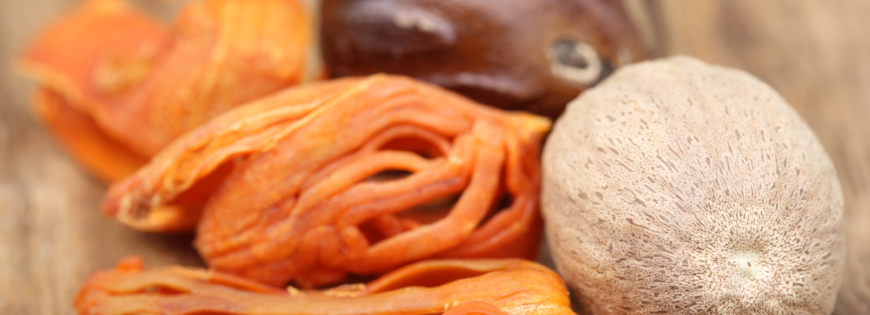
Nutmeg vs mace can be confusing because the two spices look completely different but come from the same fruit. Nutmeg is the seed found at the centre of the fruit, while mace is the delicate aril that surrounds that seed.
Although nutmeg and mace share the same botanical source, their aroma and kitchen roles are noticeably different. Nutmeg is warm, sweet, woody and deep. Mace is more fragrant, floral, bright and slightly peppery.
Understanding the difference between nutmeg and mace makes both spices easier to use. Nutmeg works well when a dish needs warmth and depth, while mace is useful when fragrance and a lighter aromatic lift are the priority.
Nutmeg vs Mace: What Is the Difference?
The simplest difference in the nutmeg vs mace comparison is where each spice comes from. Nutmeg is the dried seed kernel of the nutmeg fruit. Mace is the dried aril that wraps around the seed.
According to Spices Board India , both come from Myristica fragrans. The seed becomes nutmeg, while its surrounding aril becomes mace.
Their culinary personalities are different too. Nutmeg gives warmth, sweetness and depth. Mace offers a more delicate fragrance with brighter aromatic notes.
Quick answer: Nutmeg is the seed and mace is the covering around that seed. Choose nutmeg for warmth and depth. Choose mace for fragrance and lift.
Nutmeg vs Mace: Quick Comparison
Looking at mace vs nutmeg side by side makes the difference easier to understand. They come from the same fruit but differ in physical form, aroma and culinary role.
| Feature | Nutmeg | Mace |
|---|---|---|
| Part of fruit | Inner seed kernel | Lacy aril surrounding the seed |
| Botanical source | Myristica fragrans | Myristica fragrans |
| Aroma profile | Warm, sweet, woody and deep | Floral, bright, warm and subtly peppery |
| Culinary role | Adds body, warmth and depth | Adds fragrance and aromatic lift |
| Preferred whole form | Whole nutmeg grated when required | Whole mace blades or clean pieces |
| Common uses | Payasam, kheer, garam masala, baked dishes, creamy sauces and rich curries | Biryani, pulao, ghee rice, meat curries, festive dishes and premium spice blends |
| Usage style | A small amount can add noticeable depth | A small blade or piece can contribute considerable fragrance |
Do Nutmeg and Mace Come From the Same Fruit?
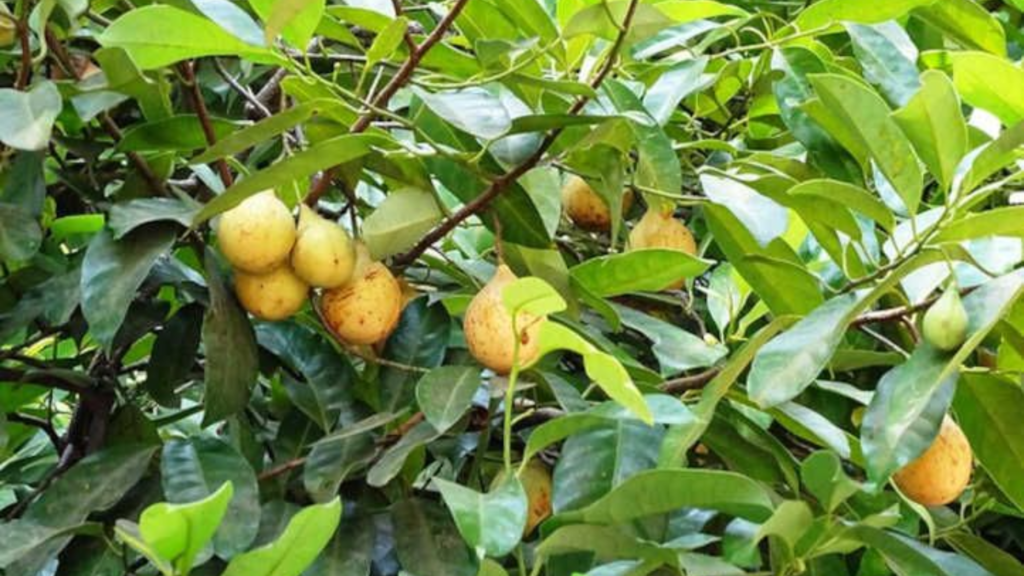
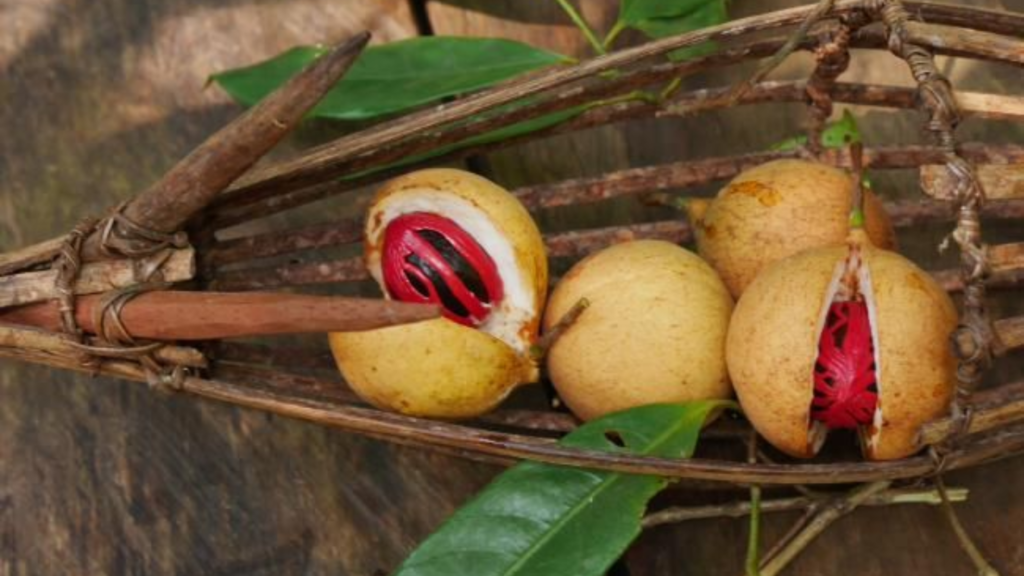
Yes. One fruit produces both nutmeg and mace. When the mature nutmeg fruit opens, the seed can be seen inside with a fine covering wrapped around it.
The seed ultimately gives us nutmeg. The lacy covering around it is the part that becomes mace after separation and drying.
This is one of the most interesting parts of the nutmeg vs mace story. Two spices with different forms, aromas and cooking roles come from different parts of the same fruit.
One Source
Nutmeg and mace originate from the same nutmeg fruit.
Nutmeg
The inner seed kernel becomes the nutmeg spice used in cooking.
Mace
The delicate covering around the seed becomes the mace spice.
How to Understand Nutmeg and Mace Before Cooking
The easiest way to use nutmeg and mace confidently is to understand four things: where each spice comes from, its aroma, the role it plays in a dish and how much is needed.
Use With Restraint
Both spices are aromatic, so small quantities can have a noticeable effect on the final dish.
Choose by Kitchen Role
Nutmeg adds warmth and depth, while mace adds fragrance and lift.
Judge Form and Aroma
Whole nutmeg and recognisable mace blades make it easier to inspect the physical condition of the spice.
Understand the Fruit
The seed gives nutmeg, while the aril surrounding it gives mace.
Kitchen insight: Once you understand the difference between nutmeg and mace, choosing between them becomes a question of the aroma and character you want in the dish.
Nutmeg vs Mace: Aroma and Flavour Difference
Aroma is one of the clearest differences when comparing nutmeg vs mace. Nutmeg has a warm, sweet, woody and deeper aromatic profile.
Mace carries a brighter fragrance. It is floral, warm and slightly peppery, which allows it to lift a dish without giving exactly the same deep character associated with nutmeg.
This is why the two spices can complement each other without being interchangeable in every recipe. One strengthens the base of the aroma while the other can add fragrance closer to the top.
What Is Nutmeg Spice Best Used For?
Nutmeg spice works particularly well when a recipe needs warmth, sweetness and depth rather than a highly visible burst of spice.
It can be used in dishes such as payasam, kheer, garam masala, baked preparations, creamy sauces and rich curries. Freshly grating whole nutmeg also allows the cook to control the amount added to a dish.
Payasam and Kheer
Nutmeg can add warm aromatic depth to rich milk-based desserts.
Garam Masala
Small quantities of nutmeg can support deeper notes in aromatic spice blends.
Sauces and Curries
Nutmeg can support creamy, rich and slow-cooked preparations where warmth is useful.
What Is Mace Spice Best Used For?
Mace spice works particularly well when fragrance is important. Its brighter aroma can contribute character without adding exactly the same depth as nutmeg.
Mace is commonly suited to biryani, pulao, ghee rice, meat masalas, festive curries and aromatic spice blends where fragrance is part of the experience.
Biryani and Pulao
Mace can contribute a delicate aromatic layer to fragrant rice dishes.
Rich Curries
A small amount can add fragrance to special-occasion and slow-cooked dishes.
Premium Masalas
Mace can support aromatic spice blends where fragrance is an important part of the final profile.
Nutmeg vs Mace for Cooking: Which Should You Use?
The answer depends on the character you want in the dish. If you want warmth, sweetness and deeper spice notes, nutmeg is usually the more natural choice.
If you want a brighter and more fragrant aromatic note, mace may be more suitable.
Choose Nutmeg
Use when the recipe needs warmth, depth and a rounded aromatic base.
Choose Mace
Use when the dish needs a brighter and more delicate aromatic lift.
Use Carefully
Both spices are aromatic, so adding more does not automatically make the dish better.
Use Both
In selected spice blends, nutmeg and mace can complement each other when used with balance.
Can You Substitute Mace for Nutmeg?
Nutmeg and mace come from the same fruit, but they do not have exactly the same aroma. Substituting one for the other can therefore change the character of the recipe.
Nutmeg provides deeper warmth, while mace contributes a brighter fragrance. If a recipe depends heavily on one of those characteristics, using the correct spice will usually give you better control over the intended aroma.
Simple rule: Think of nutmeg and mace as related spices rather than identical replacements.
What to Check When Buying Nutmeg and Mace
When buying either spice, physical form and aroma can provide useful clues about how the product has been handled.
Whole nutmeg lets the buyer see the seed itself before grating. Whole mace blades or recognisable pieces similarly make the form of the spice easier to examine than an anonymous powder.
Check the Form
Understand whether you are buying whole nutmeg, mace blades, pieces or powder.
Check Aroma
Nutmeg should have its warm characteristic aroma, while mace should retain its distinctive fragrance.
Check Handling
Mace is delicate, so excessive crushing can reduce its visual quality.
Check Packaging
Good storage protection matters because exposure to air and moisture can weaken aromatic quality over time.
How to Store Nutmeg and Mace
Nutmeg and mace should be protected from unnecessary exposure to air and moisture. Properly sealed storage helps protect their characteristic aromas after purchase.
Whole mace blades should also be handled carefully because their delicate structure can break into smaller fragments.
Keeping nutmeg whole until you need to grate it can also help preserve the natural form of the spice until cooking.
Nutmeg vs Mace: Which Is Better?
Neither spice is universally better. The nutmeg vs mace choice depends on what you want the spice to contribute.
Choose nutmeg when you want warmth, sweetness and depth. Choose mace when you want a brighter, more fragrant aromatic layer. In selected dishes and blends, the two can also complement one another.
Final takeaway: Nutmeg is the seed. Mace is the aril around it. Nutmeg gives depth; mace gives lift. Understanding that difference is the easiest way to use both spices with confidence.
Explore Whole Spices from Idukki
Discover whole spices selected for kitchens that value aroma, freshness and a clearer understanding of what goes into every dish.
Frequently Asked Questions About Nutmeg vs Mace
What is the main difference between nutmeg and mace?
Nutmeg is the seed kernel of the nutmeg fruit, while mace is the dried aril that surrounds the seed. Nutmeg has a warmer and deeper aroma, while mace is brighter and more fragrant.
Do nutmeg and mace come from the same plant?
Yes. Nutmeg and mace are both obtained from Myristica fragrans. They come from different parts of the same fruit.
Which is stronger, nutmeg or mace?
They have different aromatic characters rather than simply one being stronger. Nutmeg gives deeper warmth, while mace gives a brighter fragrance.
Is mace the outer covering of nutmeg?
Mace comes from the aril that surrounds the nutmeg seed. After it is separated and dried, it becomes the mace spice used in cooking.
What is nutmeg spice used for?
Nutmeg can be used in dishes such as payasam, kheer, garam masala, baked preparations, creamy sauces and rich curries where warm, aromatic depth is useful.
What is mace spice used for?
Mace can be used in biryani, pulao, ghee rice, meat curries, festive dishes and aromatic spice blends where fragrance is important.
Can mace be used instead of nutmeg?
The two spices are related but have different aroma profiles. Substitution can change the final character of the dish, so it is better to choose according to the flavour and fragrance you want.
Can nutmeg and mace be used together?
Yes. In selected dishes and spice blends they can complement each other, with nutmeg adding depth and mace adding a brighter aromatic lift.
Which is better for biryani, nutmeg or mace?
Mace is especially suited to fragrant dishes such as biryani because of its aromatic character. Nutmeg can also appear in richer spice blends where additional depth is desired.
How should nutmeg and mace be stored?
Keep both spices properly sealed and protected from unnecessary air and moisture exposure. Whole mace should also be handled carefully because the blades are delicate.
Why this pair matters in the premium spice market
India’s spice market is increasingly shaped by quality, traceability, processing, and premium formats. Nutmeg and mace sit well inside this direction. They are not everyday high-volume spices like chilli or coriander. They are small-quantity, high-aroma ingredients.
Spices Board India reports that during 2025–26, India exported 17.34 lakh tonnes of spices and spice products worth ₹39,140.11 crore. The same review shows that value-added formats such as spice oils, oleoresins, curry powders, and pastes are important contributors to export earnings.
Spices Board’s current market price page lists indicative Cochin averages for nutmeg with shell, nutmeg without shell, and red mace. These prices are indicative and vary by quality, grade, origin, and source, but they show why mace is usually positioned as a more premium spice.
Where nutmeg and mace create demand
Nutmeg and mace are not mass-use spices in the same way as chilli, turmeric, or coriander. Their demand grows when customers understand where they belong: rich sweets, festive rice dishes, premium masalas, gifting, and aroma-led cooking.
For Idukki Spices & Herbs, this pair can sit between education and premium positioning. The goal is not to push volume. The goal is to help customers use a small quantity well.
Regional and kitchen opportunity
Payasam and kheer
Nutmeg gives milk-based desserts warmth and a rounded finish when grated lightly.
Biryani and ghee rice
Mace adds a refined top-note fragrance that rises when the lid opens.
Garam masala and meat masala
Both spices can support premium blends when used carefully and honestly.
Discovery packs
One fruit giving two spices makes nutmeg and mace ideal for education-led gifting.
Demand zones by use case
Strategy note: Nutmeg and mace should be sold through education first. Once the customer understands the difference, the value becomes easier to see.
Nutmeg: the spice that adds depth
Nutmeg does not need to dominate a dish. Its best work happens quietly. Freshly grated nutmeg adds warmth to milk-based sweets, softness to creamy preparations, and depth to masala blends.
In Indian cooking, it is useful in garam masala, meat masala, biryani masala, rich gravies, payasam, kheer, and festive desserts. In global kitchens, it is also used in baked dishes, custards, potato preparations, white sauces, and spiced drinks.
A 2024 review in the International Journal of Gastronomy and Food Science describes nutmeg and mace as sharing many aromatic volatiles, with aroma notes that include fruity, citrus, floral, herbal, roasted, green, woody, and spicy qualities.
- Use nutmeg for: payasam, kheer, milk-based desserts, and warm spiced drinks.
- Use nutmeg in blends: garam masala, meat masala, biryani masala, and rich curry bases.
- Use nutmeg globally: cakes, cookies, puddings, custards, cream sauces, soups, and mashed potato.
Kitchen note: Whole nutmeg is better for aroma because the seed protects its fragrance until grated.
Mace: the spice that adds lift
Mace is not simply “nutmeg’s covering.” It has its own kitchen role. Where nutmeg feels deep, mace feels more lifted. It carries warmth, but its fragrance is more floral and slightly peppery.
In biryani, pulao, ghee rice, and festive meat curries, mace can create a refined aroma without making the dish taste sweet. A small blade can support cloves, cinnamon, cardamom, black pepper, bay leaf, and star anise.
For a customer discovering premium spices, mace is visually memorable. Its blade form looks different from common pantry spices, which makes it useful for whole spice education, gifting packs, biryani kits, Kerala curry kits, and spice discovery boxes.
- Use mace for: biryani, pulao, ghee rice, and festive rice dishes.
- Use mace in curries: Kerala meat masala, chicken, mutton, beef, and coconut milk gravies.
- Use mace in kits: garam masala, premium spice blends, discovery boxes, and gifting packs.
Mace rule: Let mace support the blend, not overpower it. In a family-size biryani, one small blade is often enough.
The Idukki dosage guide
Nutmeg and mace are powerful spices. Their value is not in adding more. Their value is in knowing when to stop. A little can round a dish beautifully. Too much can make the flavour heavy.
Nutmeg should always be used in small culinary quantities. Documented cases of nutmeg toxicity are generally linked to large acute intakes, largely due to compounds such as myristicin. For normal cooking, the practical lesson is simple: grate lightly and use restraint.
| Dish or Use | Nutmeg Quantity | Mace Quantity |
|---|---|---|
| One cup warm milk | One tiny scrape or a pinch | Usually not needed |
| Small payasam or kheer | One to two small scrapes | Tiny pinch if desired |
| Family-size meat curry | Small pinch of grated nutmeg | Small broken piece of mace |
| Biryani for 4 to 5 people | Tiny pinch in the masala | One small mace blade |
| Garam masala batch | Small piece or up to one quarter nutmeg | One to two small blades |
| Baking recipe | Small pinch to quarter teaspoon | Pinch if the recipe needs warmth |
The Idukki rule: Let nutmeg and mace leave a memory, not a heavy aftertaste.
Why whole nutmeg and whole mace keep aroma better
Whole spices protect aroma better because their structure remains intact. Nutmeg keeps its volatile aroma compounds inside the seed. Mace blades, when whole and properly packed, hold their fragrance better than dull, old powder.
Once a spice is ground, more surface area is exposed to air. That makes the aroma easier to release, but also easier to lose. This is why freshly grated nutmeg smells alive, while an old jar of nutmeg powder can feel flat.
For Idukki Spices & Herbs, this supports a clear premium message. Whole spices are not old fashioned. They are nature’s own packaging. They let the customer see, smell, and judge the spice before using it.
How nutmeg and mace move from curiosity to conversion
Nutmeg and mace are education-led products. Most customers do not wake up thinking about mace. But when they learn that one fruit gives two spices, curiosity begins. When they understand the kitchen difference, the product becomes easier to buy.
This is how Idukki can turn a lesser-understood spice pair into a premium shelf story without hard selling.
One fruit, two spices
Teach the simple origin story: nutmeg is the seed, mace is the aril.
Depth versus lift
Explain that nutmeg gives body while mace gives fragrance and top-note aroma.
Real kitchen use
Show payasam, biryani, garam masala, ghee rice, curries, and gifting use cases.
Buy both with purpose
Position the pair as a premium spice shelf upgrade, not a random add-on.
Marketing note: Teach the difference first. Conversion becomes easier when the customer knows exactly where each spice belongs.
The Idukki quality checklist
When choosing nutmeg and mace, look beyond the word “premium.” The spice itself should carry evidence of care.
Good nutmeg should feel firm, whole, and heavy for its size. It should not look mouldy, powdery, overly broken, or lifeless. When grated, it should release a warm, sweet, woody aroma quickly.
Good mace should appear as clean blades or neat pieces, with a natural orange-red to reddish-brown colour. Avoid mace that looks dusty, crushed into lifeless flakes, or packed with too much broken powder.
- Whole nutmeg rather than old loose powder
- Clean mace blades or clear mace pieces
- Natural colour, not artificially bright-looking images
- Tight, moisture-safe packaging
- Sensible pack sizes for slow usage
- Packed date or batch information
- Clear product photography
- Honest origin and sourcing information
Origin note: If a brand claims Idukki, Kerala, or any specific origin, that sourcing should be clear and honest. Origin builds trust only when it is used carefully.
How to store nutmeg and mace without losing aroma
Nutmeg and mace should never live next to the stove. Heat and steam slowly weaken their fragrance. Sunlight is also unkind to aroma.
Store whole nutmeg in a small airtight container and grate only what you need. Store mace blades in a sealed container, away from pressure, moisture, and strong light. Handle mace gently because the blades are fragile.
For powders, buy smaller quantities and use them faster. Powder is useful, but it cannot protect aroma as well as the whole spice. Always use a dry spoon and close the pack immediately after opening.
How Idukki can position nutmeg and mace
Nutmeg and mace are strong education-led products. They create curiosity first, then demand.
A customer who understands nutmeg may try mace for biryani. A customer who discovers mace may begin using nutmeg in garam masala or payasam. A gifting customer may choose both because together they tell a fuller spice story: one fruit, two aromas, two kitchen roles.
This pair also fits beautifully into future Idukki Spices & Herbs formats: premium whole spice packs, biryani whole spice kits, garam masala grind-at-home kits, Kerala curry spice kits, festive gifting hampers, and spice discovery boxes.
Brand direction: Teach the difference. Show the form. Explain the use. Let the customer feel the value without loud selling.
The spice box lesson: keep both, use each wisely
Nutmeg and mace come from the same fruit, but they are not the same spice.
Nutmeg is the seed. It brings warmth, sweetness, woodiness, and depth. Mace is the aril. It brings fragrance, brightness, and a delicate spice-house lift.
Keep whole nutmeg for fresh grating. Keep mace blades for biryani, garam masala, ghee rice, and festive curries. Use both in small quantities. Store both with care. That is how a little spice changes the memory of a dish.
FAQs
What is the difference between nutmeg and mace?
Nutmeg is the dried seed kernel of the nutmeg fruit. Mace is the dried aril that surrounds the seed. Nutmeg gives warmth and depth, while mace gives brighter fragrance and lift.
Can nutmeg and mace be used together?
Yes, they can be used together in very small quantities, especially in garam masala, biryani masala, meat masala, and festive curry blends. The key is restraint.
Where should I use nutmeg in Indian cooking?
Use nutmeg in payasam, kheer, garam masala, rich curries, meat masala, biryani masala, milk-based desserts, baked dishes, and creamy sauces.
Where should I use mace in Indian cooking?
Use mace in biryani, pulao, ghee rice, meat curries, coconut milk gravies, garam masala, premium spice blends, and festive masalas.
Is whole nutmeg better than nutmeg powder?
Whole nutmeg usually keeps aroma better because the seed protects its fragrance until grated. Nutmeg powder is convenient, but it loses aroma faster once exposed to air.
Why is mace usually more expensive than nutmeg?
Mace is the delicate aril around the nutmeg seed, and each fruit gives only a small quantity of mace. Its fragile form, lower yield, and premium aroma make it more expensive in many markets.
Bring depth and lift to your spice shelf.
Whole nutmeg for warmth. Mace blades for fragrance. Small quantities, handled well, can change the memory of a dish.