
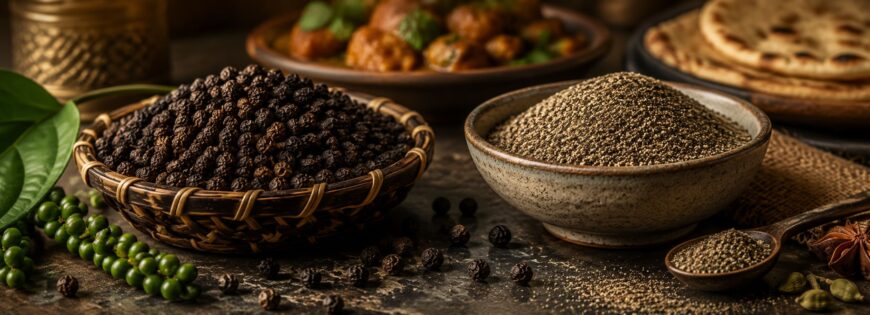
Choosing the right black pepper for cooking often comes down to one question: whole black pepper or pepper powder? Open a jar of whole black pepper and crush a few peppercorns. The fragrance arrives immediately: warm, woody, citrus-like, gently resinous and unmistakably peppery.
Now compare that with a jar of black pepper powder that has been open for several months. It may still add heat to food, but the aroma can feel flatter and less lively. This difference is not only about “better quality.” It begins with what happens when a peppercorn is ground.
At Idukki Spices & Herbs, we see black pepper as more than a heat ingredient. From the highland farms of Idukki, Kerala, pepper should bring aroma, warmth, visibility and control to the kitchen. Whether you choose whole pepper or powder depends on how you cook.
Black Pepper for Cooking: Which Keeps Aroma Longer, Whole or Powder?
Whole black pepper generally keeps aroma longer because the peppercorn remains intact until it is cracked or ground. Its structure protects more of the aromatic compounds inside the dried berry from repeated exposure to air, moisture and surrounding kitchen odours.
Pepper powder releases fragrance faster, spreads more evenly through food and saves preparation time, but its aroma begins changing sooner after grinding. The right choice is not about declaring one form permanently superior. It is about matching the form to the cooking moment.
Idukki kitchen answer: Keep whole black pepper for aroma-led cooking and fresh grinding. Keep a smaller pack of powder for speed, masala mixes, marinades and recipes that need even distribution.
How to Choose Black Pepper for Cooking
When choosing black pepper for cooking, the better question is not “Which form is always better?” It is “What does this dish need today?” Some dishes need fresh aroma at the finish. Some need quick blending. Some need slow pepper warmth inside a curry or broth.
Use this board to decide whether the peppercorn should stay whole, be cracked fresh or be used as powder.
Use whole pepper
Best when pepper is part of the eating experience: finishing soups, eggs, roasted vegetables, rasam, pepper chicken and table seasoning.
Crack it your way
Whole pepper lets you choose coarse, medium or fine texture depending on whether the dish needs bursts or background warmth.
Aroma or speed?
Choose the form that protects the dish. Whole pepper gives freshness and control. Powder gives convenience and even spread.
Use pepper powder
Best for weekday curries, batters, fillings, marinades, masala mixes and smooth gravies where even distribution matters.
Protect the powder
Powder should be bought in quantities the kitchen can finish while the fragrance is still clear and lively.
Practical rule: Whole pepper protects aroma until use. Powder makes flavour available immediately, but needs more careful buying and storage.
The simple difference between whole pepper and pepper powder
A whole black peppercorn acts like a small natural container. Many of the compounds responsible for pepper’s characteristic aroma are held within the structure of the dried berry. When the peppercorn remains intact, less of its interior is directly exposed to air.
Grinding changes that structure. One peppercorn becomes hundreds or thousands of smaller particles, which increases exposed surface area. That makes aroma and pungency easier to release, but also makes the powder more vulnerable after opening.
Research on cryogenic grinding of black pepper shows that grinding temperature influences volatile-oil retention, with lower-temperature grinding retaining more aroma compounds than ambient grinding.
What creates the aroma of black pepper?
Black pepper’s aroma comes from volatile compounds in its essential oil. These compounds can contribute citrus, woody, floral, pine-like and resinous notes, depending on variety, maturity, processing and storage.
They are called volatile because they readily move into the air. That is useful when cooking because aroma needs to leave the pepper and reach your nose. But once pepper is ground and exposed repeatedly to air, the most delicate top notes can gradually escape from the pack.
Aroma truth: Freshly ground pepper often smells brighter because the aromatic compounds are released close to the moment of eating.
Where each pepper form creates the most value
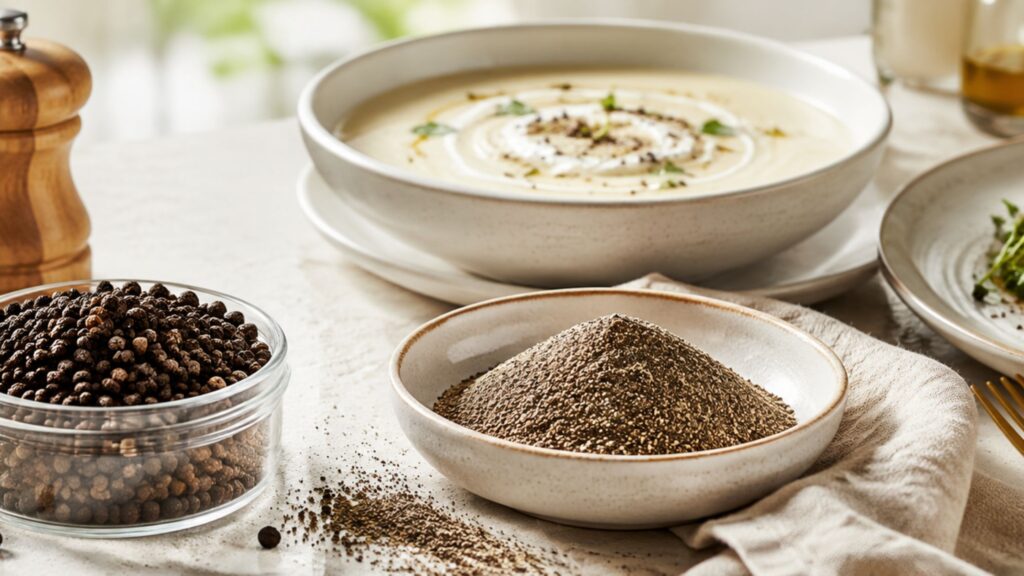
Whole pepper and pepper powder serve different kitchen zones. One protects aroma until the grinder turns. The other saves time when the dish needs fast, even seasoning.
For an Idukki-led pepper range, this matters strategically. Whole pepper builds trust through visible berry quality, while powder can support everyday convenience if sourcing, grinding and packing are handled honestly.
Kitchen demand zones
Freshly ground pepper
Soups, eggs, roasted vegetables, salads and pepper-forward dishes benefit from aroma released at the end.
Whole or cracked pepper
Broths, rasam, stocks, spice infusions, tea and slow gravies can take warmth gradually from whole pepper.
Pepper powder
Quick curries, masalas, batters, marinades and fillings need pepper that spreads quickly and evenly.
Visible berry quality
Whole pepper lets customers inspect size, fullness, cleanliness and uniformity before grinding.
Demand heat by cooking moment
Pepper-forward recipes: whole pepper has the strongest fit because aroma and texture are part of the dish.
Weekday cooking: powder fits busy kitchens when quick spreading matters more than fresh cracking.
Premium retail: whole berries carry stronger visual trust and support origin-led storytelling.
Future blends: pepper powder can work if batch discipline, moisture control and pack protection are clear.
Strategy note: The brand does not need to choose one form forever. It should teach customers when each form works best.
Grinding releases aroma, but also starts the clock
Grinding is not bad for pepper. It is the moment pepper becomes expressive. When you turn a pepper mill over soup, eggs or a finished curry, the broken peppercorn releases aromatic compounds directly above the food.
The issue is the time between grinding and use. Ground pepper does not become useless overnight, but its freshest aroma is strongest closer to the time of grinding. Packaging, temperature, humidity and how often the pack is opened all affect how fast the aroma changes.
Idukki kitchen cue: Grind close to cooking when aroma is the hero. Use powder when the recipe needs speed and even distribution.
Aroma and heat are not the same thing
An older pepper powder may still taste hot even when its fragrance feels flat. This happens because pepper’s aroma and pungent heat come from different groups of compounds. Aroma is strongly linked with volatile oils, while the familiar biting warmth is mainly linked with piperine and related non-volatile pungent compounds.
PubMed-indexed research on black pepper components shows that piperine and related compounds activate TRPV1 and TRPA1 channels involved in pungent sensation. In the kitchen, the practical meaning is simple: heat alone is not proof of freshness.
For reference, the study on activation of TRPV1 and TRPA1 by black pepper components explains why pepper can still feel pungent even when some aroma notes have faded.
Does freshly ground pepper contain more piperine?
Grinding does not automatically create more piperine. The piperine was already present inside the peppercorn. Grinding breaks the berry into smaller particles, making its components easier to distribute through food.
A fine powder can feel more immediate because it spreads evenly across the tongue, mixes quickly into liquids and sauces, and creates fewer large isolated pieces in each bite. A coarse crack gives more noticeable bursts, while fine powder creates a more uniform background warmth.
Why whole black pepper usually keeps aroma longer
Whole peppercorns have three practical advantages. Less surface is exposed, aroma is released only when needed, and the buyer can still inspect the berries. You can see size, fullness, colour, cleanliness and uniformity before grinding.
This does not mean every whole pepper is excellent or every powder is poor. Whole pepper must still be harvested, dried, cleaned, graded, stored and packed properly. But when handled well, the intact berry protects more of its character until use.
Spices Board India’s quality improvement guidance notes the importance of raw material, processing, packaging and storage practices for pepper quality, including protection from moisture.
When whole black pepper is the better choice
Choose whole pepper when aroma is a major part of the eating experience. Freshly grind it over soups, salads, eggs, roasted vegetables, grilled paneer, meat, fish, pasta or buttered corn. Adding pepper near the end preserves more fresh aromatic character than long cooking.
Whole pepper is also useful in pepper-forward recipes such as Kerala-style pepper chicken, pepper fry, milagu rasam, pepper eggs, mushroom pepper dishes, meat marinades and clear soups. A mortar, pestle or adjustable grinder can create coarse pieces for crusts, rubs and stir-fries.
Best use: Keep whole pepper for dishes where the aroma should arrive clearly and freshly.
When black pepper powder is more convenient
Pepper powder remains useful in many kitchens. It blends evenly with coriander, cumin, turmeric, chilli powder and other masalas, which helps when the final mixture needs consistent seasoning in every spoonful.
Powder also works well in marinades, batters, fillings, quick curries, dry seasoning mixes, dips and smooth gravies. The better question is not “Is pepper powder bad?” It is “How recently was it ground, how well is it packed, and how quickly will I use it?”
Which grind size should you use?
A pepper mill with an adjustable setting allows one pack of whole pepper to serve many cooking needs. Coarse pepper gives visible pieces and aromatic bursts. Medium grind works for curries, soups, eggs, marinades and everyday table seasoning. Fine grind spreads quickly into masalas, batters and smooth gravies.
Start with less when using fine pepper because it releases and distributes flavour quickly. Coarse pepper may feel less uniformly hot but can create stronger bursts when bitten.
For bursts and texture
Best for pepper crusts, stir-fries, roasted vegetables, grilled foods and salad toppings.
For daily balance
Best for curries, soups, eggs, marinades and table seasoning.
For even spread
Best for spice blends, batters, smooth gravies, dry mixes and quick cooking.
The aroma engine behind repeat pepper buying
A customer may first buy pepper because the price looks right. But repeat purchase happens when the pepper performs in the kitchen. The first crack of the berry must justify the trust placed in the pack.
For Idukki Spices & Herbs, this is where whole pepper becomes a strong entry product: visible quality before use, fresh aroma during cooking, and memory after the meal.
Berry quality is visible
The customer can judge size, fullness, colour, cleanliness and overall sorting before grinding.
Aroma arrives fresh
The peppercorn releases its warm, woody and bright notes close to the cooking moment.
The dish gains depth
Pepper gives warmth in curries, rasam, eggs, soups, marinades and pepper-forward dishes.
The pack stays useful
Whole pepper can be stored longer when kept dry, sealed and away from heat.
The kitchen notices quality
Better aroma makes the customer remember the product, not only the price.
Trust becomes repeat buying
When the spice works clearly, the next purchase feels easier and more natural.
Growth truth: The best pepper brand is not remembered because it shouted louder. It is remembered because the aroma came alive at the right moment.
How to use a pepper grinder properly
A good pepper mill does not need to be complicated. Look for one that has an adjustable grind setting, feels comfortable to turn, produces a reasonably consistent grind and can be refilled without difficulty.
Fill the grinder with only a practical quantity instead of using it as long-term storage for the entire supply. Keep the remaining peppercorns sealed in the original protective pack or in a clean airtight container.
Avoid holding the grinder directly over a heavily steaming pot for long. Steam can enter the mechanism, add moisture to the pepper and encourage clumping.
How to store whole black pepper
Store peppercorns in a cool, dry place away from direct sunlight, stove heat, moisture and surrounding odours. Black pepper is hygroscopic, meaning it can absorb moisture from the air, which is especially relevant in humid and monsoon conditions.
Do not keep the pack open for long periods. Close it immediately after measuring or refilling the grinder. A transparent jar may look attractive, but it should not sit in direct sunlight or beside a hot cooking area.
Storage rule: Whole pepper protects aroma better only when the kitchen protects the pepper from heat, air and moisture.
How to store black pepper powder
Powder needs even more protection because its surface area is already exposed. Buy a quantity you can use comfortably, keep the container tightly closed, use a clean dry spoon, and avoid shaking powder over steaming food.
Store it away from heat and sunlight, do not mix a fresh pack into the remains of an old one, and write the opening date if helpful. For occasional users, two smaller sealed packs may preserve aroma better than one large pack opened for many months.
The FSSAI standards for spices and condiments describe black pepper as having a penetrating characteristic odour and hot biting taste, while excluding mouldy and rancid odours.
How can you tell when pepper powder has lost aroma?
Do not judge only by the printed date. Place a small amount of powder in your palm or on a clean spoon and smell it. Fresh black pepper powder should have a clear, recognisable fragrance with warm, woody, citrus-like, pine-like or gently floral notes.
Warning signs include very little aroma, dusty or cardboard-like smell, damp or musty notes, hard clumps from moisture, rancid odours, visible mould or insect activity. Pepper with mouldy, rancid or abnormal odours should not be used.
Should pepper be added before or after cooking?
Add pepper during cooking when you want it integrated into the dish, when the recipe needs background warmth, or when it must disperse through a curry, sauce or marinade. Whole pepper can also be used for gradual infusion in broths and slow-cooked gravies.
Add pepper near the end when you want a fresher aroma, when pepper is a key flavour, or when the dish has already undergone long cooking. Many dishes benefit from both: a little during cooking for depth and a smaller freshly ground amount at the end for aroma.
Best method: For soups, meat dishes, mushrooms, eggs and pepper-forward curries, use pepper in two moments: warmth first, fresh aroma last.
Whole pepper or powder: the final answer
Choose whole black pepper when you value longer aroma retention, fresh grinding, control over texture, visible berry quality and a brighter finishing aroma. Choose black pepper powder when you value speed, convenience, even distribution, easy masala preparation and smooth final texture.
Whole pepper generally keeps its aroma longer because the berry remains intact until you grind it. Powder gives immediate access to pepper’s flavour and heat, but its exposed aromatic compounds begin changing sooner.
From the highland pepper-growing landscape of Idukki to the final turn of a grinder in your kitchen, black pepper reveals its character most clearly when origin, handling and timing come together.
Frequently Asked Questions
Does whole black pepper last longer than pepper powder?
Whole pepper generally retains aroma longer because less of the pepper is exposed to air. Ground pepper has a much larger exposed surface area and changes faster during storage.
Why does freshly ground black pepper smell stronger?
Grinding breaks the peppercorn and releases volatile aromatic compounds held inside the berry. These compounds reach the nose immediately after grinding.
Does black pepper powder lose its spiciness?
Its aroma may become flatter before all of its pungency disappears. Piperine is non-volatile and can remain perceptible even after some delicate aroma compounds decline.
Is black pepper powder adulterated?
Powder is not automatically adulterated. However, buyers cannot visually inspect the original berries after grinding, so ingredient declaration, batch information and seller transparency matter more.
Is coarse or fine black pepper better?
Neither is universally better. Coarse pepper creates noticeable bursts and works well for finishing and crusts. Fine pepper spreads more evenly through masalas, marinades, batters and sauces.
Should black pepper be added at the beginning or end of cooking?
Add it during cooking for integrated warmth and near the end for fresher aroma. Many dishes benefit from using a small quantity at both stages.
Can I grind a full pack of pepper at once?
You can, but it removes the aroma-retention advantage of buying whole pepper. Grind only what you expect to use soon.
Is a pepper mill worth buying?
A pepper mill is useful for households that regularly use black pepper and want control over grind size. It makes it easy to release fresh aroma directly into a dish.
Grind pepper when the aroma matters.
Whole black pepper from Idukki’s highland spice tradition for fresh cracking, stronger aroma and better control in everyday cooking.