

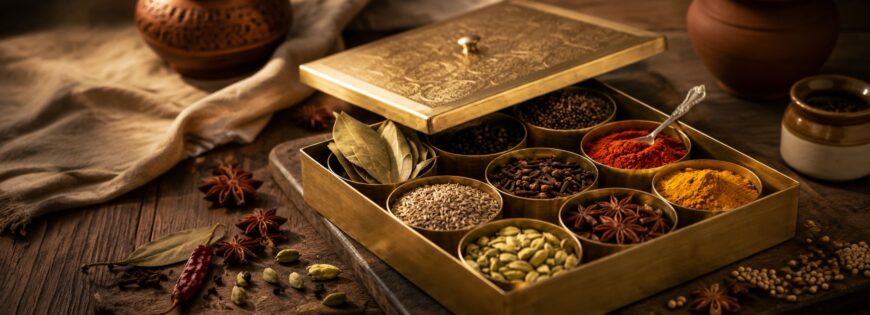
Whole spices are the foundation of a fresh Indian masala box. A good masala box is not the one with the greatest number of spices. It is the one you reach for without thinking: the pepper you crack over eggs, the cumin you drop into hot ghee, the cardamom you crush for tea and the mustard seeds that begin an everyday curry.
Building a fresh Indian masala box should begin with the food you actually cook, not with a long list copied from a cookbook. Start with a small group of fresh whole spices for Indian cooking, learn how each behaves in heat and refill them before their aroma fades.
For Idukki Spices & Herbs, this is where whole spices make the kitchen more honest. A pod, seed, bark or berry lets the cook see the ingredient before trusting it.
Which Whole Spices Should a Beginner Buy?
A practical starter collection includes black pepper, cumin, coriander seed, mustard seed, fennel, green cardamom, cloves, cinnamon, dried bay leaf and one or two special-use spices such as star anise, nutmeg or mace.
These cover everyday tempering, rice dishes, curries, chai, desserts and basic homemade masala blends. You do not need every spice in a large packet; whole spices are used in small quantities and their value comes from aroma rather than volume.
Idukki kitchen rule: Build a masala box around real cooking habits, not around display. A smaller fresh box is better than a large ageing collection.
How to Build a Fresh Masala Box with Whole Spices
A useful masala box needs balance. Some whole spices begin a dish in hot oil, some lift tea and sweets, some add slow warmth to rice and gravies, and some should stay sealed nearby because their aroma is too strong for an open daily compartment.
The colour logic is simple: green for freshness, amber for heat, bark brown for depth, black for sharpness and soft linen for storage discipline.
Seeds for hot oil
Cumin, mustard and fennel belong close to daily cooking because they change quickly in warm fat.
Berries for aroma
Whole black pepper stays more expressive when cracked close to cooking.
Keep the daily box small, active and fresh
Fill each compartment with one or two weeks of use. Keep the main stock sealed in a cool, dry cabinet.
Pods and buds nearby
Cardamom, cloves, mace and nutmeg are better kept in airtight jars near the box, not open all day.
Bark and leaves
Cinnamon and bay leaf support rice, dal, stock and gravies when stored dry and handled gently.
Practical idea: The masala box is the working shelf. The airtight reserve jars are the aroma bank.
What Is an Indian Masala Box for Whole Spices?
An Indian masala box, often called a masala dabba, is a compact container used to keep frequently used spices close at hand. Traditional versions are usually round stainless-steel boxes with several smaller bowls inside.
The idea matters more than the shape: everyday spices should be organised, easy to identify and protected from moisture. Some families keep only powders inside, while others keep a mix of powders, seeds and whole aromatics.
For a fresher and more flexible setup, keep regularly tempered seeds in the main box and store strongly aromatic whole spices such as cardamom, cloves and nutmeg in separate airtight jars nearby.
10 Essential Whole Spices for Indian Cooking
Treat this as a starting map, not a compulsory shopping list. These whole spices for Indian cooking cover the everyday needs of many kitchens. A home that cooks mostly South Indian food may use mustard and cumin faster than star anise, while a biryani-heavy kitchen may refill cardamom, cloves and cinnamon more often.
| Whole Spice | Starter Quantity | Where You Will Use It |
|---|---|---|
| Cumin seeds | 100 g | Dal, jeera rice, potatoes, curries and raita |
| Coriander seeds | 100 g | Curry bases, roasted masalas and marinades |
| Black mustard seeds | 100 g | Kerala curries, dals, pickles and vegetable tempering |
| Fennel seeds | 75 g | Meat dishes, tea, vegetable curries and regional masalas |
| Whole black pepper | 100 g | Curries, rasam, soups, marinades and table grinding |
| Green cardamom | 50 g | Chai, payasam, biryani, sweets and garam masala |
| Cloves | 25–50 g | Rice, gravies, chai, pickles and slow-cooked dishes |
| Cinnamon | 50 g | Biryani, curries, chai and sweet preparations |
| Dried bay leaf | 25 g | Rice, dal, gravies and stock |
| Nutmeg, mace or star anise | 20–25 g | Festive cooking, biryani, baking and special masalas |
Why Use Whole Spices for Indian Cooking?
Whole spices keep their aroma protected inside seeds, berries, bark and pods until they are cracked, roasted or ground. This makes whole spices especially useful for Indian cooking, where tempering, roasting and fresh grinding can shape the final flavour. A peppercorn releases sharp warmth when the grinder breaks it, while a cardamom pod opens only when you press it.
This gives you more control over flavour. The same coriander seed can be used whole in a pickle, lightly crushed for a rustic curry or roasted and ground into a masala.
Whole spices also make quality easier to judge. You can see whether peppercorns are full, whether cardamom pods are well formed, whether cloves retain their heads and whether a packet contains too much dust or broken material.
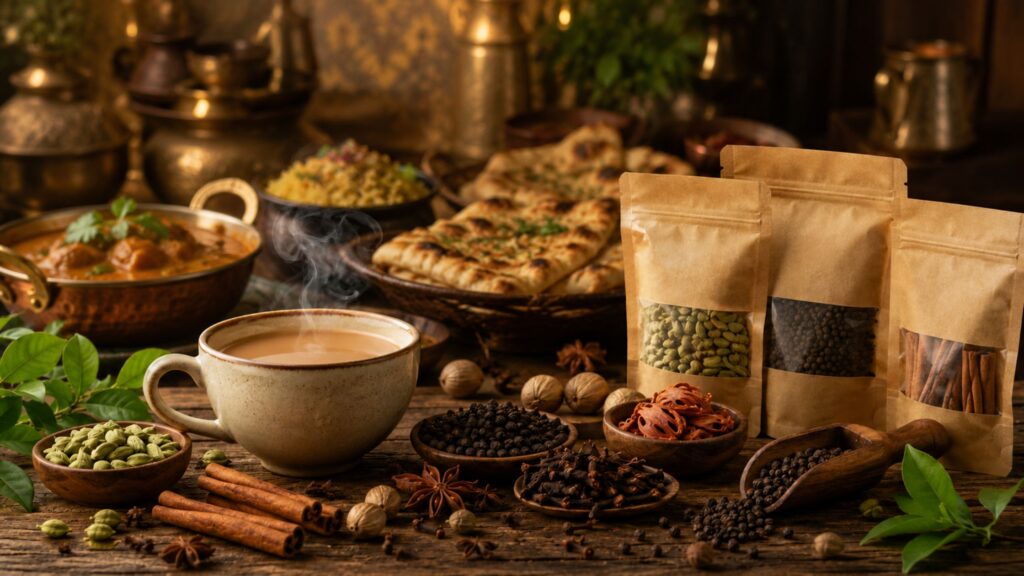
The regional masala box map
There is no single Indian masala box because there is no single Indian kitchen. The right box changes with breakfast, weekday dal, Sunday meals, festival cooking and the food a family returns to when guests arrive.
Use this map as a design guide: Kerala kitchens lean toward mustard, pepper and coconut-oil tempering, while other regions may give more space to cumin, coriander, fennel, fenugreek, nigella or ajwain.
Regional flavour canvas
Mustard, pepper, curry rhythm
Black mustard, black pepper, cumin, fenugreek and dried chillies support many everyday Kerala preparations.
Cumin, coriander, warm aromatics
Cumin, coriander, cardamom, cloves, cinnamon and bay leaf often anchor dal, rice and gravies.
Five-spice direction
Mustard, cumin, fennel, fenugreek and nigella can become more central to daily cooking.
Seeds and regional heat
Sesame, ajwain, cumin, coriander and regional chilli varieties may deserve extra space.
Demand signals by kitchen type
Daily cooking: give more space to cumin, mustard, pepper and coriander if they appear several times a week.
Tea and sweets: keep cardamom, cinnamon, cloves and nutmeg sealed close by for freshness.
Biryani homes: refill cardamom, cloves, cinnamon, bay leaf, mace and star anise more consciously.
Beginner kitchens: build slowly, then let refill frequency decide what earns permanent space.
Design idea: A masala box should reflect the recipes that repeat in the home, not a decorative idea of Indian cooking.
Choosing black pepper for the box
Black pepper is worth buying whole because its aroma is strongest immediately after crushing. Look for reasonably uniform peppercorns that feel dry and substantial, with a naturally wrinkled surface and a clean, penetrating aroma.
For an Idukki-origin pepper, the listing should say so clearly and connect the claim to traceable sourcing. Pepper obtained from Karnataka, Tamil Nadu or another producing region should carry its actual origin instead of being presented as Idukki pepper.
Keep a small pepper mill near the stove or dining table and refill it from a sealed master pack. This lets you grind only what the meal needs while protecting the remaining peppercorns from steam.
Choosing green cardamom
Choose green cardamom by looking at more than pod size. A good pod should feel reasonably full, contain developed aromatic seeds and release a sweet, fresh fragrance when gently crushed.
Cardamom from the highland growing landscape of Idukki carries a strong connection to Kerala’s spice culture. That connection should be expressed through specific sourcing, batch handling and product information, not exaggerated claims.
Keep cardamom in a tightly sealed jar rather than an open compartment. The pod protects the seeds, but repeated exposure to air, moisture and heat will gradually weaken the aroma.
Choosing cloves, cinnamon and dried bay leaf
Good whole cloves should look complete rather than heavily broken, with a visible rounded head and a strong warm aroma. Because cloves are powerful, a small pack lasts many households for months.
Cinnamon should be clean, dry and distinctly aromatic. Dried bay leaves should be mostly intact and pleasantly fragrant, not crushed into a dusty layer at the bottom of the packet.
Storage cue: Strong aromatics should be sealed separately so cardamom, cloves, mace and nutmeg do not perfume the entire masala box.
Choosing cumin, coriander, mustard and fennel
Cumin should smell earthy and warm before roasting, then become nuttier as it heats. Coriander seeds should have a fresh citrus-like warmth when crushed rather than smelling dusty or flat.
Mustard seeds should be dry, clean and free-flowing. Fennel brings a softer, naturally sweet aroma and works in meat dishes, vegetable curries, tea and regional masalas.
Because cumin, coriander and mustard often work harder in everyday cooking, they usually deserve larger starter quantities than cloves, mace, nutmeg or star anise.
How much should you put in the masala box?
Fill each masala-box compartment with only one or two weeks of regular use. Keep the remaining stock sealed in a cupboard and use it to refill the working box.
For a household of two to four people, 50 to 100 grams is generally enough for frequently used whole seeds such as cumin, mustard or pepper. Strong spices such as cloves, cardamom, mace and nutmeg can be purchased in smaller quantities.
Refill logic: When a spice sits untouched for six months, buy less next time. When a compartment empties every ten days, increase the reserve stock modestly.
How to buy whole spices online
When you buy whole spices online, look for listings that describe the product rather than only praising it. Useful details include origin, form, grade or size where relevant, packed-on date, batch number, net quantity and storage instructions.
Study product images for excessive powder, broken material, undeveloped seeds or visible moisture. Natural variation is expected because spices are agricultural produce; perfect sameness is less important than cleanliness, maturity and honest representation.
For wider Indian spice context, readers can visit Spices Board India, while product buying decisions should still be based on origin clarity, freshness and kitchen use.
Questions to ask before buying online
A reliable seller should be able to explain where a spice was sourced, whether it was cleaned or graded, when it was packed and how its batch is identified.
| Question | What a Reliable Listing Should Show |
|---|---|
| Where was this spice sourced? | State, district or sourcing region where relevant. |
| Is it cleaned or graded? | Sorting, grade, size or form details when applicable. |
| When was it packed? | Packed-on date, batch number and best-before information. |
| How is freshness protected? | Moisture-safe packaging and storage instructions. |
| Are all products from one origin? | Clear origin for each spice in mixed collections. |
- Ask whether premium claims are supported by grade, origin or batch information.
- Check whether each spice in a bundle has its own sourcing story.
- Avoid unsupported words such as organic, GI-tagged, medicinal or export quality unless proof is shown.
- Prefer calm, specific product pages over loud collections of badges.
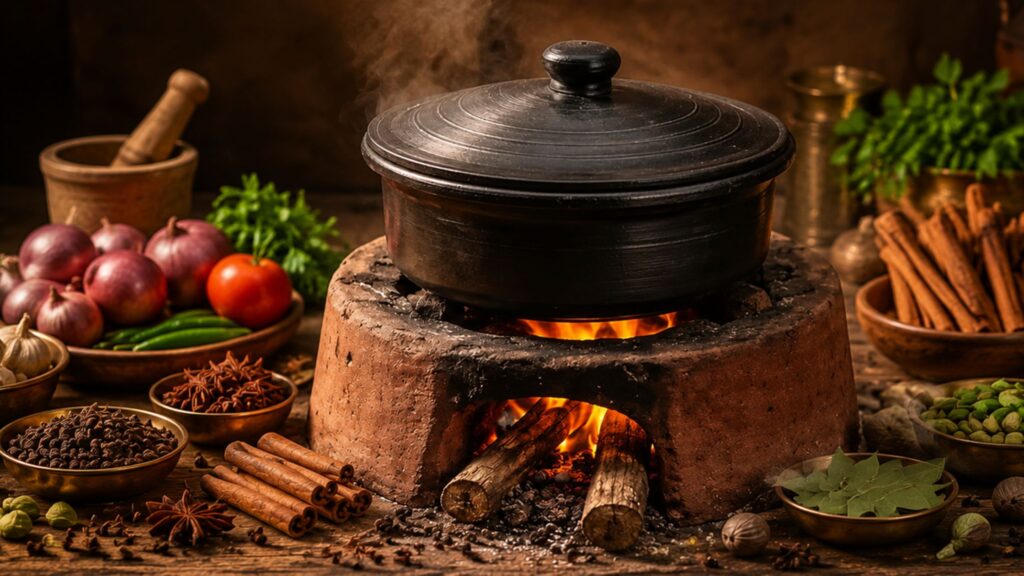
The masala box freshness wheel
A fresh masala box is not created on the day you buy spices. It stays fresh through small repeated habits: buying in sensible quantities, storing the reserve stock well, refilling cleanly and replacing spices when aroma fades.
The design principle is simple: each turn of the wheel should protect aroma, reduce waste and make the next cooking moment easier.
Buy for real cooking
Begin with the dishes you repeat and choose quantities that match actual use.
Daily box and reserve stock
Keep only a working quantity in the box and seal the rest in a dry cupboard.
Keep heat and steam away
Do not hold the open masala box over bubbling pots or wet counters.
Check aroma monthly
Crush a seed, split a pod or break a bark piece and notice whether it still smells alive.
Refill only after clearing old stock
Do not bury tired spice crumbs under a fresh refill.
Let refill patterns guide you
Buy more of what empties often and less of what sits untouched.
Growth truth: Freshness compounds when the masala box becomes a habit, not a one-time purchase.
How to store a masala box properly
Keep the masala box in a cool, dry cupboard or drawer away from the stove, sink and direct sunlight. Convenience matters, but placing spices directly above the cooking area exposes them to repeated heat and steam.
Use a dry spoon every time. Do not hold an open box over a bubbling pot because moisture can enter before you notice it.
Strongly aromatic spices such as cardamom, cloves, nutmeg and mace are better kept in separate airtight containers so their fragrances do not mingle with everything around them.
A simple refill routine that keeps spices fresh
Once a month, open each container and smell the spice. You are not looking for laboratory perfection; you are checking whether the ingredient still smells like itself.
Clean the masala box before refilling it. Finish or remove the remaining old spice, wash the bowls when appropriate and allow every part to dry completely.
Kitchen reminder: Adding fresh spices over crumbs and ageing stock makes it difficult to know what you are actually cooking with.
Beginner whole-spice combinations to try
Start with small combinations that teach how whole spices behave in heat. Cumin in warm ghee can transform dal, black mustard in hot oil can begin a Kerala-style vegetable dish, and cardamom with pepper can change a cup of chai.
For biryani, begin with green cardamom, cloves, cinnamon and dried bay leaf in warm ghee or oil. For a simple roasted masala, dry-roast coriander and cumin separately, cool fully and grind only what you need.
Cumin in hot ghee
One of the easiest ways to understand how aroma opens in fat.
Mustard and curry leaves
A familiar beginning for vegetables, dals and coconut-based dishes.
Cardamom and pepper
Crush fresh so the aroma rises in the saucepan.
Common masala box mistakes
The first mistake is buying too much. Large value packs appear economical, but they are poor value when half the spice becomes flat before use.
The second mistake is treating every spice alike. Pepper can sit in a grinder, cumin can live in the daily-use box, cardamom needs a tighter seal and nutmeg should ideally remain whole until grated.
The third mistake is building a decorative collection instead of a working kitchen tool. Add a new spice only when you have a clear use for it, then cook with it several times before buying another.
A practical starter shopping list
For a balanced first purchase, begin with enough range for tempering, curries, rice dishes, chai, baking and simple homemade spice blends without turning the cupboard into long-term storage.
- 100 g whole black pepper
- 100 g cumin seeds
- 100 g coriander seeds
- 100 g black mustard seeds
- 75 g fennel seeds
- 50 g green cardamom
- 25–50 g cloves
- 50 g cinnamon
- 25 g dried bay leaf
- 20–25 g nutmeg, mace or star anise
Adjust the quantities after your first two refill cycles. The best masala box is the one your kitchen actually uses.
Build the box your kitchen will actually use
Your masala box does not need to look like anyone else’s. It should smell like the food you cook, carry the spices your family recognises and make weekday cooking easier.
Freshness is not created by owning more spices. It comes from buying carefully, storing thoughtfully and crushing or roasting the ingredient at the right moment.
From pepper and cardamom grown in the highlands of Idukki to carefully sourced spices from other Indian regions, every compartment should have a clear purpose and an honest origin.
Frequently Asked Questions
What spices should be in an Indian masala box?
A useful beginner box can include cumin, coriander seed, mustard seed, fennel, black pepper, green cardamom, cloves, cinnamon and dried bay leaf. Add fenugreek, ajwain, nigella, mace or star anise according to regional cooking.
Is it better to buy whole spices or ground spices?
Whole spices give more control over freshness, texture and roasting. Ground spices are convenient for frequent everyday use, but their aroma tends to fade faster after repeated exposure to air.
How many spices does a beginner need?
Eight to ten well-chosen spices are enough to begin. A smaller collection that is used and replaced regularly is more valuable than twenty packets ageing at the back of a cupboard.
How long should spices remain in a masala box?
Keep only a small working quantity in the daily-use box and refill every one or two weeks. Review the master stock monthly by checking aroma, dryness and cleanliness.
Can whole spices be stored together?
Frequently used seeds can share the same outer masala box when each remains in a separate bowl. Strong aromatics such as cardamom, cloves, mace and nutmeg are better stored in individual airtight containers.
Which whole spices are most important for Kerala cooking?
Black mustard, black pepper, cumin, fenugreek and dried chillies are useful across many everyday preparations. Green cardamom, cloves, cinnamon, fennel, nutmeg and mace are important for selected meat dishes, rice preparations, chai and traditional sweets.
What is the best way to test spice freshness?
Crush or break a small piece and smell it. Fresh pepper should smell sharp, cardamom should release a sweet penetrating fragrance and cumin should smell distinctly earthy.
What should I check when buying whole spices online?
Check origin, product form, batch number, packed-on date, visible cleanliness, packaging quality and storage instructions. Look for specific information rather than broad claims.
Build your masala box one fresh spice at a time.
Explore whole spices selected for aroma, kitchen use, careful handling and clearly stated origin.